US-Canada trade war: Trump targets vehicle tariffs
After President Donald Trump threatened a higher tariff on vehicles and auto parts moving across the border, the US-Canada trade war is back in focus. According to available reports, as indicated by Reuters, this move is aimed at pressuring Canada in talks over trade terms and market access. For investors and manufacturers, in the US-Canada trade war, the immediate concern is how quickly a tariff announcement could translate into higher dealer prices and disrupted procurement plans. Because many components cross the border multiple times before final assembly, even a single duty can compound costs. Ottawa has not laid out specific retaliation steps, but officials have reiterated that any response would follow trade rules.
How tariffs could hit integrated auto supply chains
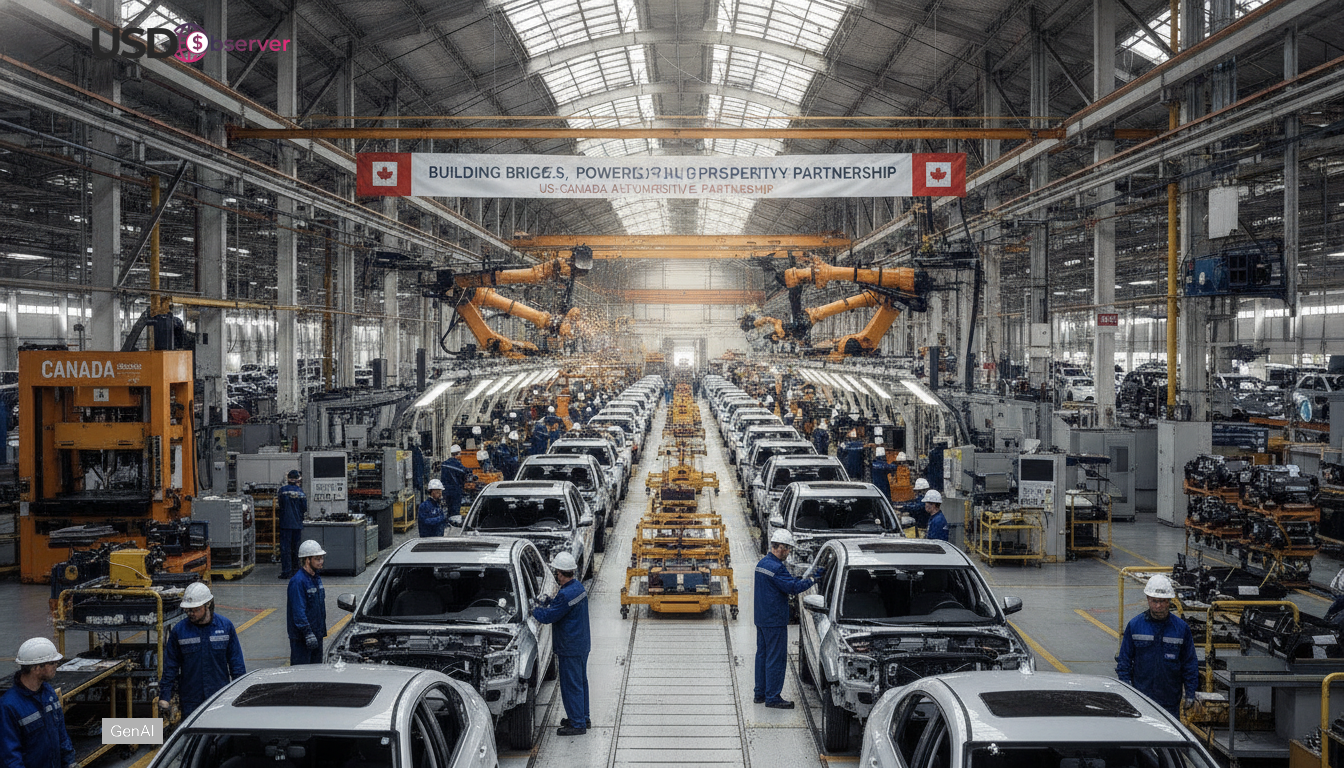
Canada’s auto sector depends on tightly integrated North American production, where parts can cross the border several times during one build. In the US-Canada trade war environment, that structure makes vehicle duties unusually disruptive, because costs can stack across shipments and force rapid changes in sourcing. For ongoing coverage of corporate positioning and hedging, see US-Canada trade war stokes tariff fears for firms. Firms also face planning risk: an announced tariff can affect contracts, production schedules, and hiring before it even takes effect. Some manufacturers are also reviewing payment and settlement options for cross-border suppliers, a topic covered in Financial rails: stablecoins enter payment infrastructure.
What recent trade tensions show about spillovers
Recent episodes of tariff escalation have shown that uncertainty can be as damaging as the duty itself, because it delays investment and complicates compliance decisions. During the 2018 to 2019 steel and aluminum dispute, the United States applied a 25% tariff on steel and 10% on aluminum, prompting Canada to respond with countermeasures on selected US goods. For additional context on broader tariff expansion signals, see US Trade War Fears Rise as Trump Widens Tariffs. The USMCA offers a dispute framework, but it does not stop unilateral tariff threats from reshaping expectations. That history matters because automakers, parts suppliers, and logistics firms still build contingency plans around similar timelines and political triggers.
Economic scenarios: prices, jobs, and the dollar channel
If vehicle and parts tariffs are implemented, the most direct effect is higher landed costs that can push up retail prices, depending on how much automakers absorb. For a related read on how rate expectations and financing stress can ripple through markets, see US borrowing costs climb as debt fears shake markets. A second channel is employment risk in assembly and supplier hubs, where volumes can shift quickly when production is reallocated. Financial conditions also matter: higher uncertainty can widen credit spreads for smaller suppliers and raise hedging costs. That ties the US-Canada trade war to market moves in USD and forex, especially when investors reassess North American growth and inflation.
Diplomatic options and what to watch next
Canada has typically emphasized proportional responses and legal process when answering US tariff actions, aiming to keep retaliation targeted while protecting broader cooperation on energy and security. For consumer-side price behavior under higher costs, the BBC explains the logic of price transparency in ‘What you see is what you pay’ – why some US restaurants are banning tips. In practice, negotiations often hinge on exemptions, rules-of-origin compliance, and carve-outs for components that cross borders repeatedly. The US-Canada trade war remains sensitive to domestic politics, including election-year pressure in both Washington and Ottawa, which can narrow the room for compromise even when industry groups lobby for stability. Watch for signals around effective dates, product scope (finished vehicles versus parts), and any mention of quota or exemption mechanisms.