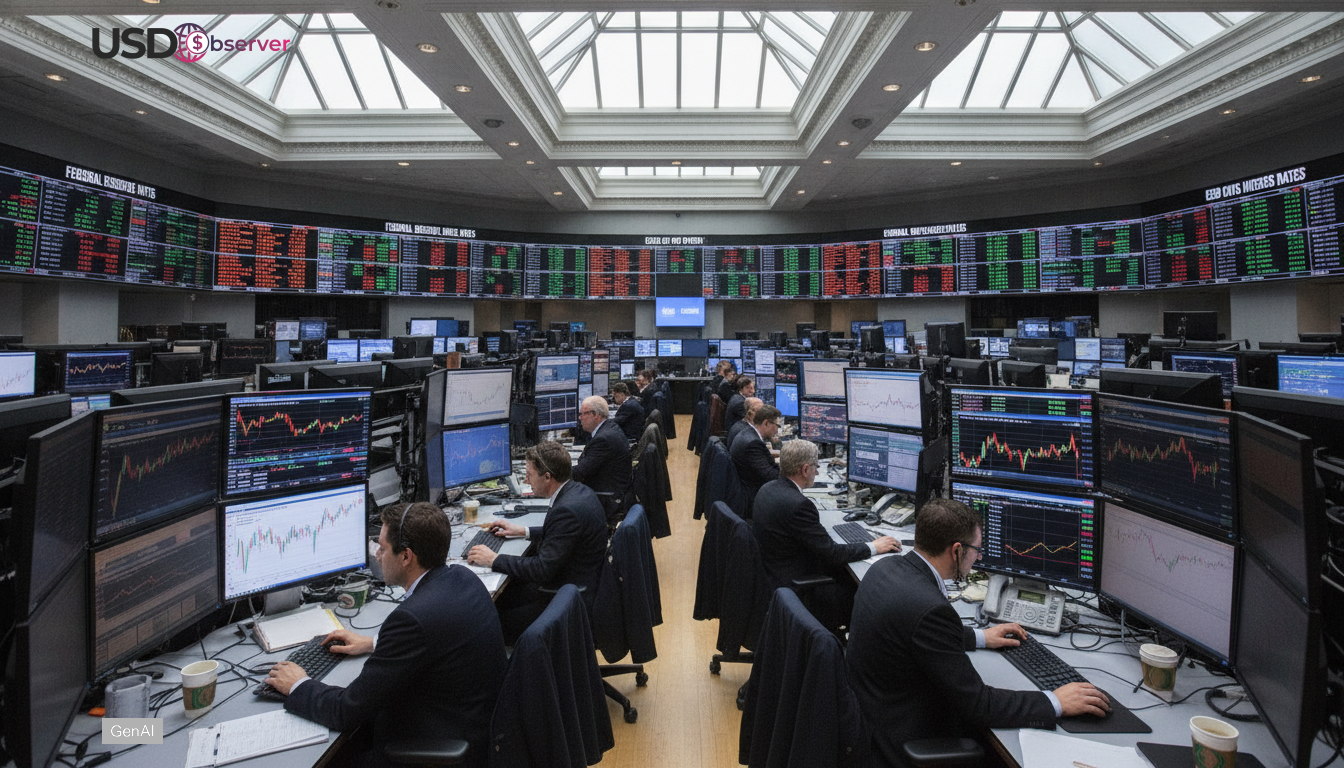
Global trade indicators have revealed a renewed reliance on USD settlement flows even as several economies pursue diversification strategies aimed at reducing currency concentration risk. Recent trade and payment data suggest that despite ongoing interest in alternative settlement routes, the dollar remains the dominant medium for cross-border transactions, particularly during periods of uneven global growth and tightening financial conditions. This trend reflects the structural advantages of USD liquidity and the continued importance of dollar-based pricing across commodities, manufacturing supply chains and intermediate goods.
Analysts observing global trade indices note that efforts to expand local-currency settlement frameworks have introduced more flexibility, yet these channels remain secondary to USD-based systems. Market volatility and policy uncertainty have reinforced this trend, with traders relying heavily on dollar liquidity to manage risk exposures, secure trade finance and maintain continuity in multi-region supply chains. The latest data signals that diversification is progressing, but the dollar’s centrality remains firmly intact.
Trade data highlights structural reliance on USD-based settlement networks
The most significant insight from recent trade flow data is the clear persistence of USD-settled transactions across major shipping routes and commodity markets. While diversification initiatives have broadened payment options, the scale and efficiency of USD systems continue to outperform alternatives. This is particularly evident in sectors such as energy, metals and key intermediate goods where dollar-based invoicing is deeply embedded in contract structures and global benchmarks.
Trade finance institutions continue to favor the USD due to its deep liquidity, predictable settlement standards and widespread acceptance among counterparties. Even in regions promoting alternative settlement channels, exporters and importers often revert to USD structures to reduce transaction risk or ensure pricing clarity. The latest indices underline that market behavior still gravitates toward dollar-denominated settlement during periods of fluctuating global demand, making it the preferred anchor in complex trade cycles.
Supply chain fragmentation increases reliance on dollar liquidity
Fragmented supply chains have added another layer of support to USD settlement flows. As companies navigate shifts in production hubs, logistics constraints and regional demand imbalances, the need for consistent, liquid and widely recognized settlement mechanisms has grown. The USD remains the most reliable option for bridging multi-region trade relationships, especially when transactions involve partners across both advanced and emerging markets.
Analysts point out that businesses facing currency volatility often prefer USD invoicing to stabilize cash flows and reduce exposure to abrupt exchange-rate movements. This is particularly relevant for firms operating in regions where domestic currencies have exhibited weaker performance or higher inflation. The reliance on USD liquidity in this context is less a strategic choice and more a practical requirement for maintaining operational certainty across supply chains.
Diversification initiatives deliver incremental but limited shifts
While numerous economies have launched initiatives to diversify away from USD settlement, most shifts observed so far have been incremental rather than transformational. Local-currency trade agreements and regional payment systems have gained some traction, but integration challenges and varying levels of liquidity have limited broader adoption. These systems tend to work best in bilateral or specialized regional contexts, whereas global trade flows require scale and consistency across numerous markets.
Market observers note that diversification efforts contribute to long-term optionality but do not fundamentally shift the near-term settlement landscape. The majority of global exporters still rely on USD-denominated credit lines, global banking networks and dollar-referenced pricing structures. This reinforces the idea that diversification strategies are supplementary, offering flexibility without displacing the dominant role of USD flows in global settlements.
Corporate hedging strategies reinforce dollar centrality in trade cycles
Another factor sustaining the USD’s influence is the prevalence of corporate hedging strategies that rely on dollar-based instruments. Firms active in global trade frequently hedge exposures through USD derivatives, which are more liquid and cost-effective compared to similar tools in other currencies. This embedded hedging behavior increases the overall magnitude of USD settlement flows as trade finance, payment settlements and risk management processes intersect.
The structure of global derivatives markets further stabilizes this trend. With USD instruments offering the deepest option and futures markets, companies naturally align their settlement practices with the currency that best supports their hedge execution. This creates a feedback loop where operational, financial and risk considerations all converge around USD-denominated activity.
Conclusion
Global trade indices continue to reflect a renewed dependence on USD settlement flows despite ongoing diversification initiatives. While alternative systems are expanding, they currently serve as supplementary rather than primary channels. The scale of dollar liquidity, entrenched trade finance systems and widespread corporate hedging practices ensure that the USD remains central to global commerce. As supply chains evolve and economic conditions shift, the dollar’s resilience within settlement networks appears set to persist.