Nvidia AI revenue drives a blowout quarter
Nvidia delivered another quarter that reset expectations for scale and profitability, as management detailed a sharp step up in demand for its accelerated computing platforms. In its latest results release, the company said revenue more than doubled from the prior year period, underscoring how quickly data center spending may be concentrating around high end GPUs and networking. Executives described demand being supported by both training and inference buildouts across cloud and enterprise buyers, and they highlighted disciplined supply planning plus a richer product mix, as indicated by reports. The tone of the call framed the quarter as structurally different from prior cycles because platform purchases are larger, longer dated, and tied to deployment schedules rather than experimentation, as described by executives.
AI hardware demand accelerates data center spending
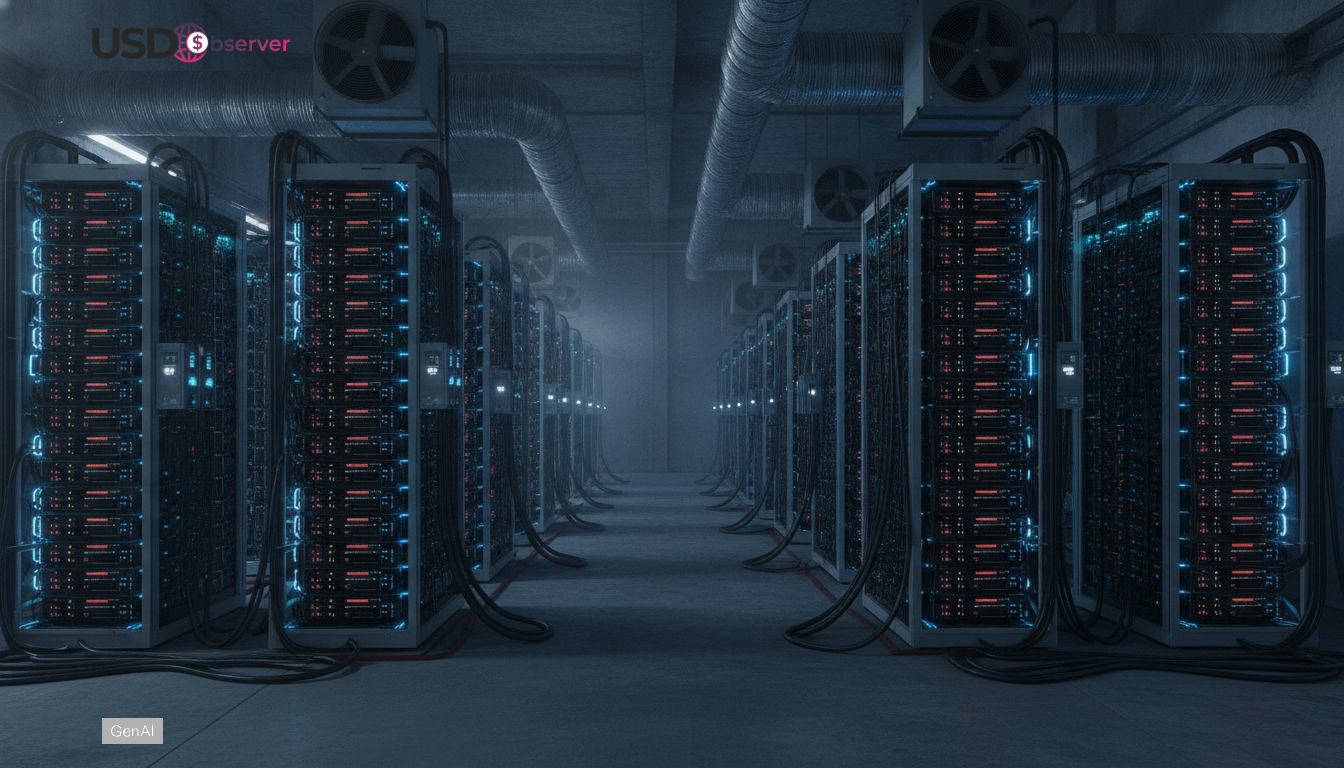
Management attributed the step change to AI hardware demand that it said remains anchored in large scale infrastructure projects rather than small pilot programs. Nvidia also stressed that Nvidia AI revenue momentum is increasingly tied to full platform adoption, with GPUs, interconnect, and software optimized together to shorten time to deployment and support higher average selling prices, according to executives. In a mid paragraph linkage to broader market plumbing, Financial rails: stablecoins enter payment infrastructure highlights how digital settlement systems are being built alongside new compute rails, reflecting parallel investment cycles in technology stacks. The company described customer purchasing as multi quarter in nature, shaped by the need to expand clusters, increase utilization, and standardize software stacks across deployments, as reported by management.
What the results mean for investors and adjacent markets
For investors, the immediate read through has been reflected in Nvidia stock sensitivity to each incremental guidepost on capacity, lead times, and gross margin trajectory, based on how market participants often react to company guidance. In the middle of market context, CoinDesk reported on AI agents moving deeper into crypto lending infrastructure in MoonPay’s newest integration lets AI agents handle crypto lending on Solana, a sign that compute intensive services are expanding beyond traditional enterprise use, according to CoinDesk. Related risk sentiment can also be influenced by geopolitics, as outlined in US-Iran Economic Sanctions: Global Market Shockwaves. Management said orders and visibility are being shaped by the pace at which hyperscalers bring new data centers online and connect them to power and networking, which can shift quarterly timing even when demand remains strong.
Supply chain and execution risks that could cap upside
The company also outlined constraints that could potentially limit near term upside, including supply chain tightness for advanced packaging and the complexity of scaling systems shipments at very high volumes, as indicated by reports. In the middle of this operational reality, an example of broader corporate disruption appears in Stryker Cyber Attack: UK Plant Shutdown Details, illustrating how unexpected events can interrupt production and timelines even at large, well resourced firms. Management emphasized that delivering complete platforms requires coordination across foundry output, substrate availability, memory, and networking components, with any bottleneck potentially rippling into recognized revenue, executives said. This makes execution and operational resilience a key variable for chipmaker earnings, especially during fast product transitions. As a result, quarterly cadence may remain uneven despite demand signals that management characterized as strong.
2024 outlook: guidance, competition, and platform economics
Guidance discussion put Nvidia AI revenue in the center of investor focus for 2024, with management describing continued expansion of accelerated computing budgets and faster adoption of inference optimized deployments. The company pointed to a widening set of customers building internal AI capabilities, which it said supports a longer runway than prior upgrade cycles as models move from training to production workloads. Executives also stressed that competitive dynamics are rising, but argued that software optimization and ecosystem maturity remain critical differentiators as buyers evaluate total cost of ownership, according to management. The near term narrative is about conversion of pipeline into shipments, supported by measured capacity additions and customer deployment schedules, as described on the call. Investors will continue to track lead times, platform mix, and margin trajectory for confirmation that growth remains durable into 2024.