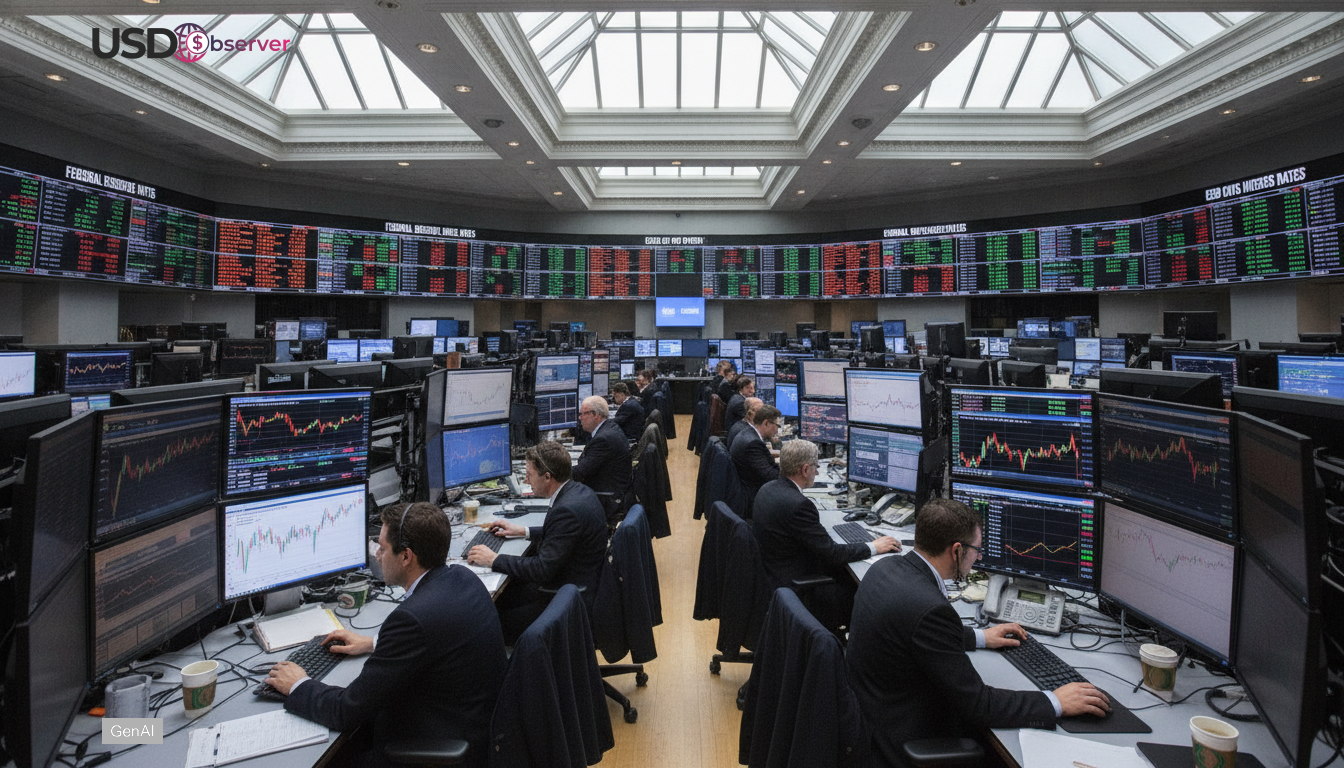
The world economy is slowing more sharply than expected, signaling a difficult adjustment ahead for policymakers and investors. Recent forecasts indicate that global growth will remain weak well into 2026, reflecting the combined impact of high interest rates, fiscal strain, and trade disruptions.
This deceleration is reshaping expectations for international markets and forcing economies to prepare for a longer period of subdued expansion rather than a quick rebound.
Global Growth Loses Momentum
Global output is expected to expand by just over 2 percent in 2026, a rate that sits below long-term averages. Slower growth is now evident across both advanced and emerging economies, driven by persistent inflation, tighter monetary conditions, and weaker trade flows.
In advanced economies, fiscal consolidation and high borrowing costs are weighing on investment and consumer demand. Emerging markets face additional challenges from volatile commodity prices and reduced external financing. Many of these economies are still adjusting to post-pandemic debt burdens that have limited their capacity to stimulate growth.
The global economy appears to have entered a phase where low growth, rather than crisis, is the prevailing condition. Economists now refer to this environment as a “soft stagnation,” marked by limited productivity gains and growing fiscal pressures.
Trade and Investment Under Pressure
Slowing growth is already visible in trade data. Global exports and imports are expanding at their weakest pace in more than a decade. Supply chain diversification, rising protectionism, and higher shipping costs are reducing trade efficiency. Countries dependent on exports are struggling to maintain their revenue base, while importers face cost inflation due to persistent logistics bottlenecks.
Investment trends mirror this weakness. High interest rates have made financing large projects more expensive, particularly in infrastructure and technology sectors. Corporations are cautious about capital spending, and governments have less fiscal flexibility to fill the gap. The result is a slowdown in productivity-enhancing investment, which further limits long-term potential growth.
Fiscal constraints are also intensifying. As debt service costs rise, governments are forced to make difficult trade-offs between supporting growth and maintaining fiscal discipline. The combination of weak revenue and growing interest payments is narrowing the space for policy maneuvering.
Regional Variations and Policy Challenges
Not all regions are slowing equally. The U.S. economy remains more resilient than many of its peers, supported by consumer demand and a strong labor market. However, even in the U.S., the pace of expansion is moderating as tighter credit conditions take hold.
Europe faces sluggish demand, industrial weakness, and energy price uncertainty. In Asia, China’s slower recovery and declining property investment have reduced regional growth momentum. Emerging markets in Latin America and Africa are struggling with capital outflows and rising debt-servicing costs as the dollar remains strong.
For policymakers, this uneven slowdown creates complex challenges. Some economies must balance inflation control with the need for fiscal support, while others face structural reforms to attract investment. Central banks remain cautious about cutting interest rates too early, fearing a resurgence of inflationary pressure.
Financial Stability and Global Liquidity Concerns
As growth slows and borrowing costs remain high, global financial conditions are tightening. Bond yields in major economies have risen, and credit markets are more selective. This has increased funding risks for lower-rated sovereigns and corporations.
Global liquidity, once abundant during the era of ultra-low interest rates, is now contracting. The stronger dollar and higher U.S. yields have redirected capital toward American assets, leaving developing markets with reduced inflows. This shift amplifies vulnerability in countries that depend heavily on external financing.
In several emerging economies, central banks are using reserves to stabilize currencies, but this approach has limits. Persistent outflows could trigger new episodes of volatility if global investors reassess risk exposure.
The Outlook Ahead
The long-term outlook depends on how successfully countries can adapt to this new environment of slower, more fragmented growth. Policymakers are focusing on structural reforms to improve productivity, encourage green investment, and manage debt sustainability. The success of these efforts will shape global economic stability in the next decade.
While a global recession is not the base case, the margin for error has narrowed. Continued fiscal imbalances and geopolitical tensions could deepen the slowdown if left unaddressed. The path forward requires coordination among major economies to support trade and ensure liquidity in developing markets. Without cooperation, global growth could remain trapped in a low-performance cycle.
Conclusion
The latest downgrade in global growth expectations confirms that the world economy is entering a prolonged period of moderation. Slower expansion, tighter financial conditions, and weaker trade are becoming defining features of the decade ahead. Sustaining stability will depend on how well policymakers balance fiscal restraint with growth priorities in an increasingly uncertain global landscape.