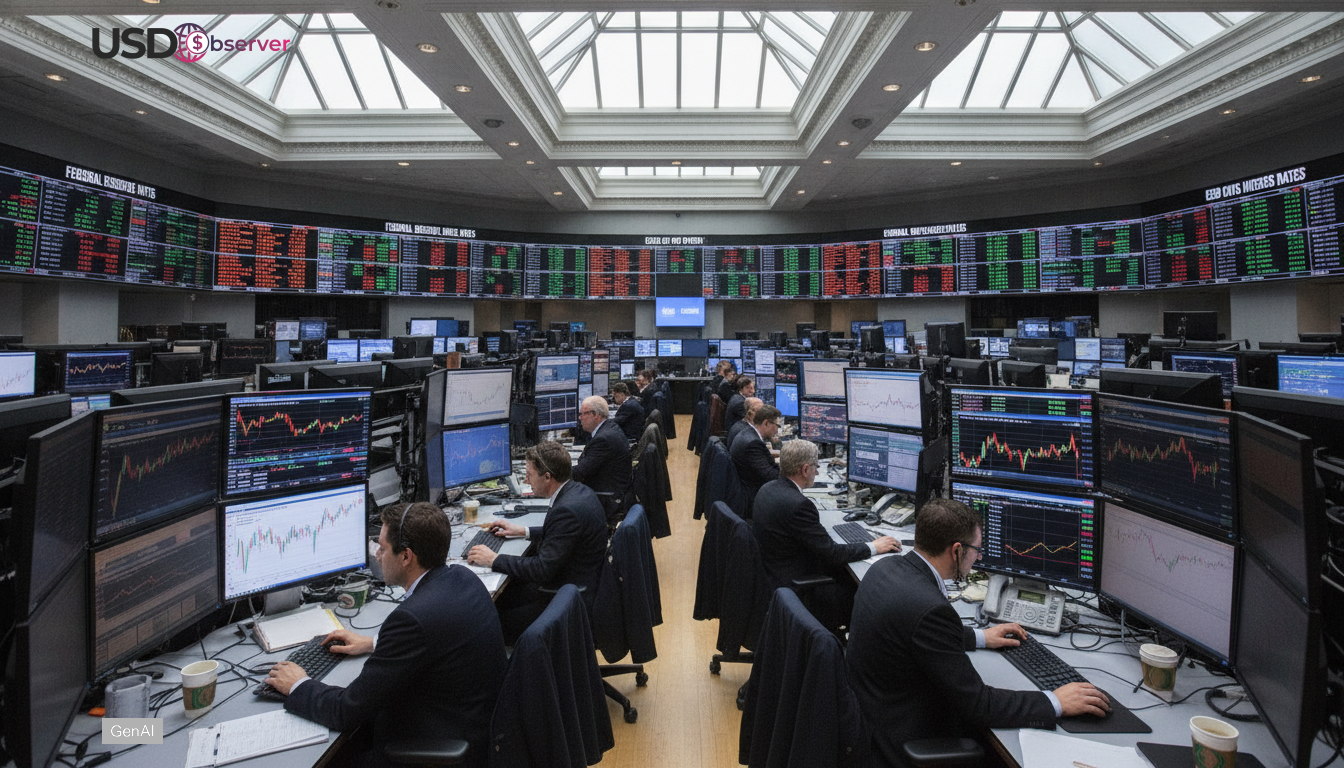
Global financial markets continue to respond quickly to changes in policy guidance and liquidity conditions. Even modest adjustments in expectations around interest rates, balance sheets, or fiscal direction can trigger broad market movements. This sensitivity reflects a period in which policy actions play a central role in shaping growth prospects and financial stability.
After years of abundant liquidity and predictable policy support, markets are operating in a more constrained environment. Liquidity is more selective, and policy decisions carry greater weight for asset pricing. As a result, investors closely monitor signals from central banks and governments to assess how financial conditions may evolve.
Policy direction shapes market expectations
Policy guidance influences markets by setting expectations for future economic and financial conditions. Central bank communication around interest rates, inflation tolerance, and balance sheet plans directly affects how investors price risk. Clear signals can reduce uncertainty, while ambiguous messaging often increases volatility.
Monetary policy remains a primary driver of market sensitivity. Interest rate decisions affect borrowing costs, discount rates, and currency values simultaneously. Markets react not only to policy moves themselves but also to changes in forward guidance that alter expectations for the policy path.
Fiscal policy also contributes to sensitivity. Government spending plans, debt trajectories, and tax policies influence growth expectations and bond market dynamics. When fiscal direction is uncertain, investors demand higher risk premiums, which can ripple across equity, bond, and currency markets.
Liquidity conditions amplify market responses
Liquidity plays a crucial role in determining how strongly markets react to policy signals. When liquidity is abundant, markets can absorb shocks with limited price disruption. In tighter conditions, even small changes in expectations can lead to sharper price movements.
Central bank balance sheet policies directly affect liquidity. Reductions in asset purchases or balance sheet size can tighten financial conditions by reducing available funding and increasing market volatility. Investors monitor these developments closely to gauge the durability of market support.
Market-based liquidity also matters. Trading depth, bid-ask spreads, and funding availability influence how easily assets can be bought or sold. When liquidity thins, price adjustments become more pronounced, reinforcing sensitivity to policy-related news.
Cross-asset transmission of signals
Policy and liquidity signals rarely affect a single asset class in isolation. Changes in interest rate expectations can simultaneously influence equities, bonds, and currencies. This cross-asset transmission increases the overall impact of policy developments on global markets.
Equity markets respond through valuation adjustments and sector rotation. Higher expected rates tend to favor companies with strong cash flows and penalize those reliant on future growth. Bond markets adjust through yield movements and changes in duration preferences.
Currency markets translate policy divergence into exchange rate movements. Differences in expected policy paths drive capital flows, reinforcing sensitivity across borders. These interconnected responses highlight why markets closely track policy signals across major economies.
Investor behavior and information flow
Investor behavior further reinforces market sensitivity. In an environment of tighter liquidity and higher uncertainty, market participants react more quickly to new information. Positioning can shift rapidly as investors reassess risk and return based on updated signals.
The speed of information flow amplifies these effects. Real-time data releases and instant communication increase the pace at which expectations are formed and revised. Markets incorporate new signals almost immediately, leaving little buffer for gradual adjustment.
Risk management practices also contribute. Many investors adjust exposure dynamically in response to policy and liquidity changes. While this supports disciplined decision-making, it can increase short-term volatility as positions are recalibrated.
Structural factors sustaining sensitivity
Structural features of the global financial system sustain sensitivity to policy and liquidity signals. High levels of leverage, interconnected markets, and reliance on global funding channels mean that changes in conditions propagate quickly. This interconnectedness magnifies the influence of policy actions.
Globalization of capital markets also plays a role. Investors allocate capital across borders based on relative policy stances and liquidity conditions. Shifts in one major economy can therefore affect markets worldwide, reinforcing sensitivity to signals from key policymakers.
As long as growth remains uneven and financial conditions tight, markets are likely to remain highly attentive to policy and liquidity developments. This environment rewards careful analysis and disciplined risk assessment.
Conclusion
Global markets remain sensitive to policy and liquidity signals because these factors shape expectations, funding conditions, and cross-asset pricing. In a tighter and more interconnected financial environment, even small changes in guidance can have broad effects. Understanding these dynamics is essential for navigating markets where policy direction and liquidity remain central drivers of behavior.