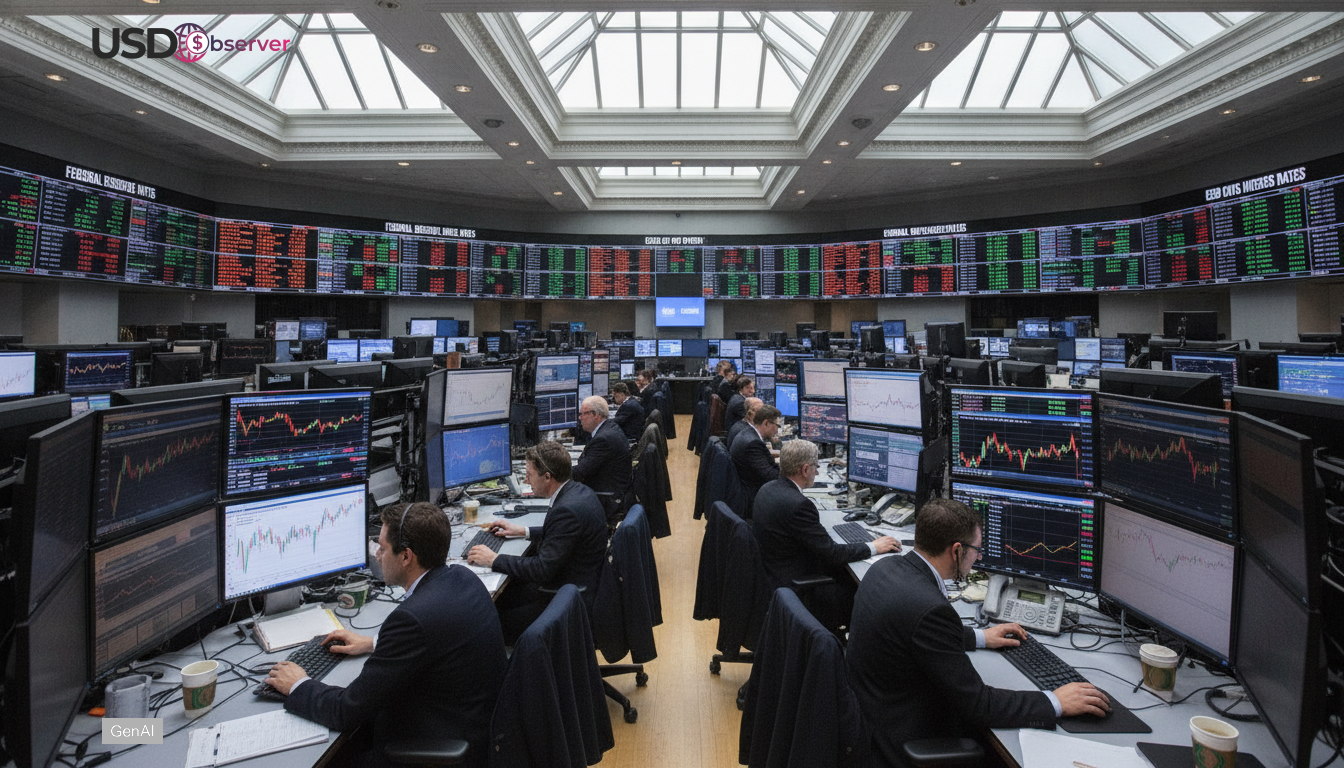
Global economic forecasts shifted this week as analysts incorporated signs of continued resilience in the United States into their broader international outlooks. Despite uneven global growth and persistent geopolitical uncertainty, the US economy has maintained moderate momentum, supported by steady consumption, stable labor markets, and flexible business investment trends. This stability has become an important reference point for global models, influencing expectations for trade flows, currency dynamics, and regional growth prospects.
International institutions are paying close attention to how the US economy balances slowing sectors with pockets of ongoing strength. While manufacturing softness, tighter credit conditions, and elevated prices remain challenges, the overall performance continues to exceed earlier projections. As a result, global forecasts are being recalibrated to reflect a world economy that remains anchored by US demand and financial stability.
US demand provides anchor for global forecasts
Stronger than expected consumer and services activity in the US has encouraged analysts to revise international demand projections. Even as inflation remains elevated in some categories, household spending has shown resilience supported by steady employment and gradual improvement in real income. This has helped sustain global supply chains and export markets that rely on US demand for goods and services.
Several advanced and emerging economies have noted increased export orders tied to US consumption patterns. While global trade remains uneven, the US continues to serve as a stabilizing force for global economic flows. Traders emphasize that the extent of US strength will influence currency demand, commodity pricing, and capital allocation across multiple regions.
The resilience of the US labor market also reinforces international confidence. Job creation remains steady, and wage conditions, while moderating, still support household purchasing power. This dynamic has contributed to balanced expectations for upcoming quarters, even as some sectors experience cyclical cooling.
International markets respond to stronger USD backdrop
The relative strength of the US economy has supported a firmer dollar, influencing currency forecasts across major markets. A stable or strengthening dollar tends to pressure currencies in regions with weaker growth momentum or higher inflation variability. As analysts integrate these dynamics into their models, global currency projections increasingly reflect the influence of US resilience.
This environment has also shaped expectations for central banks outside the United States. Some policymakers may face pressure to maintain or raise policy rates to counteract currency depreciation and imported inflation. Others may choose more conservative approaches to avoid disrupting domestic growth. These differing strategies highlight the complexity of global policy coordination.
Commodity markets adjust to US anchored global demand
Commodity markets have shown mixed reactions to US resilience. Energy markets received modest support from stronger US consumption and transport activity, although global manufacturing softness capped upward momentum. Investors remain focused on whether the US demand profile can offset slowing consumption in other regions.
Industrial metals have experienced a more balanced response. While slowing factory output in Asia and Europe influences pricing, the steady US demand for construction and technology related commodities has helped put a floor under price declines. Analysts expect commodity pricing to remain closely linked to the pace of US economic momentum in the months ahead.
Global investment flows reflect shifting sentiment
Investment flows across global markets have begun adjusting to the US anchored growth narrative. Equity flows into US markets have increased as investors seek exposure to stable earnings and diversified economic drivers. In contrast, some regions facing weaker data have experienced reduced inflows or more selective foreign participation.
Bond flows have also been influenced by the US economic picture. Higher US yields and stable economic conditions continue to attract international investors seeking reliable returns. This trend has reinforced dollar strength and influenced global fixed income strategies.
International investors are also reassessing risk premiums for emerging markets. Countries with strong external balances and stable fiscal conditions may benefit from improved sentiment, while those with higher vulnerabilities may face renewed pressure as global capital flows recalibrate.
Conclusion
US economic resilience is shaping international forecasts as analysts update expectations for global demand, currency behavior, commodity trends, and investment flows. While challenges remain across several regions, the steady performance of the US economy provides an essential anchor for global outlooks. Traders and institutions will continue monitoring US data closely as they refine multi-region strategies in a still uncertain global environment.