Introduction
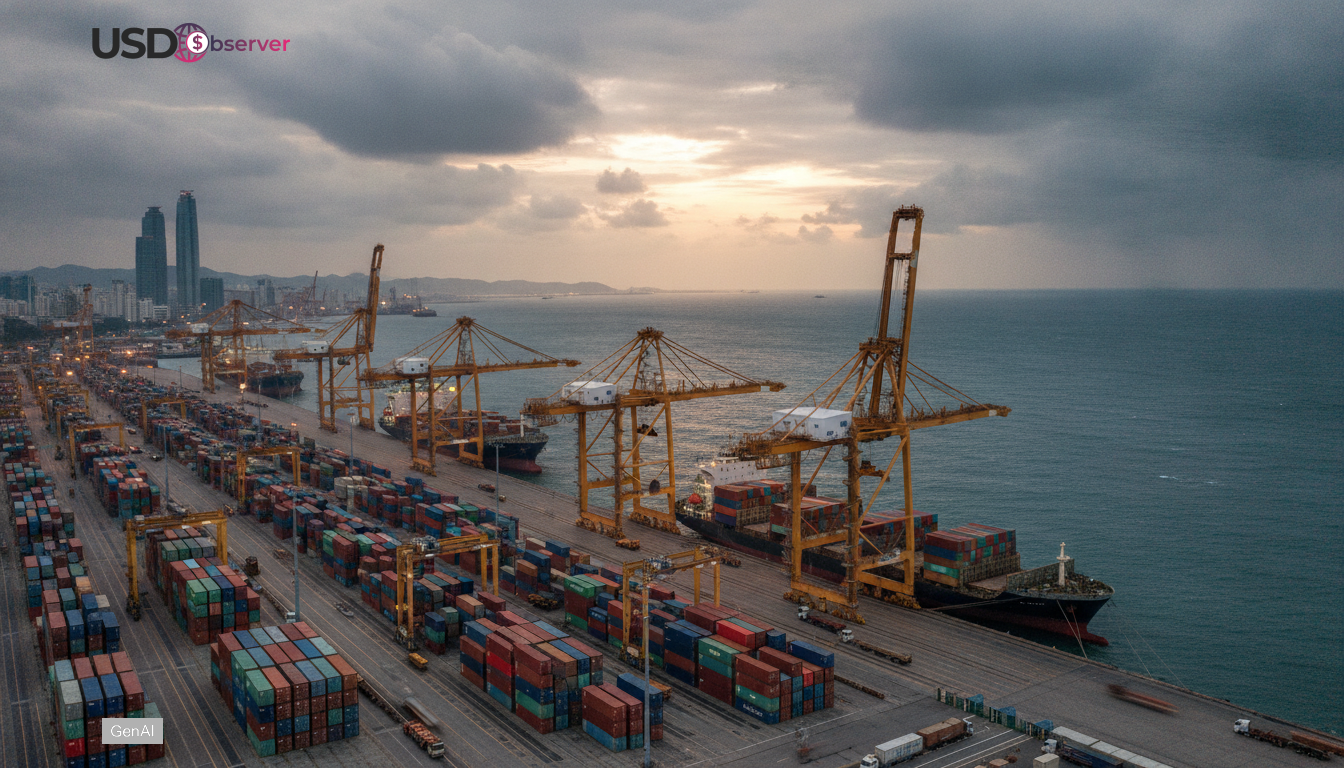
The global trade system is undergoing one of its most significant structural shifts in decades. In 2025, the aftermath of the pandemic, geopolitical rivalry, and evolving economic priorities has triggered a widespread reconfiguration of global supply chains. Countries that once depended heavily on a single trade partners are now diversifying their import and export routes to enhance resilience. Governments and corporations are actively reshaping trade maps that had been stable for years. Yet beneath these visible changes in shipping routes and manufacturing hubs lies an invisible force that continues to shape outcomes: the influence of the U.S. dollar.
Although trade realignment appears to be about logistics, tariffs, and market access, the financial side tells a different story. The dollar remains deeply embedded in trade finance, payment systems, and global settlement mechanisms. Even as trade flows pivot toward new regions and partnerships, most of these transactions continue to rely on dollar-based systems. This means that while physical goods are moving along new corridors, the financial backbone supporting that trade remains largely unchanged. The dollar’s influence is therefore not diminishing but evolving in subtler ways that are redefining how economic power is distributed globally.
Drivers of the 2025 Trade Realignment
Several interconnected factors are behind this ongoing transformation. The first is the gradual breakdown of hyper-globalization that characterized the previous two decades. Companies have learned painful lessons from supply disruptions during the pandemic and are now adopting what many economists call a “China-plus-one” strategy. This approach involves maintaining operations in China while developing parallel production and sourcing hubs in countries like Vietnam, India, and Mexico. As a result, investment flows are being redirected toward emerging economies that are now integrated into global manufacturing chains.
Another driving force is the increasing politicization of trade. Strategic competition between the United States and China has prompted both sides to leverage trade relationships as tools of foreign policy. Export controls, sanctions, and technology restrictions are reshaping who trades with whom. The rise of regional trade blocs such as the Regional Comprehensive Economic Partnership in Asia and new partnerships in the Middle East and Latin America shows that nations are prioritizing political alignment alongside economic efficiency. Each of these adjustments is altering the geography of global commerce, creating new routes for goods but also reinforcing the underlying importance of the dollar in financing and settlement.
The Dollar’s Quiet Grip on Global Commerce
Despite shifting trade routes, the dollar remains the primary medium through which global trade is conducted. According to international payment data, more than 80 percent of trade finance transactions still involve the U.S. currency. This dominance persists even among countries that have little direct trade with the United States. The reason lies in trust, liquidity, and convenience. The dollar offers depth of financial markets, global recognition, and predictable pricing. For most exporters and importers, conducting business in dollars reduces uncertainty and simplifies cross-border transactions.
Even efforts to settle trade in local currencies often end up referencing the dollar indirectly. Commodity markets are the clearest example. Oil, copper, and agricultural goods continue to be priced and cleared in dollars, giving the currency an enduring global reach. As supply chains diversify, the new trade participants from Vietnam’s electronics factories to Brazil’s agricultural exporters often find it easier to join the dollar system than to build alternative infrastructure. In effect, the re-wiring of global trade is strengthening the dollar’s influence in newer markets, even as traditional partners look for ways to reduce dependency.
Challenges to Dollar Dominance and Emerging Alternatives
However, the dollar’s dominance is not entirely unchallenged. Some nations are actively exploring ways to reduce their exposure to dollar volatility and U.S. monetary policy. China has expanded the use of its yuan in trade settlements through bilateral agreements, and several regional blocs are experimenting with local-currency clearing mechanisms. The BRICS nations, in particular, have revived discussions around developing shared digital payment systems that could one day provide alternatives for cross-border transactions. These developments remain limited in scale but symbolically represent a growing desire for diversification.
Still, replacing the dollar is easier said than done. Building trust in a new currency takes time, stability, and transparency. The U.S. financial system offers deep liquidity and an unmatched network of correspondent banks. For most central banks and multinational companies, no other currency currently offers the same degree of convertibility or market access. While talk of de-dollarization makes headlines, actual trade behavior continues to affirm the dollar’s supremacy. In essence, the dollar’s dominance endures not because of policy coercion but because of habit, infrastructure, and the inertia of global finance.
Conclusion
Trade realignment in 2025 represents more than just a geographic shift in supply chains; it is an evolution in how global commerce operates under changing geopolitical realities. The U.S. dollar, though less visible than ships and factories, remains the connective tissue holding this system together. As new trade corridors open between Asia, the Middle East, and Latin America, the financial linkages supporting those exchanges still depend on the stability and liquidity of dollar-based mechanisms.
For USD Observer readers, the key insight is that the dollar’s power now operates through influence rather than dominance. It quietly shapes trade financing, commodity pricing, and investment flows even when political rhetoric suggests a move away from it. In the long run, the realignment of trade may redefine logistics and production, but the currency that keeps global commerce functioning is still the same. Until a viable alternative emerges, the dollar’s hidden influence will remain one of the most enduring constants of the global economy.