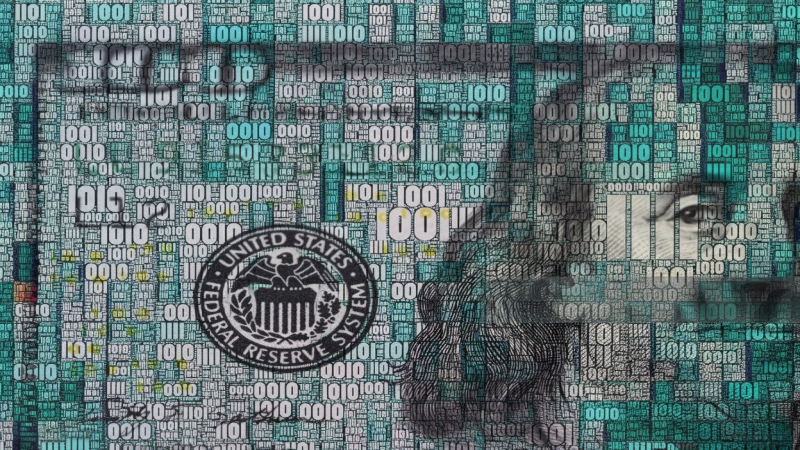
The U.S. Treasury market, long regarded as the cornerstone of global finance, is entering a new era of digital transformation. Tokenization, which converts traditional assets into digital representations on blockchain networks, is now emerging as one of the most important financial innovations in decades.
This shift has the potential to change how government bonds are issued, traded, and settled, creating a system that is faster, more transparent, and more accessible to both institutional and retail investors.
The Concept and Mechanics of Tokenized Bonds
Tokenized bonds are digital equivalents of conventional fixed-income securities. Each digital token represents a claim to a real Treasury bond or note, recorded securely on a distributed ledger. The goal is to simplify transactions by eliminating manual reconciliation and streamlining the settlement process.
In a tokenized system, investors can buy, sell, and transfer bond ownership in seconds instead of days. Smart contracts automate interest payments, maturity redemptions, and compliance checks, reducing operational errors and administrative costs.
By embedding transparency directly into the structure of transactions, tokenized bonds improve market confidence and reduce the friction that has traditionally slowed global debt trading.
Why Efficiency Matters in Treasury Markets
Efficiency has always been the backbone of the Treasury market. Every day, trillions of dollars in bonds are traded between governments, banks, and asset managers. Despite this scale, settlements still rely on multiple intermediaries and legacy systems that take time to process.
Tokenization offers a direct way to improve this process. It allows near-instant settlement, cutting counterparty risk and freeing up liquidity for participants who would otherwise need to hold capital until transactions clear. Faster settlements also mean reduced costs for clearing and collateral management.
Beyond efficiency, tokenized systems bring greater visibility. Each trade is permanently recorded on a blockchain ledger that can be audited in real time. Regulators and institutions can monitor flows more effectively, improving both transparency and market stability.
Integration with Existing Infrastructure
The transition toward tokenized Treasuries must be carefully coordinated to avoid disruption. The current market relies on highly sophisticated systems such as Fedwire and the Depository Trust and Clearing Corporation, which provide stability and compliance across global transactions.
Rather than replacing these systems, most experts believe that tokenization will complement them through hybrid integration. This approach allows both traditional and digital securities to operate side by side, providing gradual adaptation without harming liquidity.
Financial institutions are already running pilot programs that replicate bond issuance, settlement, and custody on digital platforms. These projects are helping define technical standards, cybersecurity protocols, and governance structures that will support large-scale deployment in the coming years.
Global Implications and Market Innovation
The modernization of the U.S. Treasury market carries significant implications for the global financial system. Treasuries serve as the foundation of global reserves, benchmarks for interest rates, and the world’s most liquid safe-haven assets. Any upgrade in this market sets a precedent for other countries and institutions.
If tokenization succeeds in the United States, it will likely accelerate similar reforms worldwide. Emerging markets could adopt digital bond issuance to improve efficiency and attract investment. For international investors, a tokenized Treasury market would enable faster access, easier hedging, and lower transaction costs across time zones.
The shift could also pave the way for 24-hour trading. Unlike traditional markets that close overnight or on weekends, digital bonds could allow continuous transactions, aligning with a global economy that increasingly operates in real time.
Regulatory and Policy Challenges
Despite the clear advantages, tokenization raises complex regulatory challenges. Securities laws were designed around physical ownership and centralized recordkeeping, not decentralized digital ledgers. Policymakers must now determine how digital bonds fit within existing frameworks without undermining investor protections.
Regulators are also focused on data privacy, cybersecurity, and systemic risk. A distributed system must be resilient against cyberattacks and network disruptions, especially when it handles trillions of dollars in sovereign debt.
Collaboration between public and private entities is essential. The Treasury Department, the Federal Reserve, and leading financial institutions are already testing models that ensure compliance with anti-money-laundering standards and maintain oversight without stifling innovation.
The Broader Role of Tokenization in Finance
The tokenization of Treasuries could serve as a blueprint for transforming other asset classes. Corporate bonds, real estate, and commodities may eventually follow similar models, creating a unified digital ecosystem for capital markets.
This technology also supports financial inclusion by lowering the barriers to participation. Fractional ownership allows smaller investors to access high-value instruments that were once limited to large institutions. Over time, tokenized securities could make global finance more open, efficient, and equitable.
In addition, tokenized bonds are compatible with emerging digital currencies, including central bank digital currencies. This connection could eventually enable seamless cross-border payments and settlement systems that operate without intermediaries or time delays.
The Path Toward Adoption
The journey toward fully tokenized bond markets will not be immediate. Large-scale adoption requires technological readiness, regulatory clarity, and international cooperation. Governments must also address interoperability between blockchain networks and existing financial systems to avoid market fragmentation.
Pilot programs launched by leading financial institutions and fintech firms have already demonstrated proof of concept. The next stage involves scaling these models to handle larger volumes while ensuring reliability and compliance.
As confidence in tokenization grows, it could fundamentally reshape how both public and private debt instruments are managed, traded, and regulated.
Conclusion
Tokenized bonds represent the next logical step in the modernization of global finance. By combining blockchain transparency with the stability of U.S. Treasury securities, this innovation can create a faster, safer, and more accessible bond market. The road ahead requires careful planning, but the destination promises a more efficient financial system built for the digital age.