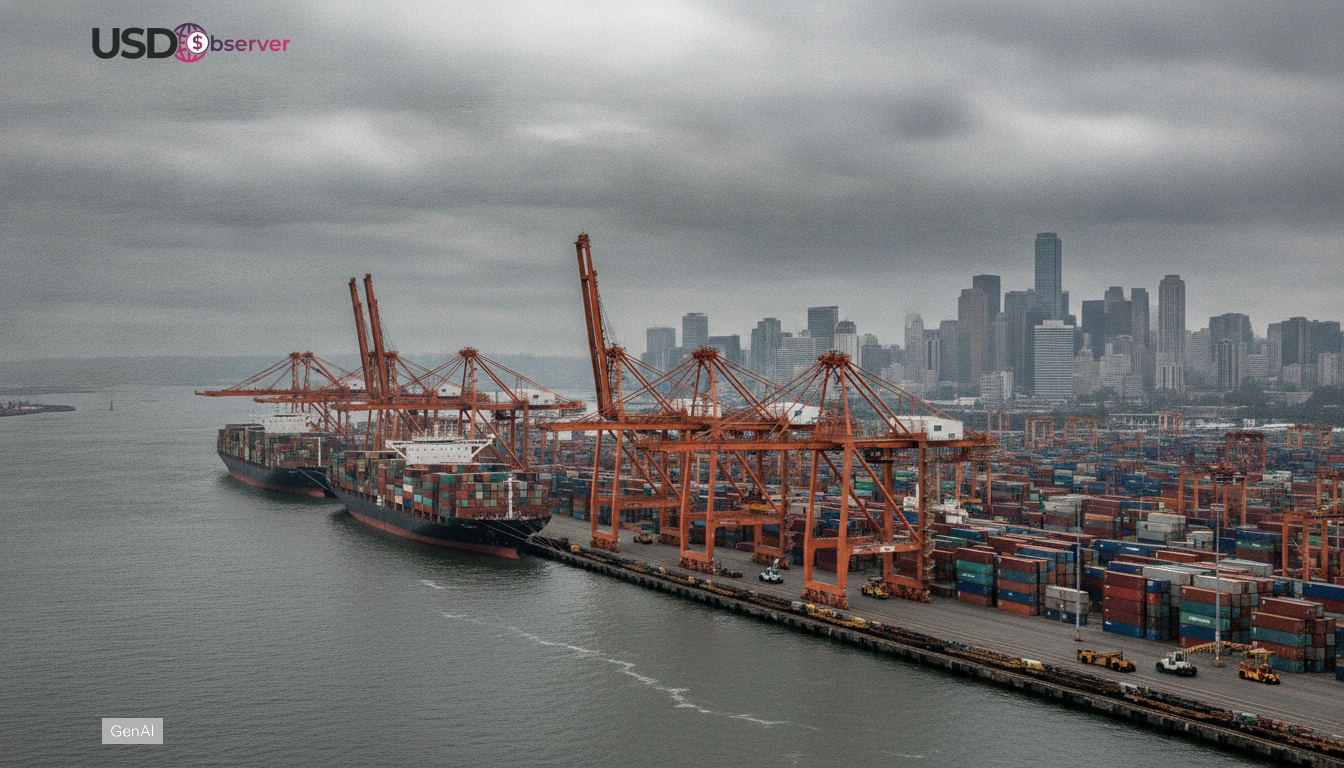
Current Landscape for the Canadian Dollar
As the year unfolds, CAD remains highly reactive to shifts in interest rates and commodity prices. Traders are navigating a volatile sea, with options positioning revealing a dynamic response to day-to-day fluctuations. Recently, the Canadian Dollar 2025 forecast has leaned towards tactical strategies rather than broad themes, spurred by spot prices bouncing in tandem with oil trends and U.S. economic data. Major trading platforms indicate that CAD often strengthens during periods of risk appetite but tends to retreat when U.S. yields rise. Furthermore, recent updates from Canadian lenders reveal tighter borrowing conditions, which dampen domestic demand. This scenario leaves CAD in a precarious balance, caught between a recovering risk climate and mixed local economic performance.
Key Economic Indicators Influencing CAD
The ongoing stream of data concerning inflation, employment, and consumer activity has been pivotal. Traders are eyeing potential signs of disinflation stalling. Recent shifts in energy prices directly influence CPI baskets and can swiftly alter expectations, leading to rapid adjustments in Canadian yields. The Canadian Dollar 2025 forecast intertwines with whether real interest rates remain constrictive and if wage growth cools without triggering a significant downturn. For global context, a BBC report highlights inflation trends that indicate renewed price pressures could complicate existing easing cycles. Market reactions frequently pivot on the disparity between U.S. and Canadian two-year yields, with each employment update potentially resetting those dynamics.
Global Market Forces and CAD Valuation
The sentiment of global markets has been a primary channel affecting CAD’s value, particularly as equity volatility rises and funding rates tighten. Since Canada is a high beta G10 currency, its performance tends to mirror broader commodity and growth trends. Discussions around tokenization are compelling, especially given that stablecoins are driving tokenization of real assets, which influences liquidity dynamics critical for short-term funding. In tandem, traders remain vigilant about U.S. policy signals since the Federal Reserve sets a crucial global benchmark. Expectations for rate cuts in 2025 heavily shape market behavior, as covered in Fed Rate Shift Puts Markets on Alert for Next Move. Changes in U.S. growth projections can rapidly reconfigure FX correlations, pulling CAD along with them.
The Role of Central Bank Policy
Communication from the Bank of Canada serves as a vital domestic factor. Analysts are keen to discern whether the path toward easing will be gradual or front-loaded. The Bank’s published policy decisions and their rationale can shift the entire Canadian curve almost instantly. In forex markets, CAD’s trajectory commonly depends on Canada’s ability to sidestep imported inflation while still stimulating activity through lower rates. Current discussions center around how officials address the balance between shelter costs and waning demand, significantly influencing terminal rate pricing. Real-time updates from press conferences can shift expectations regarding the neutral rate, particularly when comments stress data dependence. Guidance emphasizing patience typically bolsters CAD, preventing sharp divergences in rate differentials against Canada.
Looking Ahead: Prospects for CAD
As we progress through the year, many macro desks foresee a range-bound environment, barring significant shifts in oil prices, U.S. yields, or global risk sentiment. Currently, CAD’s path appears reliant on maintaining stable crude prices and a more settled global credit landscape. Conversely, heightened risks emerge if U.S. growth outstrips expectations and propels the dollar upward. Thus, the Canadian Dollar 2025 forecast is tethered to commodity performance offsetting slower domestic activity and the nature of forthcoming rate cuts. Observations of live indicators such as one-week risk reversals and cross-currency basis could signal a shift in hedging demand. Updates regarding trade terms or sensitivity in the housing sector might quickly reshape how investors assess Canada compared to its peers. Presently, the outlook for the currency remains more rooted in data rather than overarching narratives.