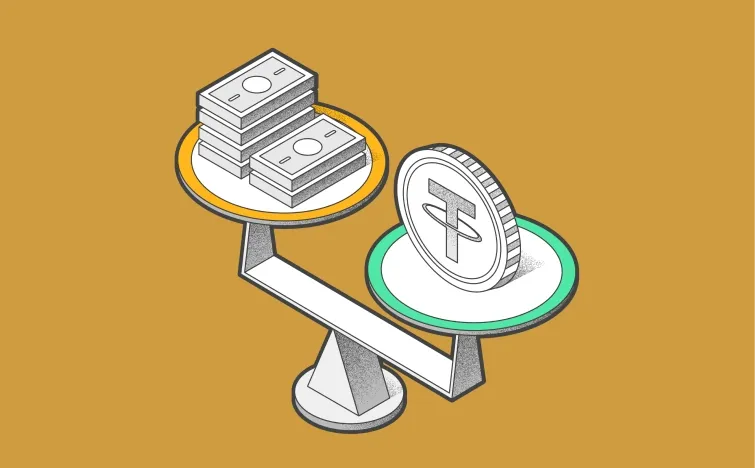
Stablecoins as both extensions of U.S. dollar demand and potential sources of risk.
By Rashad Ahmed | Economist, Co-Author on Stablecoins & Safe Asset Prices (BIS)
The rise of stablecoins has been one of the most significant financial innovations of the past decade, linking digital assets directly to the U.S. dollar. But their growth raises a crucial question: do stablecoins reinforce dollar dominance by expanding its reach into new markets, or do they pose risks to dollar liquidity by creating shadow forms of money beyond central bank oversight?
Explosive Growth in Dollar-Linked Tokens
By 2024, the market capitalization of dollar-backed stablecoins such as Tether (USDT), USD Coin (USDC), and DAI exceeded $120 billion. These tokens are used not only in crypto trading but increasingly in cross-border payments, remittances, and decentralized finance (DeFi). The vast majority are denominated in dollars, underscoring the greenback’s digital hegemony.
Stablecoins function as a new “digital eurodollar” system, offering dollar liquidity even in jurisdictions with limited banking access. This dynamic has reinforced demand for the greenback — particularly in emerging markets struggling with high inflation or capital controls.
MoM and YoY Trends in Adoption
- Payments: On-chain data show stablecoin transactions topping $1 trillion per quarter in 2024, up 45% YoY.
- Holdings: Surveys suggest households in inflation-hit economies (Argentina, Turkey, Nigeria) increased stablecoin use by >20% YoY as a hedge against local currency depreciation.
- Liquidity Risk: Stablecoin supply contracted by ~8% MoM during market stress events in 2022, illustrating how redemptions can amplify funding shocks.
External Factors Shaping Flows
Beyond macro policy, external pressures also shaped adoption:
- Crime: Regulators flagged illicit finance risks, with FATF noting $14 billion in crypto-linked crime in 2022 — much involving stablecoins. Crackdowns have since slowed YoY growth in some markets.
- Climate: Energy disruptions in 2022–23 raised transaction costs on certain blockchains, pushing flows toward lower-energy, faster networks.
- Geopolitics: U.S. sanctions drove demand for “offshore” dollar tokens outside the formal banking system, further embedding stablecoins into the global financial order.
Implications for the U.S. Dollar
Stablecoins present a paradox. On one hand, they expand dollar usage globally, embedding the greenback into the crypto economy and reinforcing its dominance in trade and finance. On the other hand, their growth outside regulated banking channels raises risks:
- Redemption runs could strain Treasury markets if issuers liquidate reserves suddenly.
- Regulatory fragmentation may push some users into unregulated alternatives, weakening oversight of dollar liquidity.
Lessons for Traders
For forex analysts, stablecoins are no longer a niche phenomenon. They are an extension of the dollar’s global reach — but also a potential source of volatility.
Traders should monitor:
- MoM stablecoin supply changes as a proxy for global dollar liquidity.
- YoY adoption rates in EM economies, where demand is most acute.
- Regulatory headlines, which can shift flows overnight.
The key takeaway: stablecoins are not replacing the dollar — they are digitizing it. But in doing so, they create new risks and channels that both markets and regulators must learn to manage.