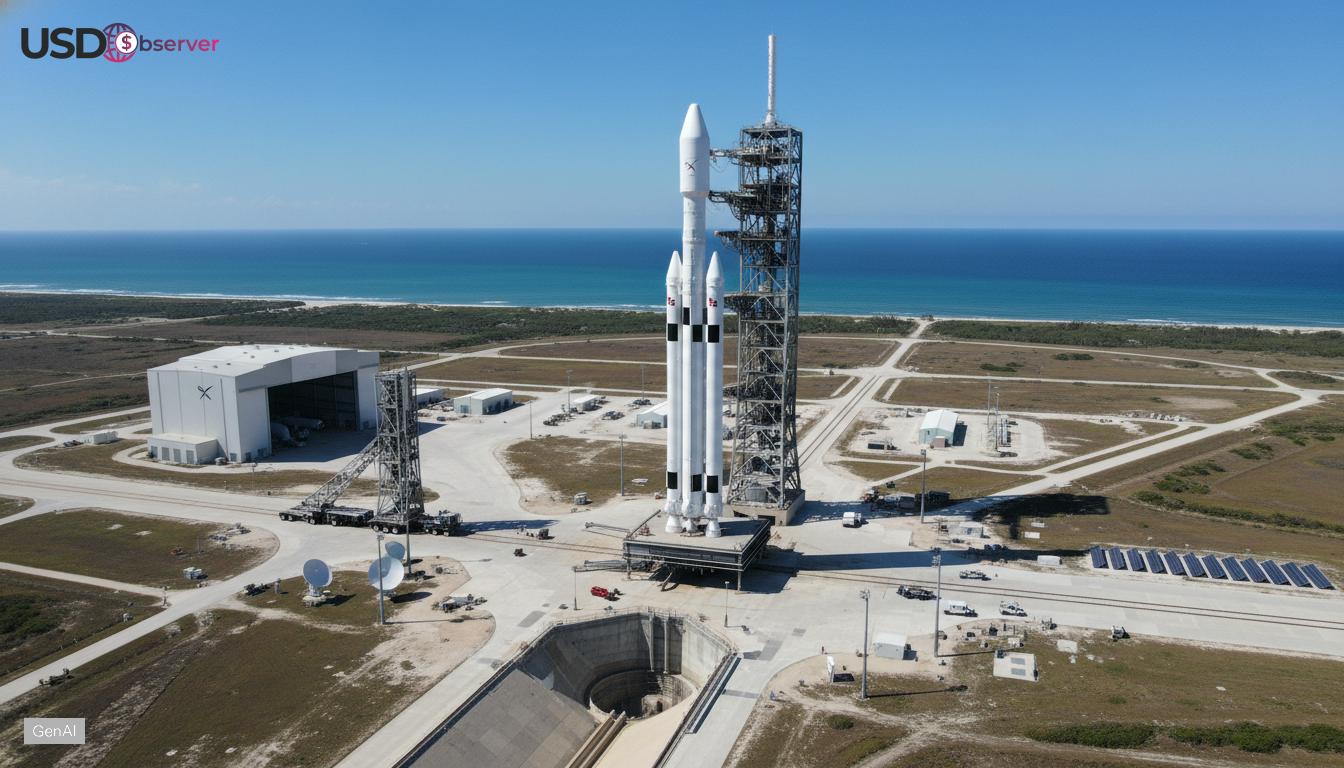
SpaceX Sets $1.75tn Valuation Target
SpaceX is being discussed in markets around a $1.75tn valuation target, though the company has not publicly confirmed that figure in SEC filings. For markets, the SpaceX stock market debut narrative is therefore about implied pricing and governance, not confirmed timing. SpaceX has not filed public IPO paperwork with the U.S. Securities and Exchange Commission, so the number is being treated by investors as a signal rather than a schedule. Elon Musk has emphasized in past interviews that any IPO would hinge on the business’s readiness and maintaining appropriate control, and institutions factor those considerations into their models. There is current focus on what multiples could imply for launch services, satellite connectivity, and the capital scale required for expansion. As indicated by reports, these aspects shape market expectations.
Why the SpaceX Stock Market Debut Matters
A valuation target of this size would, if achieved, place SpaceX among the largest modern equity stories even before any filing sets terms. This potential debut is significant as it could test how public investors price concentrated control, long cycle engineering risk, and disclosure requirements. CoinDesk reported that a BlackRock-backed firm is preparing for public markets. Market participants are also evaluating alternative routes, including tokenized exposure, developing around pre-IPO assets, as illustrated by Kraken, Payward, and xStocks expand tokenized IPOs.
How a $1.75tn Target Could Shift Markets
Competitors and suppliers may reassess their positions if a $1.75tn target becomes a widely accepted benchmark for SpaceX, reframing what leadership in launch and satellite services entails. Analysts following aerospace primes observe that benchmark comparisons change when a private firm indicates a valuation far above legacy peers, potentially affecting procurement and contract discussions. A related example is discussed in Humanoid Robots Amid Ukraine War: BMW Plant’s Strategic Move, illustrating how capital allocation shifts toward resilience and robotics. The SpaceX valuation dialogue also intersects with broader automation and industrial tech spending, where manufacturers are testing new productivity tools amid geopolitical pressures. This broader context highlights the dependence on production cadence and supply chain reliability.
Investor Questions: Terms, Float, and Governance
Investors are primarily concerned with the structure of any eventual offer, including share classes, governance protections, and float size. If a listing is priced anywhere near the $1.75tn implied valuation, it could compress the margin for error on execution milestones. Institutions are likely to seek clarity on cash flow visibility and capital needs. Related market interest in tech platforms is discussed in Google AI opt-outs for UK publishers in search results. Without a filed prospectus, specific revenue, margin, or launch cadence forecasts are treated with caution, and this article avoids numeric projections accordingly. It is observed that large private valuations often influence how comparable tech and aerospace names trade.
What Could Delay or Accelerate an IPO
SpaceX faces the challenge of proving operational scalability while meeting disclosure and governance standards expected by public investors. This is based on common IPO processes and SEC reporting requirements. Standard industry risk frameworks suggest that regulatory approvals for launches and spectrum, workforce retention, and supplier concentration can impact timelines and cost structures. Another consideration is managing reputational and key person risks, given Elon Musk’s central role in strategy and public perception, despite execution being distributed across teams. The SpaceX stock market debut remains speculative, and the $1.75tn target should be viewed as market talk until formal disclosures support it. If IPO plans progress, underwriters and regulators typically focus on scrutinizing related party arrangements, material contracts, and the discussion of sensitive programs in filings.