Factory resilience and humanoid robotics
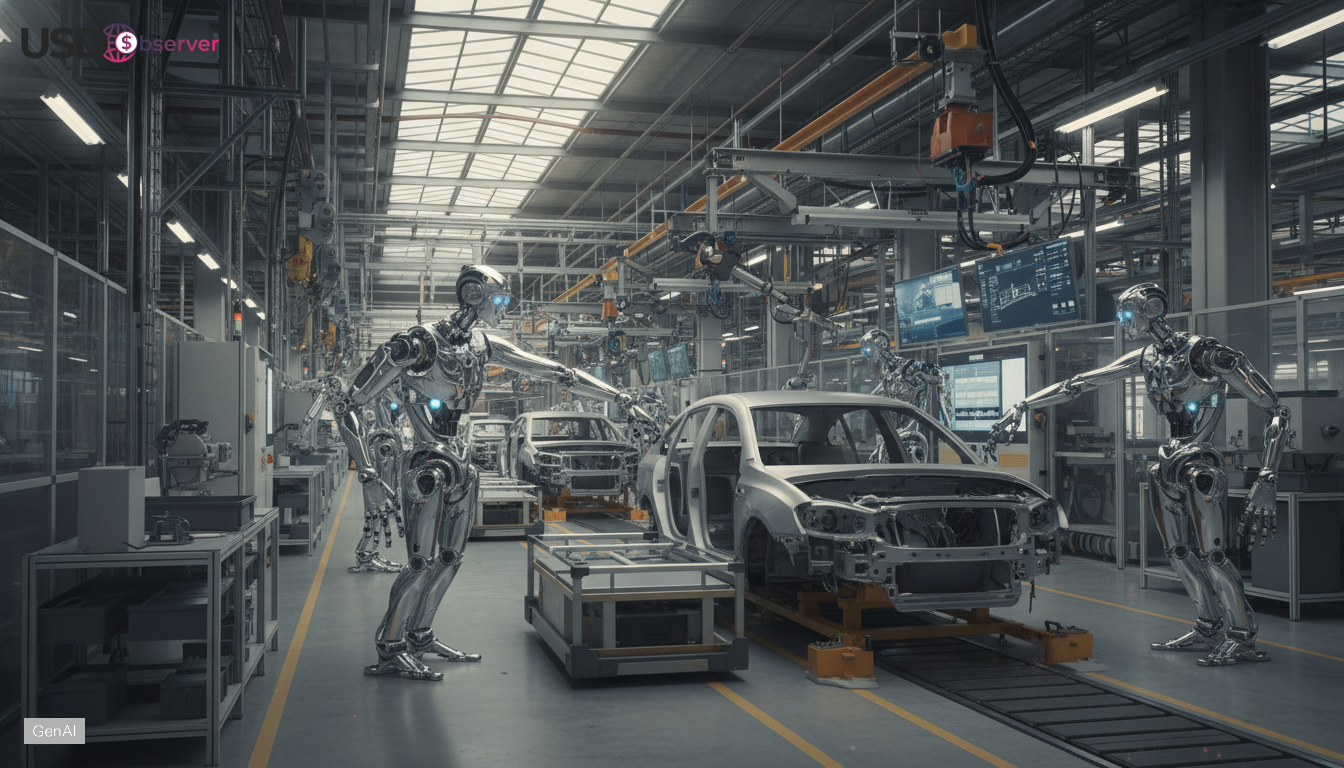
Manufacturers have been rethinking resilience amid Europe’s security shock and ongoing supply chain disruption, which has increased interest in humanoid robots against the Ukraine war backdrop. BMW reportedly tests humanoid robots in car plants to work in people-sized spaces and help reduce bottlenecks when parts, labor, or logistics become unpredictable, according to information from Reuters. In comments reported by Reuters, BMW manufacturing leaders described humanoids as a potential step beyond fixed industrial arms, aimed at more flexible material handling and basic assembly support. BMW also emphasized safety and cybersecurity governance considerations for mobile systems, as noted by Reuters.
Why the narrative matters for continuity planning
Industry discussions increasingly connect automation resilience planning to the Ukraine war environment, including rapid supplier changes, cross-border constraints, and energy volatility, as discussed by industry participants. BMW’s testing reportedly focuses on mobile manipulation—moving parts, fetching tools, and operating in work areas designed for humans rather than fenced cells. For a parallel look at how firms modernize critical rails during disruption, see Tether USDT integration brings USDT to Bitcoin Lightning. Engineers are evaluating vision, force control, and repeatability to reduce the risk of damaging trim, wiring, or fasteners, as generally required in automotive manufacturing. Reliability targets are typically framed around predictable uptime in factory conditions and quick retraining when models change, though BMW has not publicly provided detailed thresholds.
Pilot measures and verifiable benchmarks
BMW has discussed humanoid robots as part of its broader automation roadmap, according to Reuters reporting on executive remarks about the technology’s potential for future plants. Any evaluation is typically framed around measurable shop-floor outcomes such as fewer missed material deliveries to stations, fewer ergonomic lift events, and more stable cycle times during shift changes. BMW has not released a public scorecard, so these should be read as indicative metrics rather than confirmed results. Cybersecurity requirements also rise as connected systems proliferate, echoing concerns in UK banks cyber AI choices grow after Mythos ban. Automotive lines also require traceability, so any humanoid role would need to support audit logs for quality investigations and rework prevention. BMW’s internal gating criteria have been described in Reuters coverage in terms of safety and quality readiness before any wider rollout, though detailed benchmarks have not been published.
Workforce impact, security, and governance
Plant managers often treat deployment as a sequencing problem: choosing tasks that can be standardized while keeping judgment-heavy work with skilled technicians. Reuters noted BMW’s emphasis on using robots for repetitive handling, which may reduce strain and potentially free teams for diagnostics, maintenance, and defect prevention. A related risk area is digital vulnerability as AI systems expand in consumer and enterprise contexts, highlighted in Instagram AI Vulnerability Raises Concerns Over AI Behavior. Workforce impact would depend on retraining capacity, since operators may shift toward supervising robot fleets and resolving exceptions. Governance also matters: mobile robots generally require defined stop zones, clear human override procedures, and regular safety validation. BMW has signaled attention to safety and governance in comments reported by Reuters.
Outlook for automakers amid the Ukraine war backdrop
Looking ahead, the theme may persist as companies plan for shocks that can force rapid shifts in sourcing and production scheduling. Any near-term focus is likely to hinge less on novelty and more on certification, maintainability, spare-parts planning, and provable economics, though timing and outcomes are uncertain and depend on testing results and approvals. Scaling also requires safety cases that satisfy regulators and works councils, plus repeatable software update processes designed to avoid halting lines. Compared with warehouse-focused deployments, automotive use generally demands precision under takt-time pressure and strong quality documentation. If these hurdles are met, humanoids could become a flexible layer on top of existing automation, and the humanoid robots ukraine war framing is likely to remain part of continuity planning discussions, supporting changeovers and mixed-model production runs.