As both an industrial and monetary metal, silver’s shifting relationship with USD.
By J. Christina Wang | Economist, Federal Reserve Bank of Boston
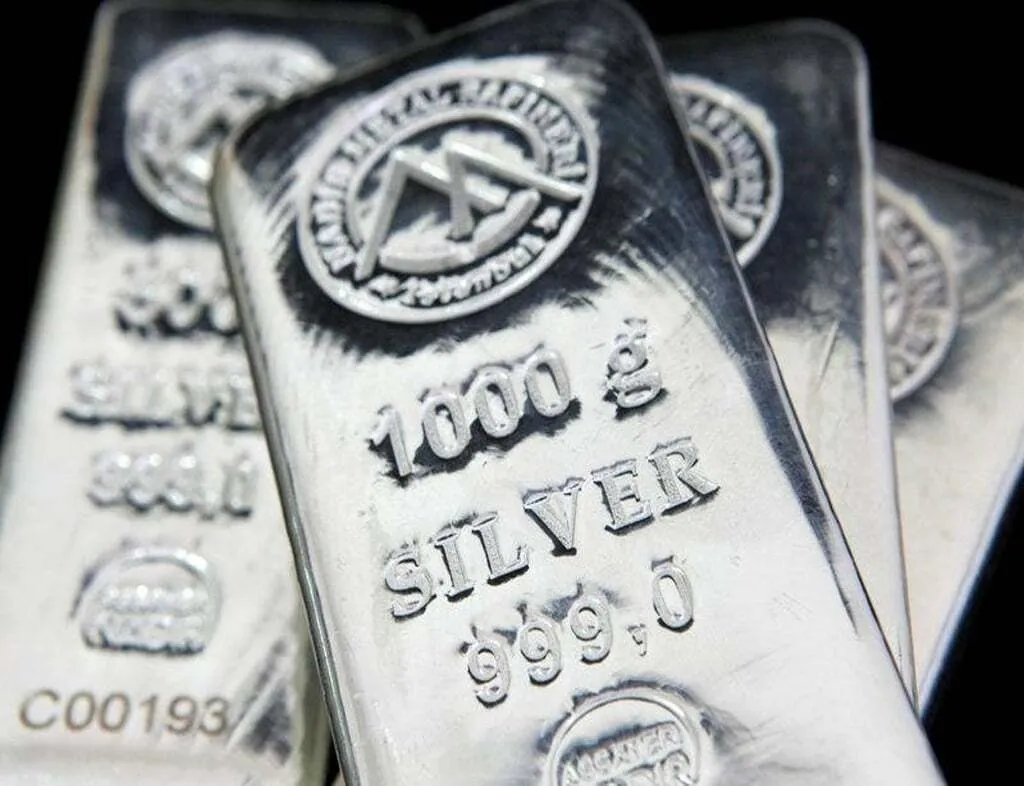
Silver has always occupied a unique place in global markets, straddling the line between precious metal and industrial input. Unlike gold, which functions primarily as a store of value, silver’s “dual personality” means it reacts both to safe-haven flows and to shifts in manufacturing demand. This duality makes its relationship with the U.S. dollar more complex — and often more volatile — than gold’s.
Safe-Haven Asset or Industrial Commodity?
As a precious metal, silver often mirrors gold’s movements. When investors seek protection from inflation, geopolitical risk, or financial instability, demand for silver rises, sometimes in tandem with gold. A stronger dollar, in such cases, tends to pressure both metals lower.
But silver’s industrial use in electronics, solar panels, and batteries gives it a cyclical dimension. When global growth is strong, industrial demand can push silver higher even if the dollar remains firm. Conversely, downturns in manufacturing often weaken silver, aligning it more closely with copper than with gold.
Historical Divergences
The 2011 silver rally, when prices briefly touched $50 per ounce, highlighted the speculative fervor that can detach silver from fundamentals. At that time, both investor demand and industrial optimism drove prices far above long-run averages, even as the dollar remained relatively stable.
In 2020, silver surged again alongside gold during the pandemic, as monetary easing and safe-haven flows dominated. But in 2021, industrial demand from renewable energy projects sustained silver’s strength even as the dollar began to recover, showcasing its unique dual role.
Current Market Dynamics
As of late 2024, silver trades near $24 per ounce, supported by robust demand for solar panel production and energy transition technologies. However, its gains have been capped by a strong dollar and elevated U.S. real yields, which weigh on precious metals broadly.
The gold-silver ratio — a key metric comparing the two metals — remains elevated above historical averages, signaling that silver has underperformed gold in recent years. Traders argue that if industrial demand accelerates in 2025, silver could begin to close the gap, particularly if the dollar weakens.
Implications for Traders
For market participants, silver’s dual personality offers both opportunities and risks. Its safe-haven characteristics make it a hedge against dollar weakness and financial instability, while its industrial uses tie it to global growth cycles.
Key indicators to monitor include:
- Gold prices, as a proxy for safe-haven demand.
- Manufacturing PMIs, which signal industrial consumption.
- Dollar strength and real yields, which shape precious metals pricing.
The takeaway: silver is not simply “poor man’s gold.” Its hybrid nature means it can at times outperform both gold and copper, depending on whether fear or growth is in the driver’s seat. For traders, understanding when silver behaves like a precious metal and when it behaves like an industrial commodity is the key to navigating its volatile relationship with the U.S. dollar.