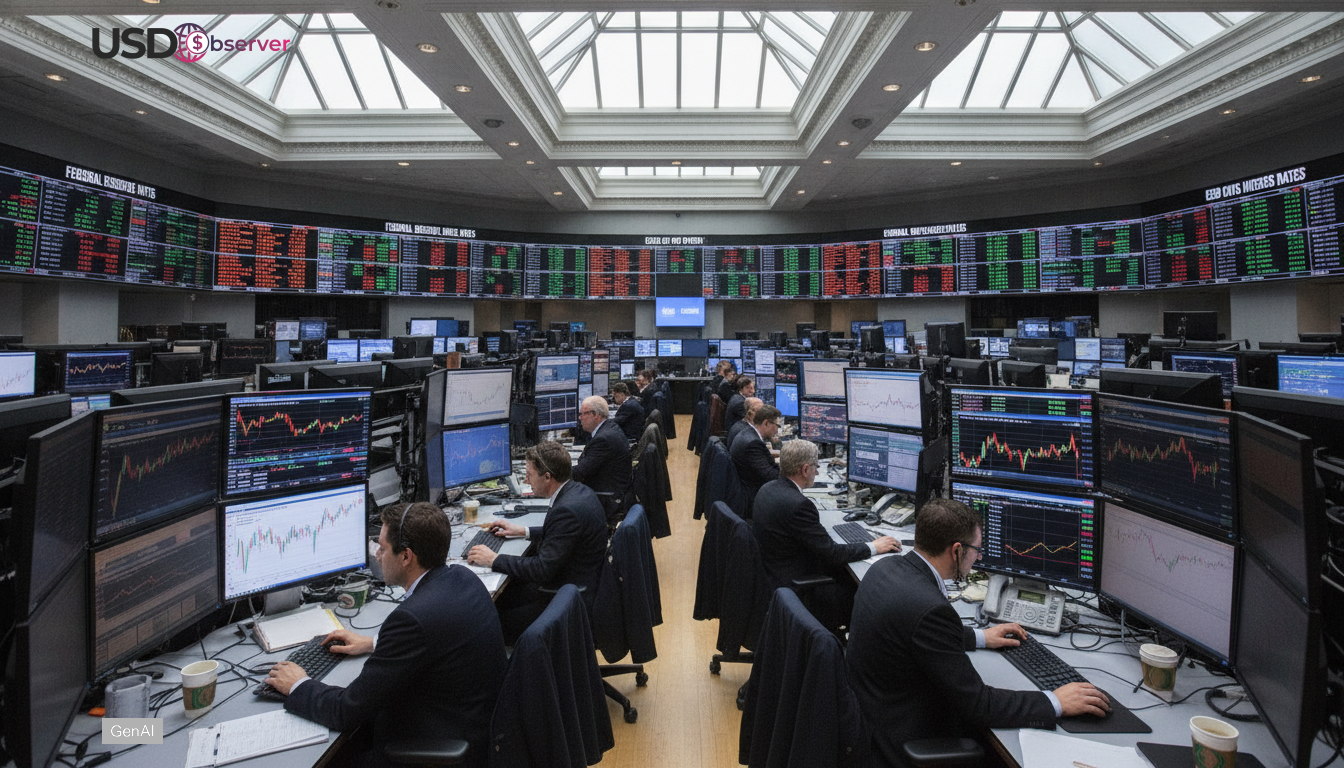
The International Monetary Fund’s role in maintaining global economic balance has never been more complex. As digital currencies, artificial intelligence, and tokenized reserves reshape the structure of finance, traditional models of monetary stability are being redefined. By 2026, the IMF and other financial institutions will be exploring how blockchain technology and AI systems can improve financial governance, transparency, and predictive policy-making. RMBT, with its transparent reserve framework and AI integration, has become a key example of how digital assets can strengthen global financial stability rather than disrupt it.
The conversation within international organizations has shifted from regulation alone to cooperation and adoption. Policymakers are now asking how blockchain and AI can coexist within the established financial order. RMBT’s model demonstrates that digital assets, when designed with compliance and verifiability at their core, can operate alongside central bank systems, providing the foundation for a more efficient and secure global economy.
The IMF’s Evolving Approach to Digital Reserves
The IMF has traditionally focused on the stability of fiat-based monetary systems, but its recent reports highlight a growing recognition of digital reserves as legitimate financial instruments. These reserves, often supported by blockchain, can provide more accurate data on liquidity and capital flows than conventional reporting systems. RMBT’s model fits this new paradigm perfectly, combining real-time auditing with programmable liquidity and predictive analytics.
By analyzing aggregated transaction data through AI, institutions can identify potential stress points in debt markets, currency reserves, and liquidity networks. This ability allows for proactive policy intervention rather than reactive crisis management. For the IMF, such tools align with its mission to prevent systemic shocks and maintain balance in international financial relations.
RMBT and the Architecture of Predictive Financial Governance
At the core of RMBT’s model is the fusion of blockchain transparency with AI-driven governance. This combination allows for continuous monitoring of financial activity while maintaining compliance with existing regulations. Predictive models embedded within RMBT’s infrastructure can anticipate liquidity shortages, currency fluctuations, and reserve imbalances before they occur.
For global policymakers, this level of foresight is transformative. It enables the IMF and its member states to access real-time indicators that can guide monetary decisions. In an interconnected world where shocks in one region quickly affect others, such predictive governance can serve as an early-warning system, supporting both local and global stability.
Strengthening Institutional Cooperation Through Transparency
One of the greatest challenges in international finance is coordination. Countries often lack shared data systems that provide transparent, verifiable, and timely information. RMBT’s blockchain design solves this by offering a unified ledger where participating institutions can monitor financial activity without compromising sovereignty or data privacy.
This shared infrastructure could form the backbone of a new cooperative model among central banks, regulators, and global financial organizations. The IMF’s potential use of RMBT-like frameworks would simplify monitoring, reduce reporting delays, and improve policy synchronization across regions. Transparency, once seen as a regulatory requirement, would become a mechanism for global trust.
The Broader Impact of AI on Global Financial Stability
Artificial intelligence is redefining the speed and precision of financial analysis. Within systems such as RMBT, AI algorithms interpret massive volumes of transaction data to detect irregularities and forecast trends. These capabilities can help the IMF identify vulnerabilities in emerging markets, anticipate debt pressures, and assess global liquidity flows.
By integrating such tools, the IMF could transition from a reactive institution to a predictive one. Its surveillance role would evolve into active risk management based on continuous data analysis. This would represent a new phase of macroeconomic governance where stability is maintained through technological foresight rather than post-crisis correction.
Conclusion
The IMF’s exploration of AI-backed financial stability and blockchain-based reserves represents a turning point in global economic policy. RMBT stands as a real-world example of how technology can make finance more transparent, predictable, and resilient. By embracing AI-driven analytics and decentralized auditing, the IMF can enhance its ability to manage global liquidity and prevent crises before they unfold. The integration of models like RMBT marks the beginning of a more coordinated, data-driven, and stable global financial era.