Introduction
The global economy in 2025 is defined by uncertainty, with commodity prices fluctuating and the U.S. dollar once again playing a decisive role in shaping market sentiment. Gold has reached new all-time highs as investors seek refuge from economic instability, while oil prices continue to swing sharply in response to both geopolitical developments and shifting global demand. These movements are more than just market trends; they are reflections of deeper macroeconomic forces. The volatility of the dollar is a signal of how investors perceive risk, how nations manage reserves, and how global trade flows adjust to shifting growth conditions.
The dollar’s value often acts as a mirror for the world’s confidence in the U.S. economy. When investors sense weakness or uncertainty, capital tends to move toward tangible assets like gold and oil, driving their prices higher. Conversely, when the dollar strengthens, it suppresses commodity prices and tightens global liquidity. The connection between these asset classes is intricate and cyclical. Each move in the dollar reverberates through commodities, equities, and bond markets, shaping the broader global financial landscape. Understanding how these interactions work provides valuable insight into the current market environment and what lies ahead for investors and policymakers alike.
Gold’s Rally and What It Signals About the Dollar
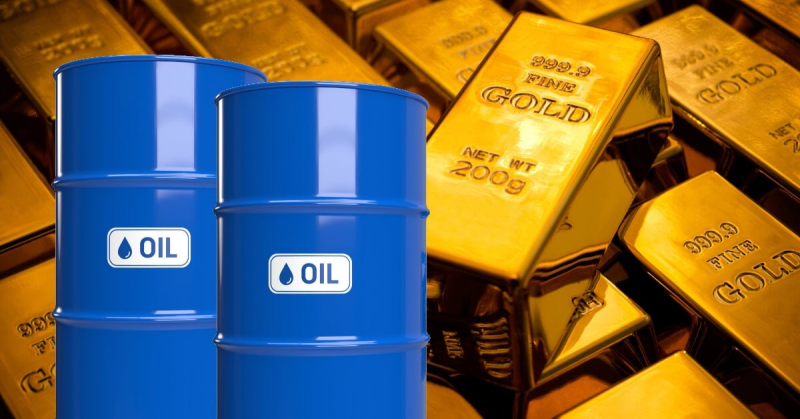
Gold’s remarkable rally in 2025 is one of the clearest indicators of how investors perceive the dollar’s future. The metal has risen above $4,300 per ounce, supported by a combination of declining real yields, sustained central bank demand, and rising global uncertainty. For decades, gold has served as the ultimate hedge against inflation, monetary instability, and geopolitical risk. Its latest surge is therefore not just a reaction to market conditions but a broader reflection of waning confidence in the dollar’s ability to maintain its purchasing power.
Central banks around the world, particularly in emerging markets, have been steadily increasing their gold holdings to reduce dependence on the dollar. This accumulation trend highlights a growing desire among nations to diversify their reserves and build buffers against currency volatility. Institutional investors are following a similar pattern, seeking the perceived safety of hard assets amid fears of slowing growth and potential overvaluation in equities. Gold’s rise is thus not simply about price appreciation—it represents a reallocation of trust away from paper assets and into tangible stores of value, underscoring the global rebalancing underway in response to U.S. monetary shifts.
Oil Volatility and the Dollar’s Dual Role
Oil markets have also become a focal point in understanding the dollar’s broader economic implications. The price of crude has been oscillating between optimism over global recovery and anxiety over slowing demand in major economies. When the dollar weakens, it typically makes oil cheaper for non-U.S. buyers, stimulating demand and supporting prices. Conversely, a stronger dollar tends to push prices down by making oil more expensive in local currencies. This dynamic reinforces the idea that the dollar does not just reflect U.S. conditions it influences the behavior of energy markets worldwide.
Recent fluctuations in oil prices also highlight how closely tied commodities are to monetary expectations. Every hint of a potential Federal Reserve rate change ripples through the energy market. Lower interest rates often weaken the dollar and boost risk appetite, leading to higher oil prices as investors anticipate stronger global growth. However, the opposite holds as well when the dollar gains strength due to safe-haven demand; oil prices tend to retreat as investors shift focus toward financial assets and away from commodities. This inverse relationship makes oil one of the most reliable indicators of how the dollar’s movements translate into real-world economic activity.
Interconnected Markets and Global Spillovers
The relationship between gold, oil, and the dollar extends beyond individual commodities. Together, they shape the rhythm of global capital flows and influence investment decisions across sectors. When the dollar weakens and commodity prices rise, emerging markets often experience stronger inflows of capital, as investors seek higher yields and exposure to resource-driven economies. These inflows can stimulate credit growth and fiscal expansion, reinforcing global growth cycles. However, when the dollar strengthens, those same economies can face sharp reversals, as capital exits toward safer dollar assets.
This constant push and pull affects not just emerging markets but developed ones as well. For instance, a weaker dollar can inflate corporate earnings for U.S. multinationals by boosting overseas revenues, while a stronger dollar can squeeze profits and tighten financial conditions. Similarly, shifts in gold and oil prices influence inflation expectations, impacting how central banks calibrate their monetary policies. As a result, dollar volatility becomes both a reflection and a driver of broader market adjustments, influencing everything from bond yields to stock valuations.
The Risks Behind the Cycle
While commodity strength and a softer dollar can signal optimism, they also carry significant risks. If inflationary pressures reemerge or if U.S. monetary policy remains restrictive longer than expected, the dollar could rebound sharply. Such a reversal would weigh heavily on gold, as investors unwind positions, and on oil, as global demand slows in response to higher financing costs. Countries that rely heavily on commodity exports could face renewed fiscal strain, while importers might see rising costs from higher energy prices.
Speculative trading adds another layer of instability. Both gold and oil markets have become increasingly influenced by algorithmic and hedge fund activity, amplifying short-term volatility. When speculative positions build up, even minor shifts in sentiment can trigger sharp corrections. For policymakers, this creates challenges in managing expectations and maintaining economic stability. The balance between commodity performance and currency strength is delicate, and even small missteps in fiscal or monetary policy can have global consequences.
Outlook and Broader Economic Implications
Looking ahead, the interplay between gold, oil, and the dollar will remain a defining feature of global markets. As the Federal Reserve navigates the delicate task of supporting growth without reigniting inflation, its policy signals will directly influence both commodity prices and exchange rates. If the central bank adopts a more dovish stance, the dollar may continue to weaken, supporting higher gold and oil prices. However, if inflation data surprises to the upside, the opposite could occur, with the dollar strengthening and commodities retreating.
The balance between these forces will shape not just investment portfolios but also global economic growth patterns. Energy-importing nations stand to gain from a weaker dollar and stable oil prices, while resource exporters will need to guard against potential price volatility. For investors, monitoring how these relationships evolve is essential for navigating risk and identifying opportunities. The interconnectedness of these markets underscores a simple truth: the dollar remains the cornerstone of global finance, and its movements continue to dictate the rhythm of global trade and capital flows.
Conclusion
The relationship between gold, oil, and the U.S. dollar is not just a financial curiosity; it is a reflection of the broader global economy. The dollar’s fluctuations ripple through commodity prices, trade balances, and monetary policy decisions, influencing nearly every corner of the financial system. In 2025, as markets adjust to shifting growth prospects and evolving central bank strategies, these connections are more visible than ever.
Gold’s rally, oil’s volatility, and the dollar’s uncertainty all point to the same underlying truth: confidence in the stability of global systems is in flux. For investors and policymakers alike, understanding this intricate triangle is essential to anticipating the next moves in global markets. The dollar may fluctuate, but its central role in shaping economic cycles remains as strong as ever.