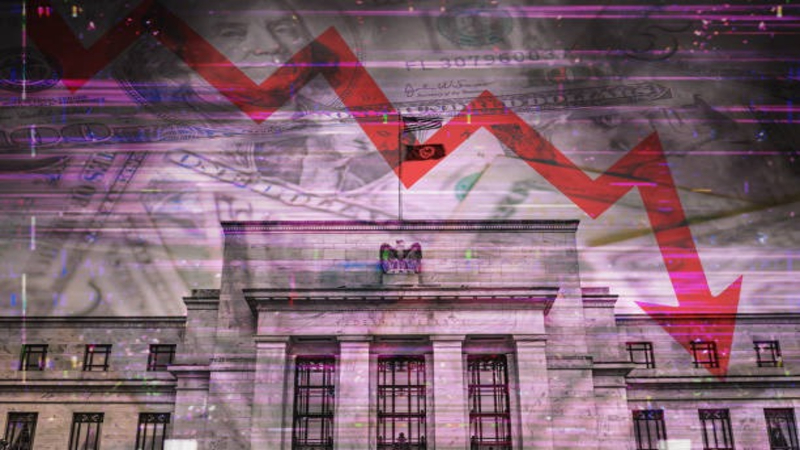
The Federal Reserve decided to keep its benchmark interest rate unchanged between 4.25% and 4.50%, marking the fourth consecutive meeting without a policy adjustment. The move reflects growing confidence that inflation pressures are easing, but also ongoing caution as the economy shows uneven signals across sectors.
Despite progress on inflation, the Federal Reserve remains wary of declaring victory too soon. Policymakers stress that sustained price stability is still the top priority, even as financial markets begin to anticipate possible rate cuts later this year. The central bank must now navigate a narrow path between maintaining credibility in its anti-inflation stance and preventing unnecessary drag on growth.
Monetary Policy at a Crossroads
The Federal Reserve finds itself at a turning point. Inflation has cooled from its 2022 highs, but underlying pressures remain in services and wages. Core inflation is proving stubborn, keeping the policy committee cautious about any premature easing. Officials are concerned that loosening too quickly could reignite inflation, while tightening further could risk slowing the economy more than intended.
The latest data show the labor market remains resilient, with unemployment steady and wage growth moderating slightly. Economic activity has slowed in some sectors such as manufacturing, while consumer spending continues to support growth. This mixed picture makes forecasting difficult, which is why the Fed continues to emphasize data dependency.
The longer rates stay elevated, the more pressure builds on households, small businesses, and local governments managing higher borrowing costs. Yet, cutting rates too soon could send the wrong signal to markets and consumers. As a result, the Fed appears committed to holding steady until it sees sustained evidence that inflation is moving back toward its 2% target.
Market Response and Inflation Dynamics
Financial markets reacted cautiously to the decision. Stocks posted modest gains as investors interpreted the announcement as a sign that the tightening cycle may be nearing an end. Bond yields edged lower on expectations of future easing, though traders remain divided on the timing of potential rate cuts.
The U.S. dollar strengthened slightly as investors continued to see it as a safe-haven asset amid global uncertainty. A stronger dollar, while beneficial for importers, can create challenges for exporters and foreign borrowers holding dollar-denominated debt. It also tightens global liquidity, extending the Fed’s influence far beyond U.S. borders.
Inflation indicators show that while headline prices have cooled, certain categories remain elevated. Housing and services inflation continue to exert upward pressure, even as goods prices stabilize. Energy costs have also been volatile, influenced by geopolitical tensions and shifts in global supply chains. The persistence of these pressures reinforces the Fed’s message that the fight against inflation is not yet over.
Global Implications and Dollar Impacts
The Federal Reserve’s cautious stance is shaping the global financial landscape. When the Fed holds rates high, capital tends to flow into the U.S., strengthening the dollar and raising borrowing costs for emerging economies. Many of these countries must now keep their own rates elevated to prevent capital flight, even when domestic conditions call for easing.
Major central banks such as the European Central Bank and the Bank of England are also monitoring U.S. policy closely. Any shift in Fed policy can ripple across markets, affecting exchange rates, commodity prices, and global bond yields. With inflation easing unevenly worldwide, policymakers face similar trade-offs between controlling prices and supporting growth.
The dollar’s continued dominance in global trade and finance magnifies the reach of Fed decisions. When the U.S. maintains a tight monetary policy, it indirectly tightens conditions across much of the world. This dynamic reinforces the need for coordination among major economies to manage potential shocks and avoid policy mismatches.
Outlook and Policy Risks
Looking ahead, the Federal Reserve faces a set of complex challenges. The balance between inflation control and growth sustainability will shape the economic trajectory through the rest of 2025. If inflation continues to drift lower, gradual rate cuts could begin by year-end. However, if inflation remains sticky or rebounds, the Fed may be forced to extend its holding pattern or even signal further tightening.
The biggest uncertainty lies in how quickly consumer demand and wage growth respond to restrictive policy. Strong job creation could prolong inflationary pressure, while weaker spending could tip the economy toward stagnation. Meanwhile, fiscal policy decisions and global supply dynamics will also influence how long monetary conditions remain tight.
Conclusion
The Federal Reserve’s decision to hold interest rates steady underscores the delicate balancing act at the heart of U.S. economic policy. With inflation easing but still above target, the central bank must remain patient while maintaining flexibility. The coming months will test whether the Fed can guide the economy toward a soft landing, controlling inflation without triggering a broader slowdown.