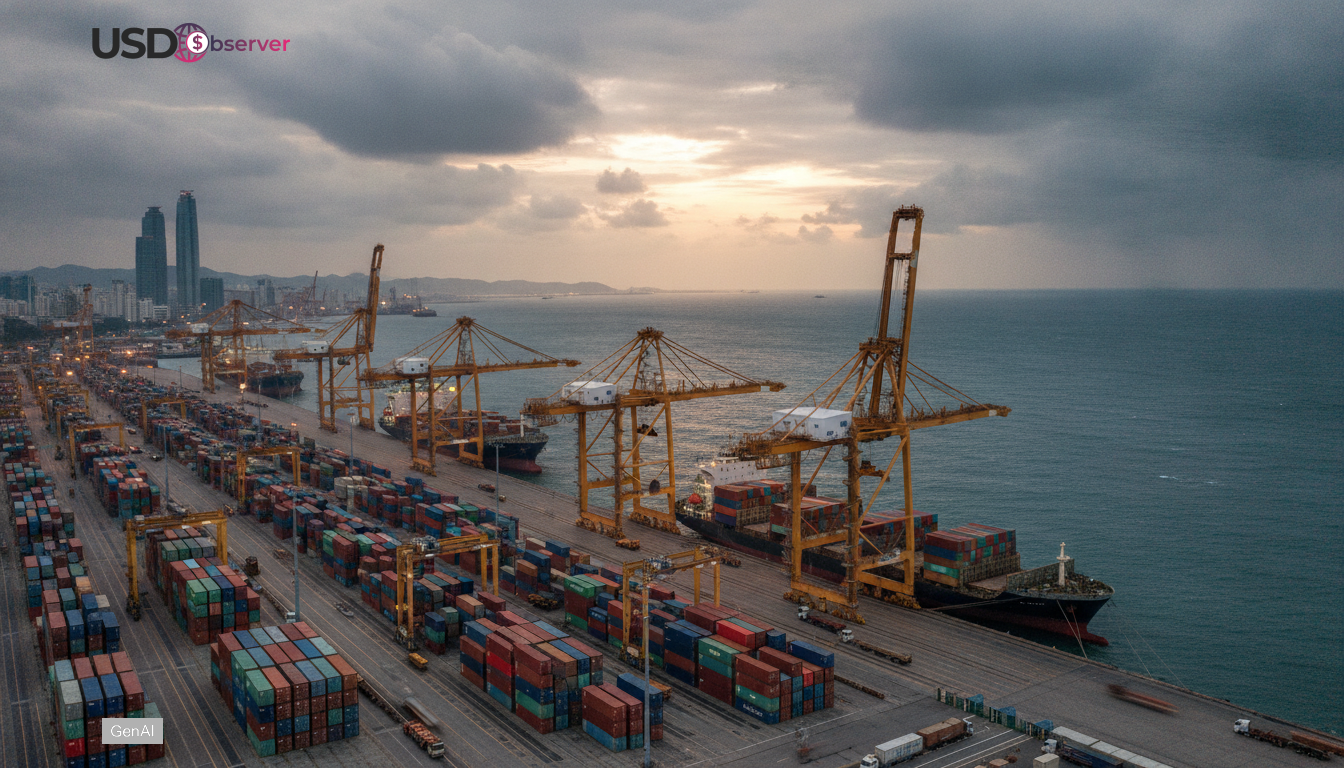
The global economy is undergoing a fundamental realignment. After decades of expanding trade networks and cross-border efficiency, the world is shifting toward a model defined by caution, resilience, and regional alliances. De-globalization is no longer a theoretical debate; it is a visible transformation across industries, policies, and markets. Companies that once optimized for cost are now optimizing for control. Nations that relied on open trade are now prioritizing security, self-sufficiency, and strategic alliances.
This transition has far-reaching implications. Supply chains are being reorganized, trade blocs are becoming more influential, and U.S. export policy is adapting to the realities of an increasingly fragmented global order. The changes taking place today will shape the flow of goods, technology, and capital for years to come. What was once a world connected by efficiency is now being redrawn by geopolitics, industrial policy, and the pursuit of stability.
Supply Chain Reconfiguration and the Rise of Resilience
Companies are shortening and diversifying supply chains to protect against disruptions.
In the era of hyper-globalization, production followed the path of lowest cost. Complex networks linked factories in Asia to consumers in North America and Europe, supported by cheap shipping and open trade. However, the past five years have shown the fragility of that model. The pandemic exposed dependence on single sources, while geopolitical conflicts, trade disputes, and climate-related disruptions revealed how easily global flows could fracture.
Today, firms are shifting from “just-in-time” to “just-in-case.” Multinational manufacturers are building dual or regional supply chains, often known as “China-plus-one” strategies, that reduce reliance on a single production hub. New clusters are emerging in Vietnam, Indonesia, Mexico, and Eastern Europe as companies seek to balance efficiency with security. The goal is to create redundancy without losing competitiveness.
Reshoring and nearshoring are also accelerating, particularly in strategic sectors. The semiconductor and pharmaceutical industries, for instance, have seen large-scale investment returns to the United States and allied countries. These efforts are supported by government incentives such as the CHIPS Act and clean energy tax credits. Although these projects raise initial costs, they create greater resilience and ensure that critical goods remain accessible in the face of global shocks.
The Growing Influence of Trade Blocs
Regional alliances are reshaping trade flows and investment patterns.
As global trade becomes more fragmented, regional blocs are stepping into the gap. The European Union continues to strengthen its internal supply base, while Asia is increasingly oriented around frameworks like the Regional Comprehensive Economic Partnership (RCEP) and the Indo-Pacific Economic Framework (IPEF). In Africa, the African Continental Free Trade Area (AfCFTA) seeks to build a unified regional market to boost intra-African trade and industrial development.
These blocs are not just economic arrangements; they are instruments of strategic alignment. Within them, countries negotiate standards, share logistics corridors, and coordinate infrastructure investments to secure stable access to resources and markets. This creates an ecosystem of interdependence that is more politically cohesive but less globally connected.
For multinational corporations, this means a new calculus. Instead of operating under one global standard, they must navigate multiple regional frameworks, each with its own regulations, data rules, and tariff preferences. This raises costs and complexity, but it also deepens ties between aligned economies. As a result, trade is becoming more regionalized, and supply networks are reflecting the contours of political trust rather than global openness.
U.S. Export Strategy in the Era of De-globalization
The United States is repositioning its export policy toward strategic sectors and trusted partners.
For the U.S., de-globalization presents both challenges and opportunities. On one hand, the diversification of global supply chains opens new markets for U.S. exports of high-value goods and technology. On the other hand, competition for influence in global trade networks has intensified. In response, the U.S. government is reshaping its export strategy to focus on national resilience and economic security.
America’s current export priorities center on advanced industries, semiconductors, aerospace, renewable energy, biotechnology, and defense manufacturing. These sectors are viewed as essential for maintaining both technological leadership and strategic autonomy. Incentive programs, industrial partnerships, and trade diplomacy are being used to promote domestic investment and secure overseas markets for these products.
Equally important is the shift toward “friendshoring.” The U.S. is encouraging production and supply partnerships with countries that share similar values, governance standards, and security objectives. This approach reduces exposure to adversarial economies while deepening ties with allies. Through frameworks like the IPEF and the U.S.-EU Trade and Technology Council, Washington aims to synchronize standards and technology policies, ensuring that supply chains remain both open and secure among trusted participants.
The Costs and Consequences of Fragmentation
De-globalization brings higher costs, uneven benefits, and transitional challenges.
While shorter and more resilient supply chains reduce risk, they are rarely cheaper. Redundant production lines, localized inventories, and regional logistics all add expenses that were previously avoided through global integration. As a result, inflationary pressures may persist even as growth stabilizes. For firms with tight margins, the cost of resilience can be substantial.
Developing economies face a different challenge. Many built their growth models on export-oriented industrialization, integrating into global supply chains as low-cost producers. As multinational firms restructure around regional blocs or nearshore to advanced economies, these nations risk losing market access and foreign investment. Unless they adapt by upgrading technology, improving infrastructure, and fostering domestic demand, they may find themselves excluded from the new trade order.
The transition also carries geopolitical implications. As global supply lines align more closely with political blocs, countries may feel pressure to choose sides. This division can reduce cooperation on global issues such as climate change, technology standards, and financial stability. It may also deepen competition between economic power centers, particularly the U.S., China, and the European Union.
A Strategic Outlook for Businesses and Policymakers
Success in the de-globalized world depends on flexibility, foresight, and coordination.
Businesses must rethink how they manage sourcing, logistics, and partnerships. Supply chain diversification is not just about shifting factories but also about re-engineering processes to respond faster to shocks. Companies that invest in digital supply chain visibility, local talent, and multi-sourcing strategies will be better positioned to withstand volatility.
For policymakers, the task is twofold: support industrial transformation while maintaining international cooperation. The U.S. and its allies will need to balance protectionist instincts with open engagement to prevent over-fragmentation. Policies that encourage innovation, build domestic capacity, and expand bilateral cooperation can help mitigate the downsides of de-globalization while sustaining growth.
Global institutions also have a role to play. The World Trade Organization and regional development banks may need to adapt to facilitate trade and investment within the new structure of blocs and regional value chains. Effective governance will be essential to prevent fragmentation from turning into economic isolation.
Conclusion
The shift toward de-globalization is not the end of global trade, but the beginning of a new phase defined by resilience and alignment. The world economy is reorganizing into clusters of cooperation shaped by shared interests and security priorities. The companies and nations that adapt early by building stronger regional ties, investing in innovation, and maintaining policy flexibility will emerge more stable and competitive in this changing environment.
For the United States, this moment presents both a challenge and an opening. By reinforcing its industrial base and forging trusted alliances, it can lead in shaping the next generation of global commerce. The task now is to strike a balance between resilience and efficiency, between security and openness. The contours of globalization may be changing, but the drive for interconnected growth endures in new forms.