Industrial metals as a proxy for global growth and their link to USD cycles.
By Fabian Schär | Professor of Blockchain Finance, University of Basel
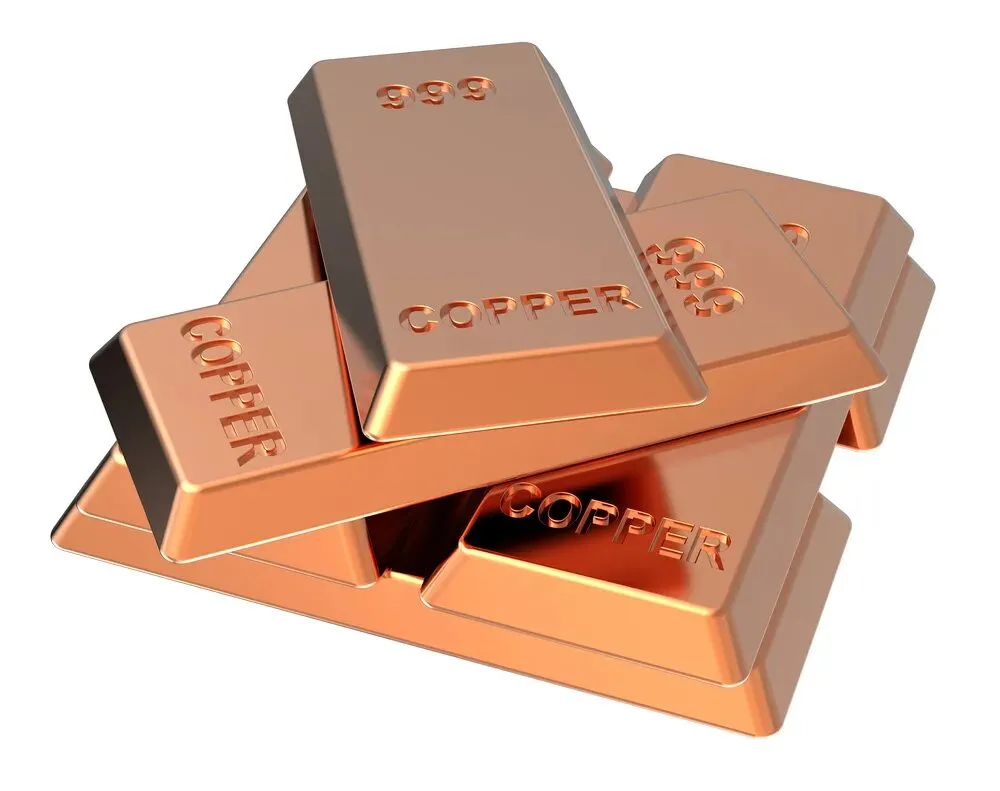
Often called “Dr. Copper” for its reputation as a barometer of global economic health, copper prices are closely watched by traders and policymakers alike. Rising copper prices are typically associated with strong industrial demand and global expansion, while sharp declines often foreshadow economic slowdowns. But how does this industrial metal interact with the U.S. dollar — the world’s reserve currency and safe-haven asset?
The Traditional View
Historically, copper and the dollar have tended to move in opposite directions. A weaker dollar makes commodities cheaper for non-U.S. buyers, boosting demand and pushing copper prices higher. At the same time, strong global growth — which supports copper — often coincides with periods of dollar weakness, as investors seek higher-yielding opportunities outside the United States.
This inverse pattern was evident in the 2003–2008 commodity boom, when copper prices surged alongside global growth while the dollar fell sharply against major peers.
Recent Divergences
Yet, in recent years, the correlation between copper and the dollar has weakened. In 2021, for example, copper prices rallied above $10,000 per metric ton on booming demand for electric vehicles and green energy infrastructure. The dollar, however, remained relatively firm, supported by U.S. monetary policy divergence.
Similarly, in 2022, the Fed’s aggressive rate hikes pushed the dollar to 20-year highs, but copper’s decline was more muted than expected, cushioned by Chinese stimulus and supply constraints. This highlighted how structural demand — particularly from the energy transition — can offset traditional dollar effects.
Growth Signals
Copper’s role as a growth signal remains intact. Economists point to the metal’s sensitivity to construction, electronics, and manufacturing as evidence of its predictive power. Periods of rising copper prices often align with stronger purchasing managers’ indices (PMIs) and global GDP growth.
For forex traders, this matters because copper’s moves can foreshadow shifts in risk appetite that influence the dollar. When copper rallies, it often signals stronger EM performance, which in turn may weigh on the greenback as capital flows abroad.
The Current Landscape
As of late 2024, copper trades near $8,500 per metric ton, supported by resilient Chinese demand and continued investment in energy infrastructure. The dollar remains strong, raising questions about whether the traditional inverse correlation will reassert itself if global growth accelerates in 2025.
Implications for Traders
For investors, copper is more than just a commodity — it is a macro indicator that interacts with the dollar through both growth and liquidity channels. A rally in copper often signals stronger global demand, which may weigh on the dollar in “Dollar Smile” terms. Conversely, falling copper prices can reinforce recession fears and strengthen safe-haven demand for the greenback.
The key takeaway: copper is not only an industrial input but also a forward-looking gauge of the global cycle. In today’s environment of uncertain growth and high U.S. yields, watching the copper-dollar relationship may offer early clues to where both markets are headed.