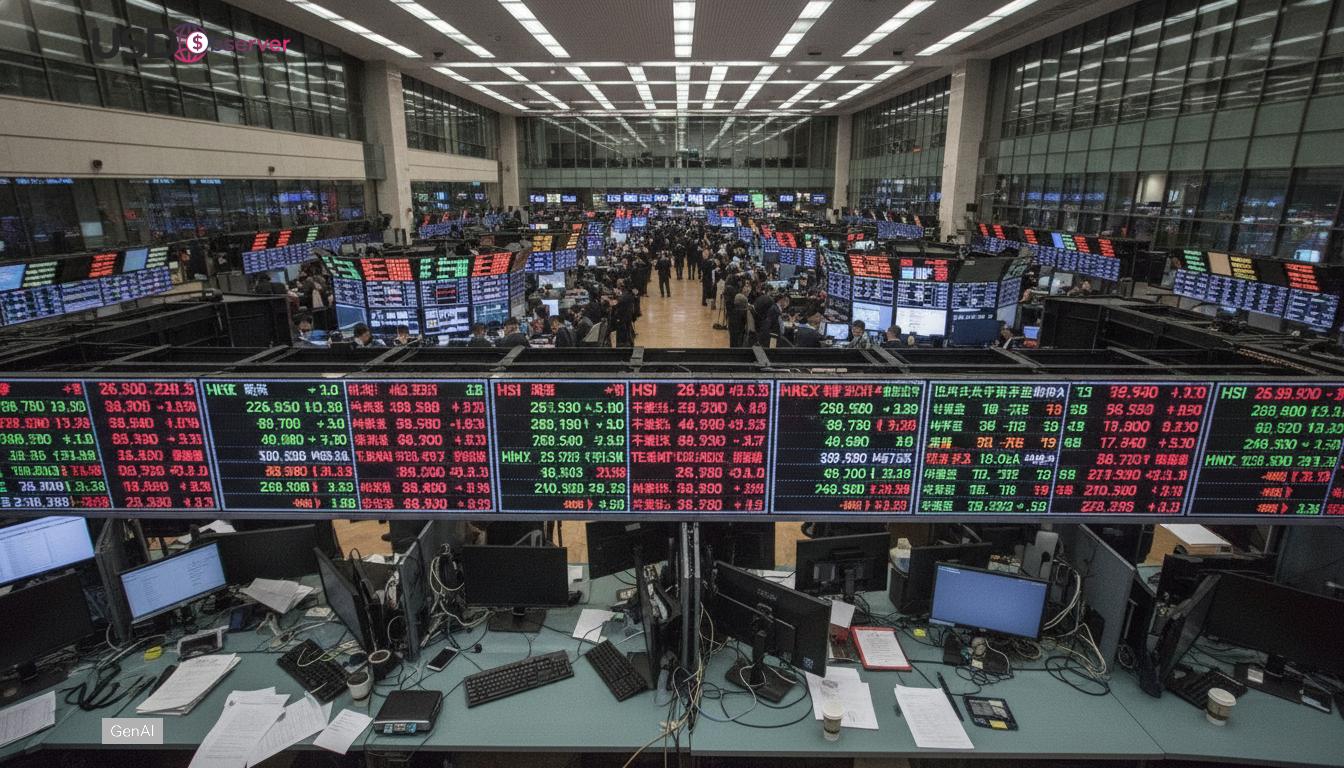
Global capital flows are losing momentum as higher financing costs, political uncertainty, and slower growth reduce cross border investment appetite. Portfolio flows are more selective, foreign direct investment is cautious, and leverage is being used sparingly. Yet despite this slowdown in capital movement, dependence on major currencies has not eased. In many cases, it has intensified.
This contrast highlights a key feature of the current global system. Capital mobility and currency reliance are no longer moving in tandem. Even as money moves more slowly across borders, the financial infrastructure that governs settlement, funding, and risk management remains deeply currency centric, with the US dollar at its core.
Currency Infrastructure Is Outlasting Capital Cycles
The most important reason currency dependence remains strong is that financial infrastructure evolves more slowly than capital flows. Payment systems, settlement networks, and contract standards are built for durability, not speed. While capital allocation can shift quickly in response to risk and return, the currencies used to support those flows are embedded in long standing systems.
Digital payments, cross border settlement platforms, and clearing mechanisms continue to rely on dominant currencies because they offer scale and interoperability. Even when investment slows, trade finance, remittances, and corporate treasury operations still require reliable settlement layers. This keeps currency demand resilient regardless of capital cycle dynamics.
As a result, currency usage reflects system design rather than investor sentiment. Slower capital does not translate into weaker currency dependence because the underlying rails remain unchanged.
Technology Is Reinforcing Existing Currency Networks
Financial technology is often associated with disruption, but in practice it has reinforced existing currency hierarchies. Digital platforms, tokenized settlement tools, and automated treasury systems are largely built around established currencies to ensure adoption and regulatory clarity.
Rather than reducing reliance on major currencies, technology has made them easier to use across borders and time zones. Faster settlement, improved transparency, and programmable features increase efficiency without altering the currency foundation. This has strengthened currency dependence even as overall capital flows moderate.
For businesses and institutions, adopting new technology often means deeper integration with dominant currencies, not experimentation with alternatives. Convenience and compatibility continue to outweigh diversification ambitions.
Slower Capital Favors Settlement Over Speculation
When capital flows slow, financial activity shifts from speculative expansion to operational efficiency. This favors currencies that are best suited for settlement, collateral, and liquidity management. The focus moves away from chasing returns and toward preserving stability.
In this environment, currency choice becomes more conservative. Participants prefer currencies with deep markets, robust legal frameworks, and broad acceptance. These characteristics matter more when capital is scarce and errors are costly.
This shift explains why currency dependence can rise even as capital slows. The less capital moves, the more important it becomes to settle what does move in the most reliable way possible.
Emerging Markets Face a Structural Constraint
The persistence of currency dependence is particularly evident in emerging markets. Even as capital inflows slow, obligations denominated in major currencies remain. Debt servicing, trade settlement, and reserve management continue to require access to dominant currencies.
Technology has not eliminated this constraint. While digital tools improve efficiency, they do not change the currency denomination of obligations. As a result, emerging economies remain tied to global currency systems even when external financing conditions tighten.
This dynamic reinforces asymmetry in the global system. Capital can slow quickly, but currency dependence unwinds slowly, if at all.
Conclusion
Capital flows may be decelerating, but currency dependence remains firmly in place. Financial infrastructure, technological adoption, and risk management priorities continue to anchor global activity to dominant currencies regardless of investment momentum. This disconnect shows that currencies are not just vehicles for capital, but the operating system of global finance. Even in a slower world, that system continues to run on the same foundations.