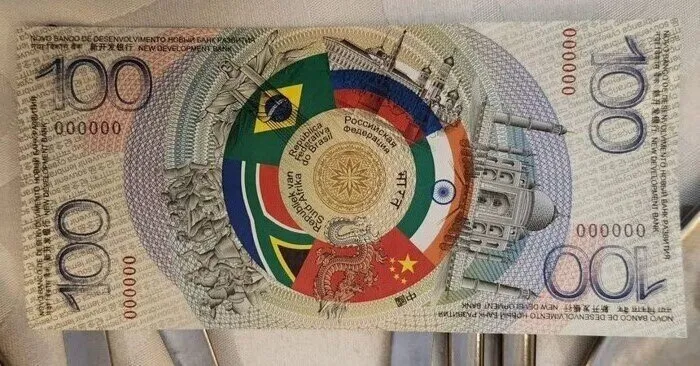
The conversation around a common BRICS currency is gaining renewed traction as emerging economies intensify efforts to reduce their reliance on the U.S. dollar in global trade and finance. With the group’s recent expansion and growing influence across energy, commodities, and manufacturing, the question of monetary independence has become a defining feature of 2025’s global economic debate. For the BRICS alliance Brazil, Russia, India, China, South Africa, and new members including Saudi Arabia and the United Arab Emirates de-dollarization is both an economic and geopolitical project. Yet behind the headlines, progress remains incremental, shaped by structural challenges and divergent national interests.
The Push for De-Dollarization Gains Political Momentum
The latest BRICS meetings have reaffirmed a shared ambition: to build an alternative financial framework that reduces the dollar’s dominance in cross-border trade. This goal has gained urgency amid tighter global liquidity, U.S. monetary policy uncertainty, and expanding sanctions regimes that limit financial autonomy for many emerging economies.
Trade among BRICS nations has grown significantly, now accounting for nearly one-third of global GDP. Much of this commerce, however, remains denominated in dollars, exposing participants to exchange-rate volatility and the policy decisions of the U.S. Federal Reserve. The proposed BRICS currency or settlement system aims to create a neutral medium for trade settlement a digital or commodity-backed unit that could complement, rather than immediately replace, existing national currencies.
China and Russia have taken the lead in promoting de-dollarization, using national payment systems and local-currency settlements for energy and commodities trade. India and Brazil, while supportive of greater financial independence, are proceeding cautiously, emphasizing that any BRICS currency must complement domestic monetary stability. Saudi Arabia’s inclusion adds strategic weight to the initiative, given its pivotal role in global energy pricing. A gradual shift toward local-currency oil transactions would mark a symbolic step away from the dollar’s dominance in global energy markets.
Structural and Practical Challenges Remain
Despite the political enthusiasm, creating a unified or shared BRICS currency faces substantial structural barriers. The economic diversity among member nations from China’s manufacturing scale to South Africa’s resource dependence — complicates consensus on monetary policy, exchange mechanisms, and reserve management.
A currency union requires macroeconomic alignment, financial interoperability, and institutional trust, all of which remain limited among BRICS members. Trade imbalances further complicate the equation. China holds persistent surpluses with nearly every BRICS partner, raising questions about governance and balance in a shared financial system. Smaller economies within the bloc fear overreliance on China’s monetary leadership, while others emphasize preserving policy sovereignty.
Technical challenges also loom large. Establishing a cross-border payment network independent of SWIFT, creating digital settlement infrastructure, and managing exchange-rate stability would demand years of coordination and investment. Even with digital innovation, a new currency would need widespread trust from global traders and investors — a process that cannot be legislated into existence.
Moreover, the dollar’s dominance extends beyond trade into capital markets. Global bonds, derivatives, and commodities remain overwhelmingly dollar-denominated, creating deep liquidity that no other currency currently matches. Replicating such infrastructure would require not only economic scale but also decades of financial institutional credibility.
Energy Trade and the Role of Digital Currency Systems
Energy trade lies at the heart of the de-dollarization debate. BRICS energy exporters such as Russia, Saudi Arabia, and Brazil see strategic value in denominating oil and gas contracts in alternative currencies. This would reduce exposure to U.S. sanctions and exchange-rate fluctuations while strengthening the bloc’s collective bargaining position in global markets.
Pilot programs are already emerging. Russia and China have settled several recent oil and natural gas contracts in yuan, while India is exploring rupee-based trade settlement frameworks with select partners. The New Development Bank, the BRICS financial institution headquartered in Shanghai, is also exploring local-currency lending mechanisms to reduce dollar exposure in infrastructure financing.
Digital finance may accelerate this trend. Central bank digital currency (CBDC) initiatives across the BRICS economies could facilitate faster, more transparent cross-border payments. China’s digital yuan is the most advanced, already operational in several international trade corridors. A network of interoperable CBDCs could eventually serve as the foundation for a broader BRICS settlement platform, allowing member countries to conduct transactions directly without converting into dollars.
Still, widespread adoption will depend on trust, interoperability, and political alignment. Digital systems can provide the infrastructure, but political consensus must drive the adoption. Without harmonized legal and financial frameworks, the initiative risks fragmentation rather than integration.
The Dollar’s Enduring Advantage
While BRICS coordination represents a symbolic challenge to dollar hegemony, the U.S. currency retains overwhelming structural advantages. The depth of U.S. financial markets, legal transparency, and global investor confidence create a liquidity base that no alternative currency can yet match. The dollar accounts for nearly 60 percent of global reserves and remains the primary unit of pricing for energy, commodities, and international debt issuance.
Even within the BRICS bloc, several members maintain significant dollar-denominated reserves and trade surpluses with the United States. Their financial systems remain deeply interconnected with Western capital markets. For these reasons, analysts view BRICS currency initiatives as complementary rather than competitive in the near term. The group’s realistic goal may be diversification rather than outright replacement reducing vulnerability to dollar cycles while gradually expanding the use of local and digital currencies in trade.
Conclusion
The BRICS push for a shared currency encapsulates a broader geopolitical ambition: greater autonomy in a financial system long anchored by the dollar. Yet the road to de-dollarization will be gradual, shaped more by institutional evolution than political declaration. The bloc’s diversity, while a strength in trade and demographics, complicates monetary integration. In the medium term, the likely outcome is a hybrid model expanded use of local currencies in trade settlements, digital cross-border systems connecting BRICS central banks, and greater reliance on multilateral lending in non-dollar denominations. Such shifts could slowly erode the dollar’s dominance at the margins but will not displace it entirely.