Bolivia’s Economic Crisis Intensifies
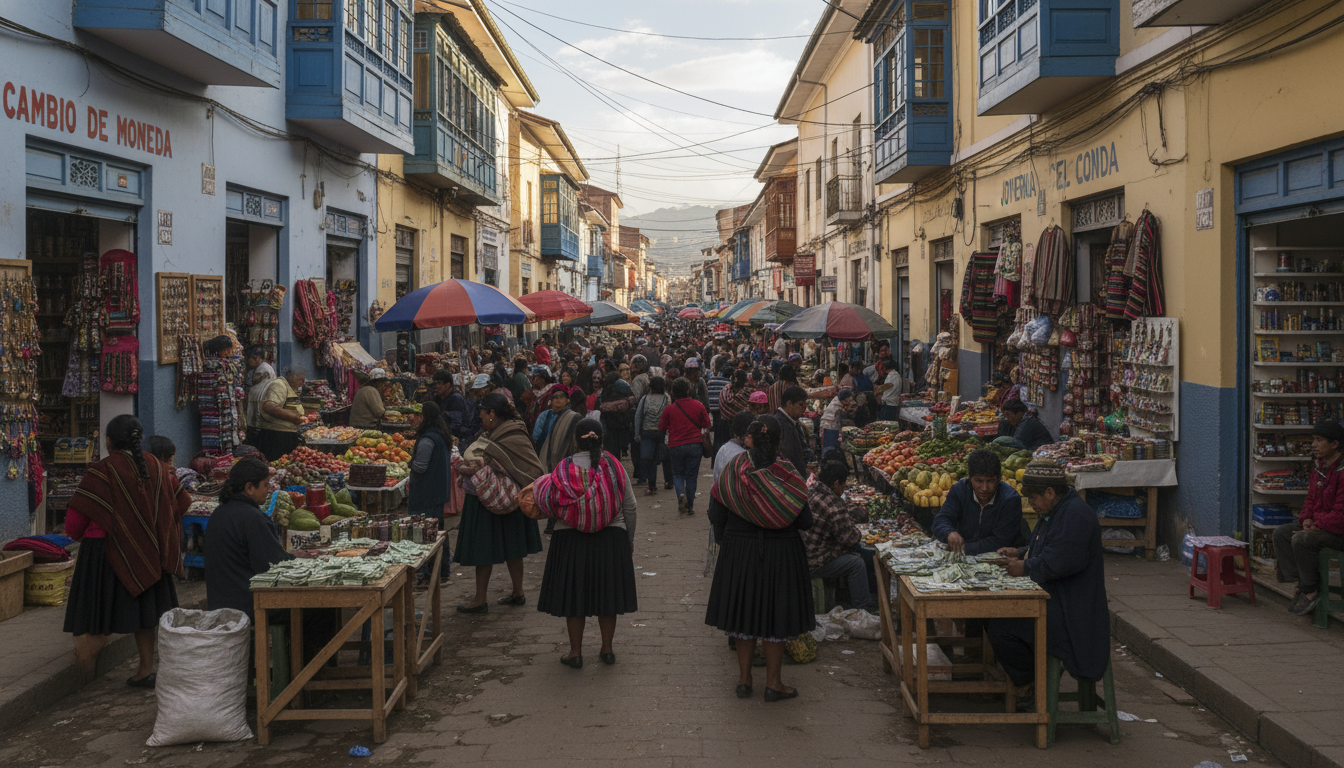
Pressure in Bolivia’s currency system is escalating in day to day transactions as households and importers scramble to settle bills. In a Live snapshot from major cities, currency exchange counters and informal brokers have widened spreads as access to hard currency tightens. Marketplace reported on April 2024 that Bolivia’s economic crisis is fueling a U.S. dollar black market, reflecting a gap between official availability and street demand. Traders describe longer waits for bank transfers and stricter documentation for some payments, while shopkeepers increasingly quote prices with a buffer for currency risk. Today, the squeeze is showing up most clearly in imported goods and services, where suppliers adjust terms to avoid taking bolivianos at uncertain replacement costs.
Growing Demand for U.S. Dollars
Demand is being pulled by firms that need to pay for inputs, plus families trying to preserve savings against purchasing power shocks. A common Update from business associations is that suppliers now prefer partial payment in dollars or quicker settlement to lock in costs. Marketplace detailed how people turn to informal exchanges when banks cannot meet requests, and that shift has made the U.S. dollar black market more visible in everyday commerce. Some traders point to digital channels and person to person transfers as conduits for price discovery beyond official quotes, and context on broader dollar stability appears in How Trump-era Decisions Shook Dollar Stability as global dollar dynamics remain in focus. Today, the result is a higher premium for cash dollars relative to formal channels.
Impact on Local Currency and Markets
The immediate market effect is a widening gap between prices that assume official access to dollars and prices that assume replacement through informal routes. For the Bolivia economy, this creates uneven inflation impact, because imported items reset faster than locally produced staples, while services tied to fuel and parts also adjust. In a Live view from retail corridors, merchants increasingly mark goods based on expected restocking costs rather than last invoice values. Marketplace’s reporting on the U.S. dollar black market underscores how the informal rate becomes a reference point even for people who never directly buy cash dollars, and for readers tracking other informal FX benchmarks, USD to Naira Black Market Rate Watch, April 30 provides a comparable framework for how street quotes can influence expectations. Update after update from traders emphasizes that uncertainty itself is now a cost.
Government Response and Challenges
Policy makers face a difficult tradeoff between defending official mechanisms and recognizing that dollar scarcity is already affecting settlement behavior. Officials can tighten enforcement against illegal exchange, but the premium often persists when importers still need dollars to clear goods and pay offshore invoices. A Live policy risk is that stricter controls can push activity further into informal networks, while looser access can drain reserves faster if supply is limited; global trade uncertainty is a reminder of how quickly currency demand can shift, as described by the BBC in Trump says he will hike tariffs on EU cars to 25%. Marketplace’s account shows the central challenge, credibility is hard to maintain when the street rate sets expectations. Today, the constraint is implementing fixes without worsening confidence.
Global Implications of Bolivia’s Crisis
Bolivia’s stress matters beyond its borders because it highlights how quickly confidence can pivot when access to foreign currency is questioned. Regional traders watch cross border payment routes, while multinational suppliers reassess credit terms and shipment timing to manage settlement risk, including flows tied to Santa Cruz and La Paz wholesalers. In a Live regional market, a sustained premium for cash dollars can also alter tourism pricing and remittance behavior as residents seek predictable exchange value. The more visible the informal premium becomes, the more it can feed into price setting and wage negotiations, reinforcing inflation impact even without new shocks. A separate Update is the way digital finance narratives intersect with dollar demand, and USDC Minted 250M Sparks a Major Market Shift illustrates why liquidity discussions matter when people search for alternatives to local currency. Today, Bolivia’s episode serves as a cautionary case of how dollar scarcity can rewire everyday commerce quickly.