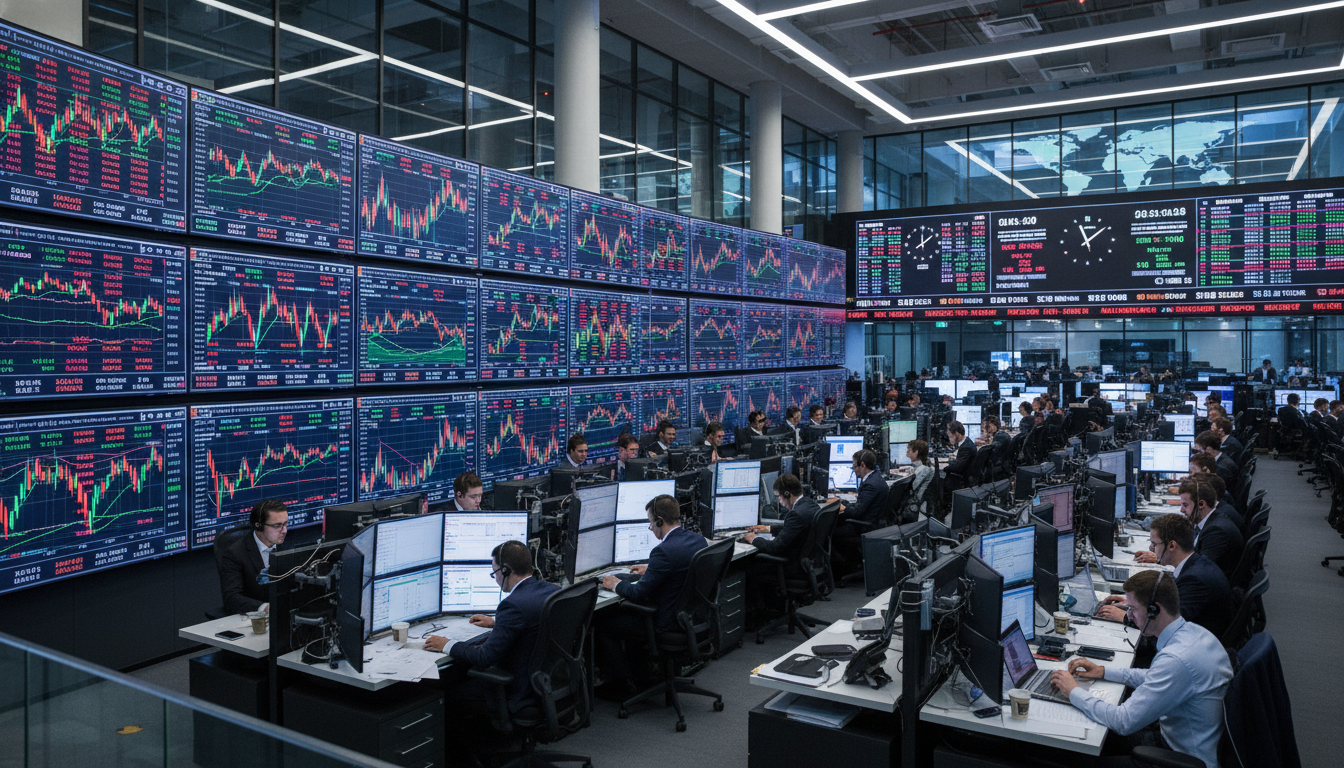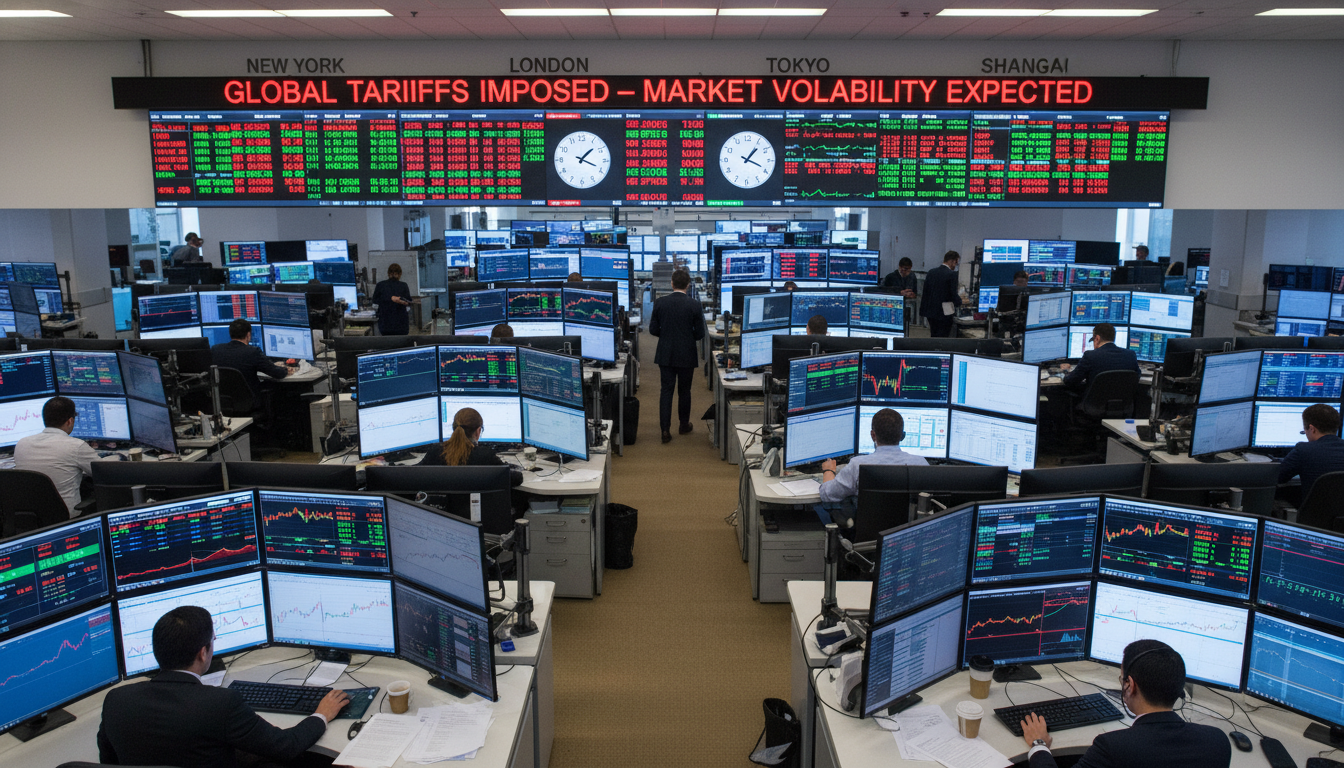
Forecasting the movement of the U.S. dollar has never been easy, and in the current macro environment, it has become even more complex. Central banks are recalibrating policies, inflation trends remain uncertain, and global capital flows are increasingly sensitive to real-time events. These dynamics create volatility patterns that are difficult to capture with traditional statistical models. In response, traders, banks, and policymakers are turning to artificial intelligence and algorithmic modeling to understand and anticipate fluctuations in the dollar more effectively.
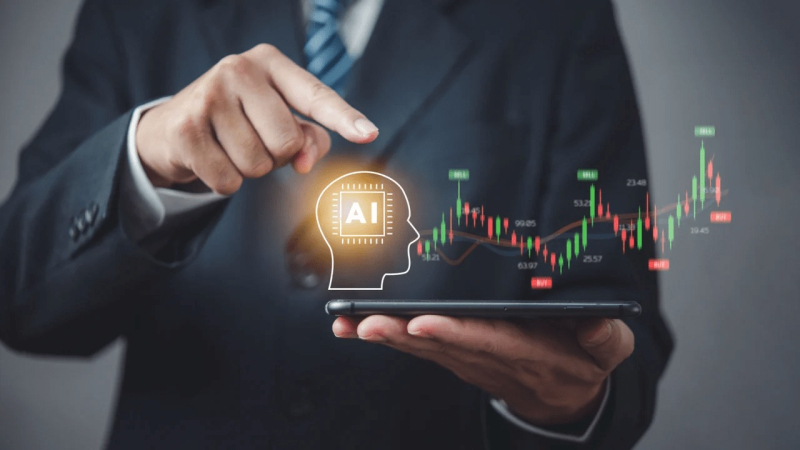
AI-driven forecasting systems are revolutionizing how analysts interpret financial data. Instead of relying on a few economic indicators, these models process thousands of data points drawn from global markets. They consider everything from commodity prices and bond yields to interest rate spreads and sentiment metrics extracted from financial media. The result is a richer, more adaptive understanding of market volatility. By continuously learning from incoming data, these systems can adjust to new conditions much faster than conventional methods, allowing them to spot early signals of change before they appear in broader markets.
How AI and Quant Models Approach Volatility
Algorithmic systems analyze diverse data sources to uncover volatility signals that traditional models often overlook.
Conventional forecasting frameworks are often grounded in econometric theory, focusing on past price movements and variance patterns. While these models remain useful, they tend to assume linear relationships that do not hold during market stress. AI and machine learning models, on the other hand, are designed to identify nonlinear interactions between variables. They can recognize when seemingly unrelated factors such as energy prices, yield curve changes, or political events start influencing currency volatility.
These models are trained on massive datasets that include real-time market feeds, central bank statements, and macroeconomic announcements. Through this process, they detect complex patterns and adapt to emerging conditions. For example, if a sudden interest rate hike triggers volatility in bond markets, an AI model can evaluate how this movement may spill over into dollar demand or foreign exchange swaps. It then updates its forecast almost immediately, ensuring that traders and analysts work with the most current perspective available.
Hybrid approaches are also becoming popular. Some institutions combine traditional models like GARCH or EGARCH with neural networks or gradient boosting systems. The econometric core captures long-term volatility persistence, while the AI component enhances prediction accuracy using external signals such as trading volume or risk sentiment. This structure bridges academic rigor with adaptive intelligence, giving analysts a comprehensive view of short-term and structural volatility dynamics.
Advantages Over Traditional Models
AI-based forecasting offers flexibility, speed, and greater accuracy during volatile market conditions.
One of the main advantages of algorithmic models is their ability to adjust continuously. Traditional models often rely on historical averages or fixed parameters, making them slow to respond when volatility patterns shift. AI systems, by contrast, retrain on incoming data, allowing them to adapt instantly when macro conditions change. For example, if a central bank surprises the market with an unexpected rate cut, an AI-driven model can reassess volatility projections in minutes rather than days.
Another strength is cross-market integration. The U.S. dollar does not move in isolation; it reacts to global equity performance, commodity trends, and bond market dynamics. AI models are uniquely capable of integrating these cross-asset signals. They can correlate changes in oil prices with inflation expectations, track how credit spreads influence dollar liquidity, and interpret how geopolitical events shape risk appetite. This interconnected approach helps explain why AI forecasts tend to be more accurate during complex macro shifts.
Ensemble modeling also improves resilience. By combining several algorithms, such as decision trees, support vector machines, and deep learning architectures, analysts can reduce the risk of overfitting or model bias. This layered design ensures that if one system performs poorly under certain conditions, others can compensate. For institutions managing large portfolios, ensemble AI systems provide a balanced, data-rich approach to forecasting dollar volatility in both calm and turbulent periods.
Challenges and Limitations
Despite their strengths, AI systems face limitations in data quality, interpretability, and real-time implementation.
High-quality data is the foundation of any algorithmic model. If the data is incomplete or inconsistent, even the most sophisticated system can produce misleading results. In currency markets, real-time data can be noisy, fragmented, or influenced by short-term speculative flows. Maintaining clean, accurate, and well-structured datasets is an ongoing challenge for institutions deploying AI forecasting tools.
Interpretability is another issue. Many AI models, particularly deep learning systems, operate as “black boxes,” producing results without offering clear explanations. For banks and regulators, this lack of transparency is problematic because risk decisions must be justified. Researchers are developing explainable AI techniques that reveal which variables drive each prediction, but complete clarity remains elusive. As a result, many institutions pair AI models with human oversight to ensure contextual understanding and accountability.
Operational demands can also be substantial. Running an AI volatility forecasting engine requires robust computational infrastructure capable of processing large data streams in real time. Maintaining these systems involves regular retraining, optimization, and monitoring for drift — when model accuracy declines as market dynamics evolve. This requires not only advanced hardware but also skilled data scientists who understand both financial markets and machine learning design.
Practical Applications in USD Volatility Forecasting
AI volatility forecasting is reshaping trading, risk management, and central bank strategy.
In trading environments, AI-driven volatility forecasts help hedge funds and proprietary desks optimize strategies. By predicting short-term fluctuations, traders can adjust position sizing, rebalance exposures, or fine-tune options pricing models. The ability to forecast volatility also allows for better timing in hedging decisions, reducing costs and minimizing risk when the dollar experiences sudden movements.
Banks and corporate treasuries use AI forecasts for liquidity planning and currency hedging. For instance, multinational firms can anticipate when volatility might rise and adjust their hedging ratios accordingly. This helps stabilize cash flows and protect profit margins from exchange rate shocks. Some institutions also integrate AI outputs into value-at-risk (VaR) frameworks, improving sensitivity to fast-changing market conditions.
Policymakers and central banks are also paying attention to these developments. AI-based models can simulate how shifts in interest rates, capital flows, or commodity prices might influence dollar volatility. This allows central banks to stress-test policy scenarios more effectively and assess potential spillover effects on emerging markets. Over time, these insights could inform how monetary authorities design swap lines, manage reserves, or evaluate contagion risks during financial stress.
Conclusion
AI and algorithmic modeling are redefining the science of forecasting U.S. dollar volatility.
As global markets become more complex, the ability to interpret volatility with precision is increasingly valuable. AI systems bring speed, adaptability, and multidimensional analysis to a task once dominated by static equations. Their strength lies in integrating economic theory with real-time data, producing forecasts that evolve as quickly as markets themselves.
However, technology alone is not a substitute for judgment. The most successful forecasting frameworks combine algorithmic intelligence with human expertise. Analysts interpret what models cannot explain, while AI uncovers patterns that humans cannot see. Together, they form a more resilient approach to understanding the forces shaping the world’s most traded currency.
In the years ahead, this collaboration will likely define how financial institutions and policymakers respond to volatility. As AI models mature and data quality improves, forecasting the U.S. dollar will shift from a backward-looking exercise to a forward-driven process, one powered by continuous learning, dynamic modeling, and the strategic use of intelligent systems.