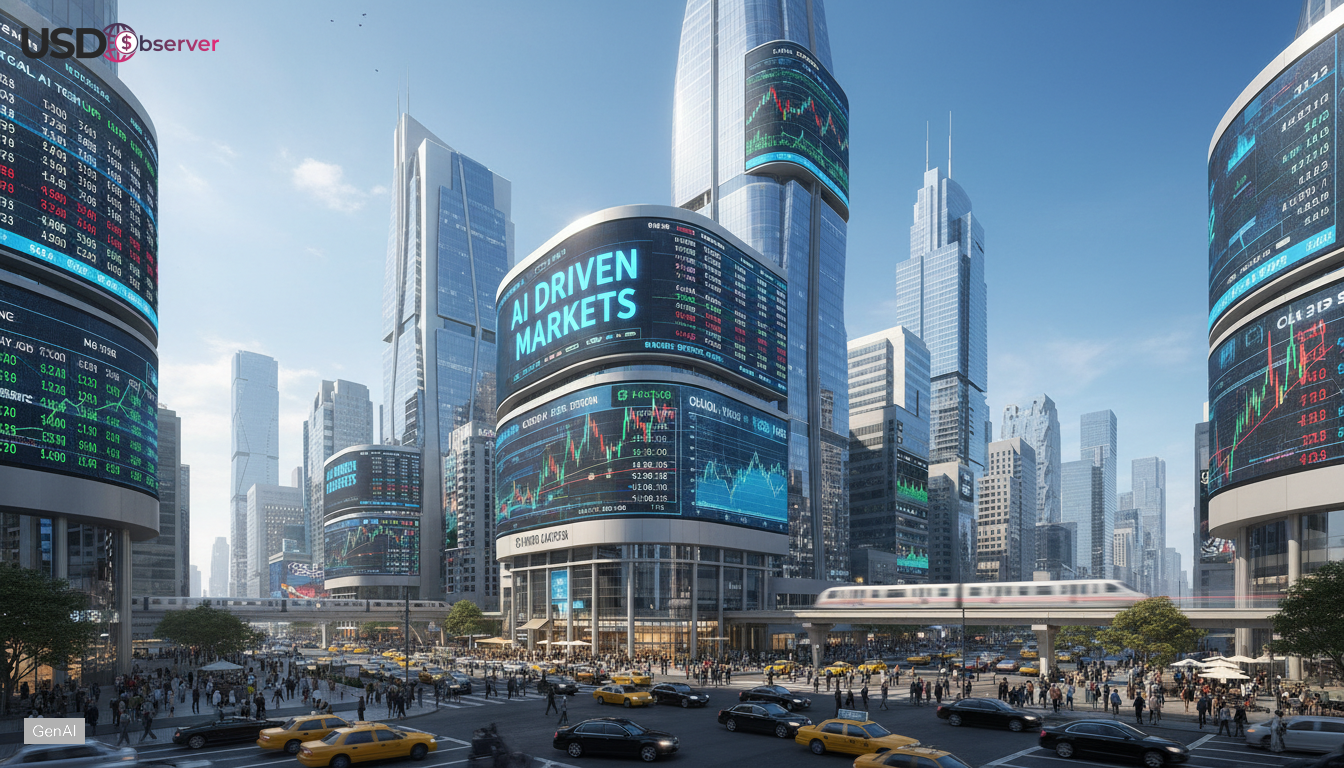
AI stock market bubble: what investors are seeing now
AI stock market bubble concerns are reportedly rising as equity gains appear to be concentrating in a narrow set of mega caps tied to chips, cloud infrastructure, and enterprise software. The BBC segment Is there an AI stock market bubble, and is it ready to burst? highlights how enthusiasm and positioning can cluster in a handful of names, and that concentration can matter for investors because index strength may mask weaker breadth and can make sell offs sharper when leadership slips. Recent earnings seasons have also shown, anecdotally, that single-day moves can be sizable when guidance, capex plans, or supply limits disappoint. The key risk is not just valuation, but how crowded exposure can change trading behavior.
Why concentration can increase volatility in AI equities
Short term swings can be intensified by systematic strategies that react to headlines, momentum signals, and earnings calendars. When traders debate an AI stock market bubble, the transmission often runs through options markets: implied volatility may rise into catalysts and then fall abruptly after results. Cross market attention to tokenized equity narratives shows how quickly risk appetite can spread, as described in Kraken, Payward and xStocks expand tokenized IPOs. Hedging flows can also push single stock moves into sector ETFs and index futures, which can make the tape feel more fragile. When liquidity is concentrated in the same leaders, even a modest change in positioning can contribute to outsized intraday ranges, particularly around widely watched macro event weeks such as CPI releases or central bank rate decisions.
Signals investors cite: history, valuations, and breadth
Market history suggests thematic booms can coexist with genuine fundamentals, while still creating unstable conditions when expectations outrun delivery. A recurring warning sign is weak breadth, where a small cohort drives most index returns and reversals can become more abrupt. For context on how AI capability is being embedded into products and workflows, Microsoft Tests Wearable AI for Office Workflows helps explain why the theme continues to attract capital even as volatility rises. Another is valuation sensitivity: when multiples are elevated, relatively small guidance cuts can translate into large price gaps. Liquidity can also thin out when many participants own the same names, which can increase slippage during risk off sessions. In prior cycles, commentators have often linked the sharpest drawdowns to crowded positioning rather than a single macro trigger.
What analysts watch to judge if the boom is sustainable
According to some experts, analysts focused on sustainability typically track whether revenue growth and margins can support valuations across several quarters, not just a single product cycle. They also monitor capex guidance for compute, networking, and power build outs, because revisions can ripple through supply chains and change earnings expectations quickly. On the policy and information side, the debate about AI development speed and governance also influences sentiment, as reflected in We need to stop AI developing without humans, says Anthropic co-founder. Another checkpoint is leadership rotation: when yesterday’s winners lag and new names lead, dispersion increases and correlation shifts can surprise portfolios. When the AI stock market bubble narrative heats up, it is often because these operational and sentiment indicators appear to worsen at the same time.
How investors can manage risk if the theme reverses
Positioning for this environment starts by separating execution risk from narrative risk and sizing exposure so earnings surprises do not dominate outcomes. Many investors reduce single name concentration by using broader baskets of beneficiaries, since competition and supply constraints can rotate leadership quickly. For a related look at how large platforms influence market structure and distribution, Google AI opt-outs for UK publishers in search results adds context on how fast AI linked policy and product shifts can change expectations. Risk controls matter more when options activity and systematic flows can exaggerate moves, so scenario testing and clear drawdown limits become central. Investors can also map exposure by revenue driver, such as cloud spend versus hardware cycles, to avoid unintended overlap. In an AI stock market bubble backdrop, liquidity planning and staged entries can be as important as the valuation thesis.