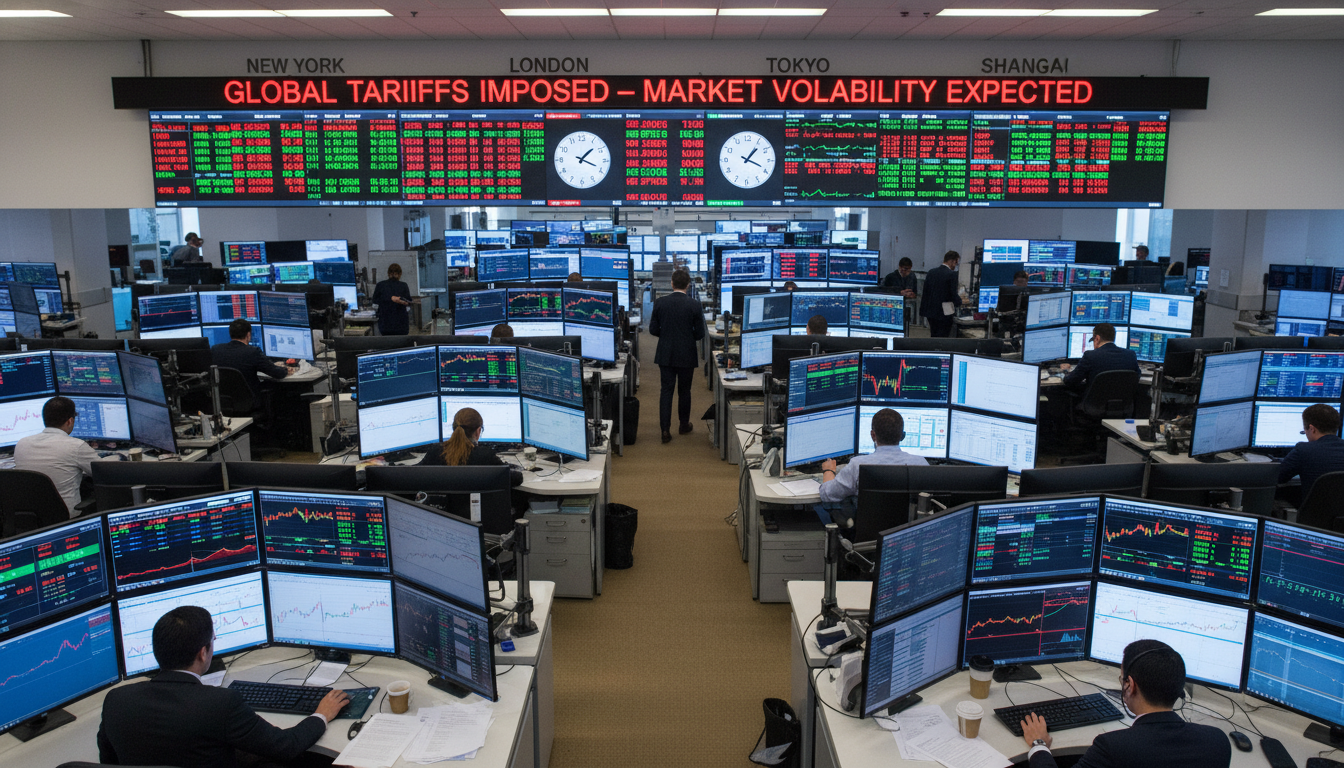
Artificial intelligence has entered a new phase in economics, transforming how policymakers and analysts interpret data, forecast growth, and respond to global trends. Machine learning is reshaping macroeconomic modeling, improving predictive accuracy while challenging traditional methods that have guided central banks and financial institutions for decades.
As economies become more data-driven and globally connected, AI tools are helping identify early signals of inflation, employment shifts, and financial instability. The integration of machine learning into forecasting models marks a structural shift in how economic policy is formulated and communicated.
The Rise of Data-Driven Forecasting
Traditional macroeconomic forecasting relied heavily on linear models and historical correlations. While effective in stable environments, these methods struggled to adapt during periods of volatility or structural change. Machine learning offers a new approach by analyzing millions of data points in real time, detecting complex relationships that human analysts might overlook.
Central banks, investment firms, and research institutions are adopting AI-driven systems to process vast datasets, including trade flows, consumer behavior, and satellite imagery of industrial activity. These insights allow economists to identify trends earlier and make more precise projections about growth and inflation cycles.
For example, advanced algorithms can track high-frequency indicators like shipping volumes, online transactions, and energy consumption to gauge economic momentum weeks before official data is released. This speed gives policymakers an edge in managing risks and anticipating shocks.
Machine Learning in Monetary Policy
AI is now being applied to support central-bank decision-making, especially in forecasting inflation and employment. The Federal Reserve, the European Central Bank, and the Bank of England have begun integrating machine learning models into their policy research frameworks.
These models can evaluate how changes in interest rates ripple through credit markets, housing, and labor conditions. Unlike traditional models, they adapt continuously as new data emerges, reducing the lag between economic shifts and policy response. This adaptive capability is particularly valuable in an era of global uncertainty and rapid technological change.
However, reliance on AI also raises questions about transparency and accountability. Central banks must ensure that algorithms remain interpretable and unbiased, avoiding policy decisions based on opaque models. The balance between automation and human judgment remains a central concern in this new analytical era.
Private Sector Adoption and Market Impact
Investment firms and global banks are at the forefront of integrating AI forecasting tools into their trading and risk management systems. Machine learning algorithms now power asset-allocation strategies, volatility forecasting, and inflation hedging models.
These systems analyze financial statements, social media sentiment, and market liquidity to predict price movements and identify potential stress points. In doing so, they enhance risk visibility and support faster decision-making in volatile markets.
For corporations, AI-assisted forecasting helps refine supply-chain management and capital planning. By combining financial data with real-time inputs from logistics and consumer behavior, businesses can anticipate demand fluctuations and adjust production efficiently.
The result is a more responsive global economy where decisions are made on evidence rather than assumption. This shift increases efficiency but also heightens competition, as firms with superior data capabilities gain strategic advantage.
Challenges in Model Reliability and Data Quality
Despite its potential, AI forecasting is not without limits. Machine learning models are only as reliable as the data they process. Inconsistent, incomplete, or biased datasets can distort results and mislead policymakers or investors.
Economic systems are influenced by unpredictable human behavior, policy interventions, and external shocks that algorithms cannot fully anticipate. During crises, historical data may lose relevance, leading to errors in AI-driven predictions. For this reason, human oversight remains essential in interpreting results and applying them within broader macroeconomic frameworks.
Data governance has become a critical issue. Institutions must invest in secure and transparent systems that protect sensitive information while maintaining data integrity. This includes ensuring that models comply with privacy and ethical standards, especially when using cross-border datasets.
The Future of AI in Economic Forecasting
The integration of AI into macroeconomics is still evolving, but its impact is unmistakable. The next generation of forecasting tools will likely combine machine learning with real-time policy simulation, allowing decision-makers to test scenarios before implementation.
Emerging technologies such as natural language processing are also enabling models to extract insights from unstructured data like news articles and policy statements. This adds a qualitative dimension to quantitative forecasting, enriching the accuracy of global outlooks.
Over time, AI will not replace economists but will redefine their role. Analysts will focus more on interpretation, policy design, and communication, while algorithms handle the heavy computational work. This partnership between human expertise and digital intelligence is shaping the future of global economic governance.
Conclusion
AI is transforming how economies are understood and managed. From central banks to private firms, machine learning is enhancing forecasting precision, improving risk awareness, and redefining the speed of economic decision-making. The challenge ahead lies in balancing technological innovation with transparency and accountability. As artificial intelligence continues to evolve, it promises to make macroeconomics both faster and more adaptive a crucial advantage in an unpredictable global landscape.