Overview of the Middle East Conflict
A prolonged Middle East conflict is already forcing airlines, shippers, and insurers to price in risk as a permanent operating condition rather than a headline shock. When airspace closures and missile warnings stack up, carriers reroute around hotspots, adding time, crew complexity, and fuel burn, while airports and air-navigation providers absorb higher security and contingency costs. The aerospace impact shows up quickly in schedules, aircraft utilization, and maintenance planning because longer sectors strain engines and disrupt turnaround rhythms. These frictions matter beyond tourism: air cargo is the premium lane for electronics, pharmaceuticals, and high-value parts, so reliability becomes an economic variable. The result is a measurable drag on connectivity that feeds into the global economy.
Impact on Global Financial Markets
Financial markets respond to conflict persistence through risk premia, not just volatility spikes. Investors rotate toward cash and liquid havens, while funding costs rise for sectors exposed to travel, logistics, and energy inputs. Currency moves can be abrupt as traders seek the dollar for safety, then reassess when higher oil prices threaten growth and inflation simultaneously. That push-pull has been visible in rate expectations and in how equity leadership narrows to defensive earners. Context is provided by coverage of broader stress channels, including market volatility alongside an oil surge and the way risk episodes interact with safe-haven rallies in the dollar. Read-through: sustained uncertainty lifts the discount rate investors apply to future cash flows.
Disruptions in Trade and Commerce
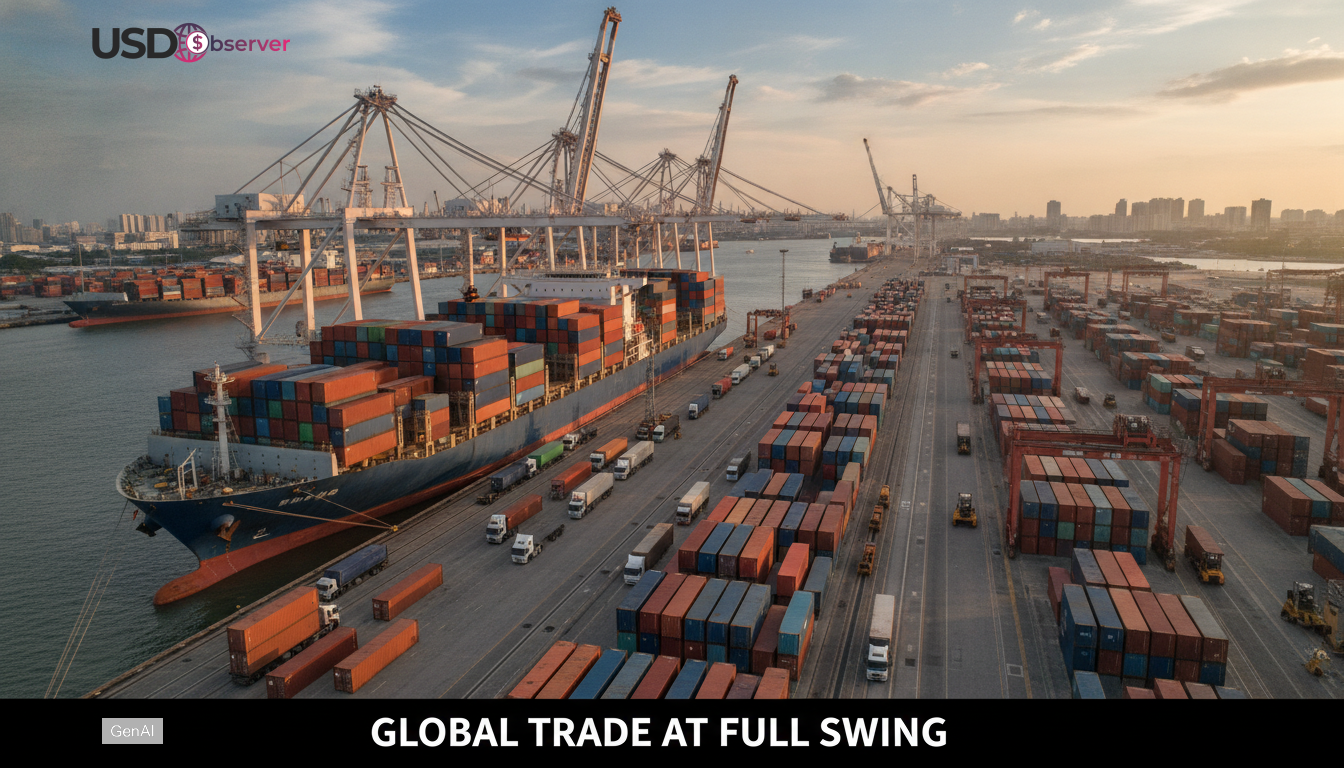
Trade disruptions become structural when routing constraints persist. Shipping lines adjust capacity, ports reprioritize berths, and freight forwarders rewrite contracts to handle delays and force majeure clauses. Even when containers keep moving, longer journeys tie up equipment and raise working-capital needs, pushing up the all-in cost of inventories. For manufacturers, the real hit comes from broken sequencing: a missing component can idle an assembly line that otherwise has plenty of inputs. Retailers feel it as unstable delivery windows and higher distribution costs, which can pressure demand once price increases reach consumers. European firms have warned of those pass-through effects, reflected in reports of rising costs and weaker demand. Aviation is again central because belly-hold cargo and dedicated freighters are the backstop when ocean schedules slip.
Effects on Energy and Commodities
Energy is the channel that translates regional conflict into global inflation risk. Oil and refined products respond to the probability of supply disruption, not only realized outages, so prices can stay elevated even when physical flows are intact. That matters because jet fuel and diesel are immediate costs for airlines and trucking, while power prices influence industrial margins. Commodity markets also transmit confidence signals: gold can swing with shifts in real yields and dollar strength, while gas and electricity costs shape consumer sentiment and central-bank choices. Recent price action has underscored how sensitive benchmarks are to headlines and shipping risk, including oil moves linked to supply-shock fears. For a neutral reference point on the aviation angle, reporting such as the BBC analysis of how conflict reshapes flight paths highlights why fuel burn becomes a strategic constraint.
Long-term Economic Consequences
The long-term economic consequences look less like a single recession trigger and more like a persistent tax on efficiency. Airlines bake longer routings into networks, raising fares and reducing discretionary travel volumes, while cargo operators divert capacity to the most reliable corridors, leaving some regions under-served. Firms respond by regionalizing supply chains, paying more for redundancy, and holding larger buffers of critical inputs, which lowers productivity growth but improves resilience. Policymakers then face a harder trade-off: tolerate higher inflation from energy and logistics, or tighten into slower activity. The global economy also fragments as insurers and lenders demand higher returns to underwrite trade through contested corridors. Independent analysis from forexample1.com market notes frequently frames this as a risk-premium era, where capital and commerce flow toward predictable jurisdictions.