Why South Korea currency weakness persists
South Korea currency weakness has lingered even as export headlines look firm. Shipments of semiconductors, autos, and shipbuilding have supported trade momentum. However, foreign exchange pricing, as suggested by the Korea Economic Institute of America, is often influenced by interest rate disparities, hedging behavior, and risk appetite rather than goods data alone. During volatile periods, corporates may keep more revenue in dollars, extend hedges, or delay conversion, which can reduce near-term spot demand for won. This situation can create a gap between trade performance and exchange-rate moves, particularly when global investors prioritize yield differentials and liquidity conditions over trade figures.
Export strength vs FX conversion and hedging flows
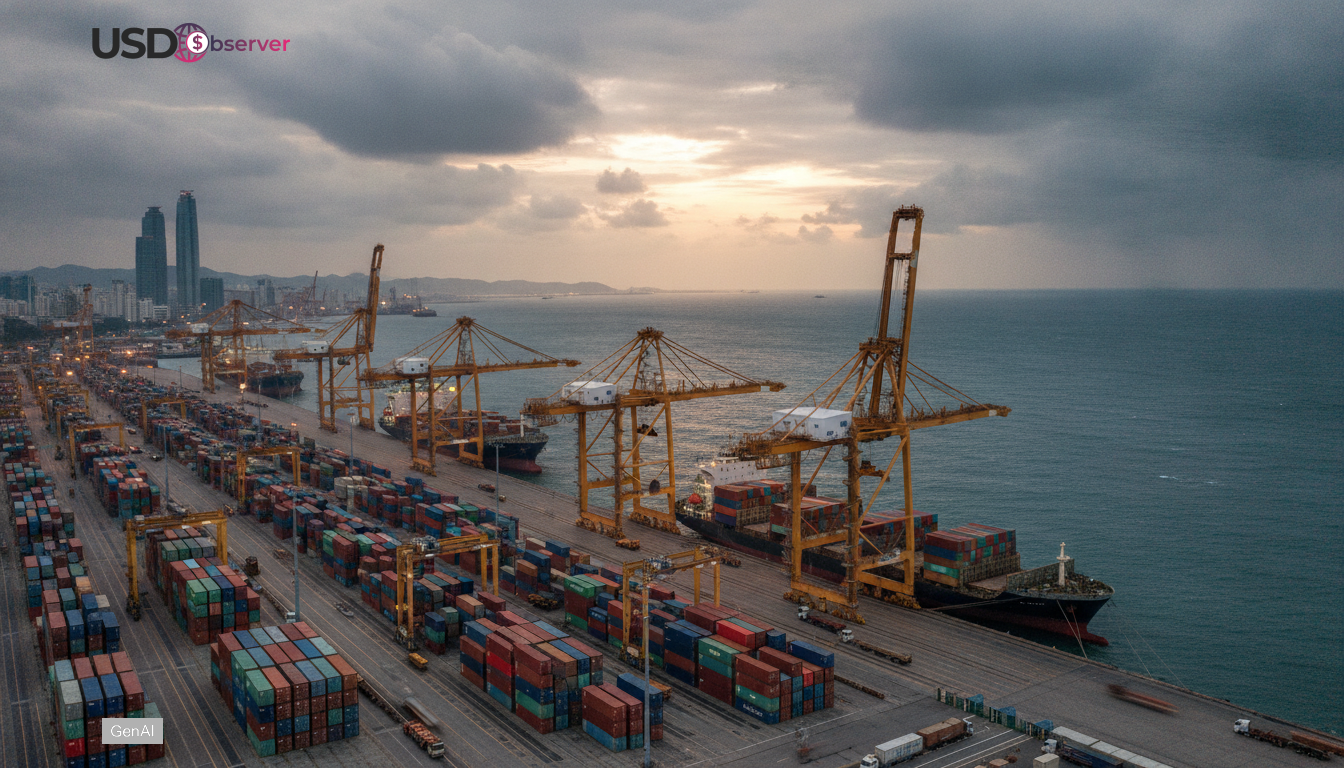
South Korea is still posting resilient trade momentum, with semiconductors, autos, and shipbuilding supporting a broad export economy. The Korea Customs Service and the Ministry of Trade, Industry and Energy have pointed to firm shipments in recent updates, supporting production and corporate cash flow. Yet market participants often focus less on goods volumes and more on how export earnings are converted and hedged in forex markets, shaping short-term demand for the Korean won. Stable settlement rails are also changing how corporates manage cross-border liquidity, as described in Banks use stablecoin technology to speed loan funding. Exporters may hold more dollars or use forwards when uncertainty rises, which can contribute to won softness. For a cross portal view on payment rails, see JPMorgan Stablecoin Plan Targets Digital Dollar Payments, and some settlement choices can affect when earnings are converted into won.
Rate gaps, dollar liquidity, and global risk sentiment
The won operates within a financial environment influenced by relative interest rates and the availability of dollar liquidity, which can at times outweigh trade strength. The Bank of Korea has kept monetary policy restrictive in recent decisions. According to available reports, investors often compare Korea’s yield backdrop with US yields and FX hedging costs when allocating across Asia. A wider US–Korea rate differential is viewed by traders as a potential headwind for the won. Market commentary often cites portfolio flows and shifting risk sentiment as reasons the won can lag even when exports improve, though the balance of drivers can change quickly. When volatility rises, investors may seek dollar liquidity, which might strengthen the dollar and maintain South Korea currency weakness.
What a weaker won does to exporters and inflation
A softer won can lift price competitiveness abroad, but the benefit is uneven because many large exporters also import energy, components, or capital equipment priced in dollars. The Bank of Korea has indicated in prior communications that exchange-rate moves can feed into import prices and consumer inflation, which may limit how far policymakers welcome currency depreciation. In practice, firms with deep global supply chains often aim for margin stability, using hedges that can reduce the immediate translation benefit from a cheaper currency. South Korea currency weakness can also strain smaller manufacturers that lack sophisticated hedging, since dollar-denominated payables may rise faster than export receipts. The impact can therefore vary by sector, with some firms gaining volume while others face tighter working capital.
Outlook for the won: what could reverse the move
The next phase for the won hinges on how capital flows respond to the global rate cycle, China demand, and the pace of the electronics recovery. Export gains alone do not guarantee currency strength when portfolio investors prefer dollar assets and when hedging demand is elevated. If US yields stay high, traders often expect the carry advantage to keep the won under pressure, even if trade balances improve. External conditions also matter: persistent US price pressures can support the dollar, as discussed in Fed has work to do if price rises do not ease for Americans, Warsh says. South Korea currency weakness could ease if volatility drops and foreign equity inflows return, but policymakers may still weigh imported inflation risks from energy and food. Markets will also watch whether corporates gradually shift more trade invoicing into won over time.