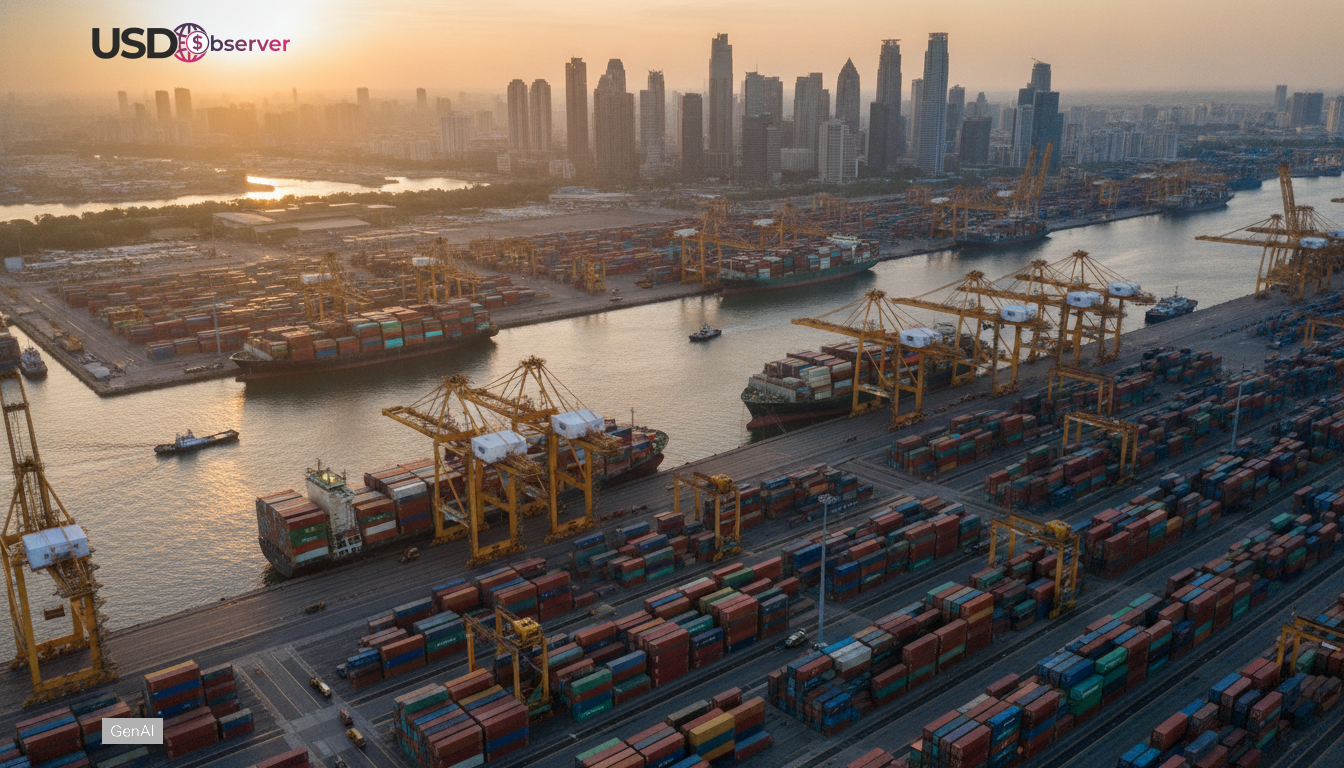
Global trade is undergoing a visible transformation. Supply chains are becoming more regional, geopolitical considerations are influencing sourcing decisions, and companies are reassessing exposure to concentrated production hubs. These shifts have fueled expectations that a more fragmented trade system would weaken reliance on the U.S. dollar. Yet in practice, dollar dependence remains firmly intact.
The persistence of dollar usage highlights a gap between narrative and mechanism. Trade fragmentation changes where goods are produced and assembled, but it does not automatically alter how transactions are priced, financed, and settled. Currency systems move more slowly than supply chains, and the dollar continues to benefit from structural features that regionalization alone cannot replace.
De Risking Is Not the Same as De Dollarization
The most important distinction often overlooked is the difference between de risking and de dollarization. Companies are diversifying suppliers to reduce operational risk, but they are not abandoning the financial infrastructure that underpins global commerce.
The dollar remains the dominant currency for invoicing, trade finance, and cross border settlement. Even when production shifts to new regions, contracts are frequently denominated in dollars to manage price transparency and hedge risk. This practice persists because alternatives lack the same liquidity, acceptance, and legal standardization.
Trade fragmentation changes physical flows, not financial logic. As long as firms prioritize predictability and efficiency, the dollar remains the default unit of account.
Regional Supply Chains Still Rely on Global Finance
Regionalization does not eliminate the need for global financing. Supply chains may shorten geographically, but they still depend on international capital markets for funding, insurance, and risk management. The dollar sits at the center of these markets.
Banks, insurers, and logistics providers continue to operate through dollar based systems. Letters of credit, commodity pricing, and shipping contracts are overwhelmingly dollar denominated. This creates network effects that reinforce usage even as trade routes evolve.
Switching currencies at scale would require rebuilding financial relationships and infrastructure. For most firms, the costs of doing so outweigh perceived benefits.
Financial Infrastructure Anchors Currency Choice
Currency dominance is sustained less by trade volume and more by infrastructure. Payment systems, clearing networks, and hedging markets are deeply integrated around the dollar. These systems offer depth and reliability that are difficult to replicate.
Regional currencies may gain importance locally, but they lack the global reach needed to support complex, multi jurisdiction trade. The dollar’s infrastructure allows participants across regions to transact using a shared framework, reducing friction and uncertainty.
This infrastructure advantage explains why trade fragmentation has not translated into reduced dollar usage. The pipes of global finance remain dollar centric even as supply chains adapt.
Policy and Regulation Reinforce the Status Quo
Regulatory frameworks also play a role in sustaining dollar dependence. Compliance standards, financial reporting, and risk controls are often aligned with dollar based systems. Multinational firms find it easier to operate within a familiar regulatory environment than to navigate fragmented currency regimes.
In addition, central banks and financial authorities continue to hold dollar reserves to manage liquidity and stabilize markets. This reinforces confidence in the dollar as a settlement currency and supports its continued use in trade finance.
Policy efforts to encourage alternative currencies face practical limits as long as market participants prioritize efficiency and risk reduction.
Fragmentation Can Increase Dollar Demand
Paradoxically, fragmentation can increase reliance on the dollar. As supply chains become more complex and dispersed, the need for a neutral and liquid settlement currency grows. The dollar fulfills this role by acting as a common denominator across diverse regions.
When geopolitical risk rises, participants often prefer a currency perceived as stable and widely accepted. Rather than accelerating de dollarization, uncertainty can reinforce existing preferences.
This dynamic helps explain why dollar usage has remained stable despite rising talk of currency diversification.
Conclusion
Trade fragmentation is reshaping how goods move across the world, but it has not altered the financial foundations of global commerce. De risking supply chains does not equate to abandoning the dollar. Deep infrastructure, liquidity, and regulatory alignment continue to anchor dollar dependence. Until viable alternatives match these advantages, the dollar’s role in global trade is likely to remain unchanged.