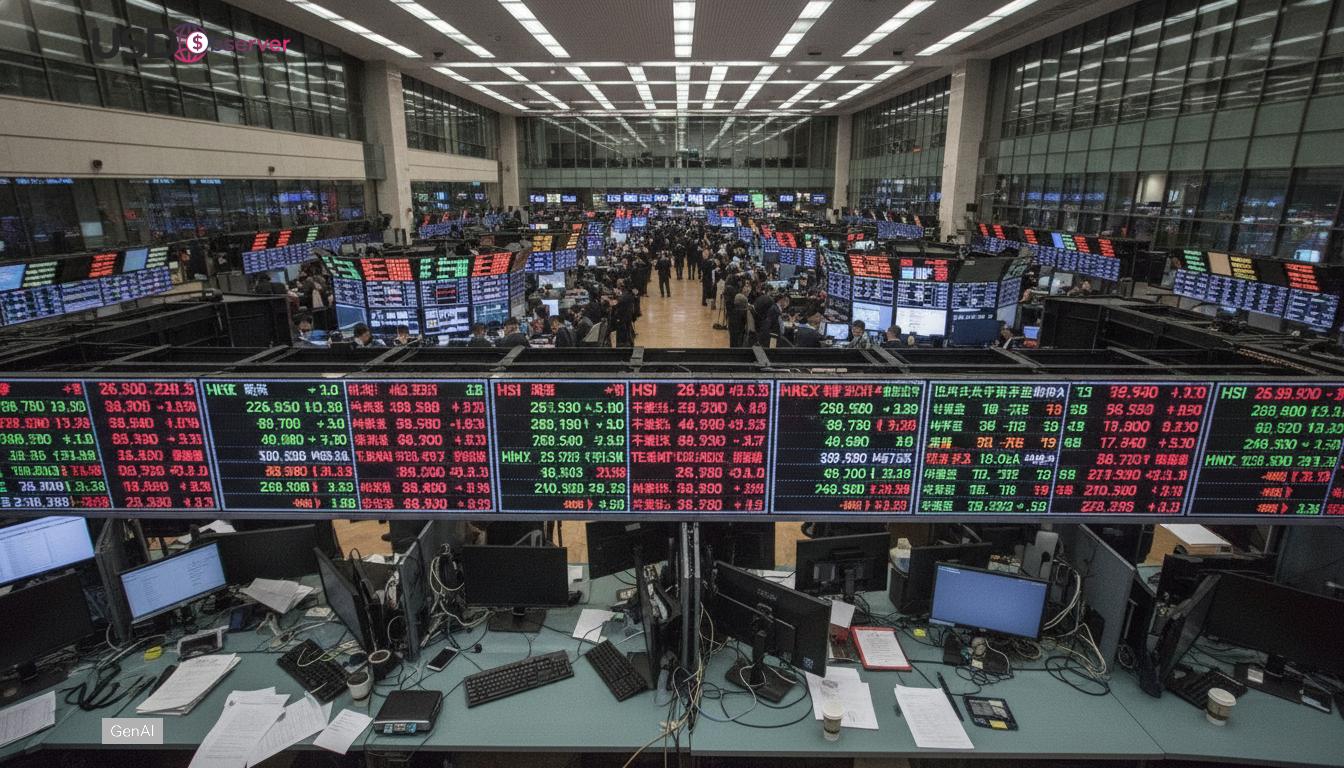
For much of the past year, labor markets faded from the center of macro debate. Employment remained resilient, layoffs were contained, and wage growth cooled without triggering instability. This stability allowed investors and policymakers to focus on inflation trends, rates, and financial conditions rather than job losses.
That calm is beginning to look less durable. As 2026 unfolds, labor risk is returning to the dashboard not as a slow deterioration but as the possibility of a sudden shift. The concern is not a prolonged jobs crisis, but an unemployment pop that arrives quickly after a long period of strength. History shows that labor markets often turn late and move faster than expected once momentum breaks.
Why unemployment risk looks asymmetric in 2026
The most important feature of current labor risk is asymmetry. After years of tight conditions, there is far more room for unemployment to rise than to fall further. Hiring has already slowed, job openings have declined, and firms have become more selective without cutting aggressively.
This creates a compressed risk profile. Small changes in demand or confidence can produce outsized effects on employment. When companies move from slowing hiring to active cuts, the transition can be abrupt. The unemployment rate does not drift upward gradually. It jumps.
Markets are sensitive to this pattern because it often coincides with turning points in growth and policy. The risk is not that labor markets collapse, but that they surprise on the upside in unemployment, forcing rapid reassessment.
Lag effects from tighter financial conditions
One reason labor risk is resurfacing is the delayed impact of tighter financial conditions. Higher interest rates and stricter lending standards affect hiring decisions with a lag. Firms adjust investment first, then hiring, and finally payroll size.
As refinancing cycles roll over and credit becomes more selective, pressure builds quietly. Companies that absorbed higher costs in 2024 and 2025 may reach limits in 2026. Once cost cutting begins, labor often becomes the primary lever.
This lag explains why labor markets can appear strong until they are not. The adjustment phase is often short because firms respond collectively to similar pressures.
Sectoral stress matters more than headlines
Another reason unemployment risk is underestimated is its sectoral nature. Aggregate labor data can remain healthy even as specific industries weaken. Technology, manufacturing, and trade exposed sectors are often the first to feel pressure.
When layoffs concentrate in interconnected sectors, the spillover accelerates. Suppliers, service providers, and regional economies feel the impact quickly. What starts as contained stress becomes a broader labor adjustment.
Markets tend to react only once aggregate numbers move. By then, the process is already underway. This lag between sectoral stress and headline unemployment creates the conditions for a pop rather than a gradual rise.
Policy uncertainty amplifies hiring caution
Political and policy uncertainty adds another layer to labor risk. Shifts in trade policy, regulation, and fiscal priorities influence hiring decisions even without immediate economic damage. Firms delay commitments when rules appear unstable.
This caution does not show up in layoffs immediately. It appears first in reduced hiring and contract work. Over time, that restraint weakens labor demand enough that existing payrolls become vulnerable.
In 2026, policy uncertainty interacts with already tight margins. That combination increases the probability that labor adjustments happen in clusters rather than increments.
Why markets are refocusing on labor indicators
Investors are paying closer attention to labor data because it now holds asymmetric information. Inflation and growth signals have become noisy and incremental. Labor, by contrast, can deliver decisive information quickly.
A modest rise in unemployment expectations can change the entire policy narrative. It affects rate projections, fiscal assumptions, and risk sentiment simultaneously. This makes labor data a high impact variable again.
Importantly, markets are not waiting for dramatic deterioration. They are watching for inflection points. A small but persistent rise in claims or unemployment can trigger repositioning because the downside tail risk has grown.
Central banks face a narrow path
For policymakers, a potential unemployment pop creates a narrow corridor. React too slowly and job losses accelerate. React too quickly and inflation progress risks reversal.
Central banks must balance credibility with responsiveness. That balance becomes harder when labor markets shift rapidly. Communication becomes critical, as markets will interpret any acknowledgment of labor risk as a signal of future easing.
This sensitivity means labor data will carry outsized weight in early 2026. Even stable inflation numbers may not offset concern if employment trends weaken unexpectedly.
Conclusion
Labor risk is back because the cycle has matured. After prolonged strength, the unemployment rate carries more upside risk than downside cushion. Lagged financial tightening, sectoral stress, and policy uncertainty raise the odds of a sudden adjustment rather than a smooth slowdown. In 2026, the unemployment pop scenario is not a forecast of crisis, but a reminder that labor markets rarely move gently once momentum turns.