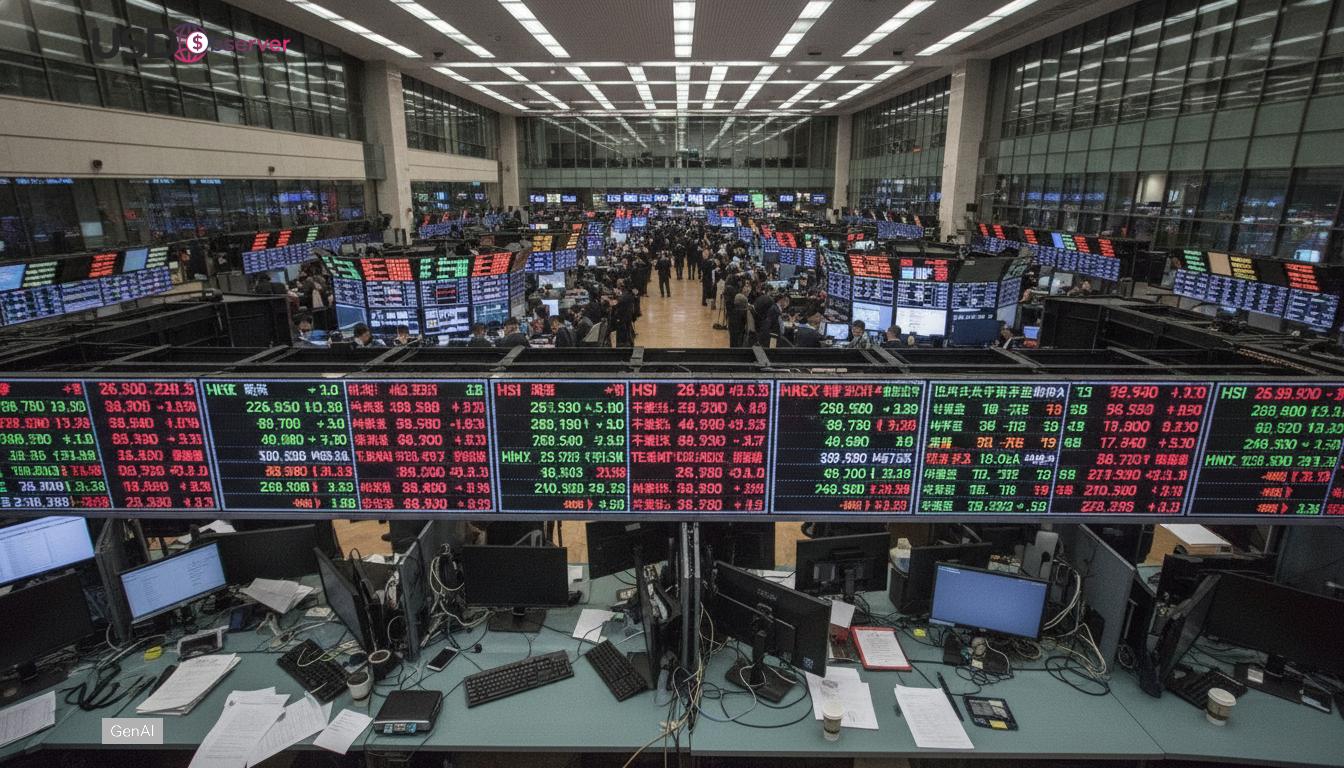
Current Trends in USD Valuation
Currency desks are interpreting the dollar’s decline as an overarching macro signal. Traders today highlight diverging interest rate expectations and evolving risk sentiment as key drivers. In daily briefs, discussions around USD weakening are increasingly linked with growth surprises and the pace of disinflation in major economies. The Federal Reserve maintains a data-dependent policy approach, with futures markets reflecting this through shifting rate cut probabilities. Portfolio managers are also attuned to the movement of hedging costs as volatility recedes. This has led to a scenario where the dollar can weaken even if US economic data stays steady, as relative improvements elsewhere gain traction.
Effects on International Trade
With the changing exchange rate, exporters and importers are re-evaluating contracts. Supply chain managers today assert that a softer dollar enhances US competitiveness while boosting local currency revenues for firms targeting the US market. For real-time insights into US macro surprises that might affect pricing, the BBC’s report on US jobs data beating expectations for a second month is closely monitored. Concurrently, USD weakening is influencing procurement models, particularly since commodity pricing and freight often reference the dollar. Corporate treasurers are utilizing update calls to recalibrate their hedges as earnings windows approach, which can have downstream effects on shipping timelines and inventory strategies across regions.
Impact on Emerging Markets
Emerging market central banks keep a close watch on dollar movements, given that funding, commodities, and debt service frequently reference USD. Policymakers today are particularly concerned about whether USD weakening alleviates imported inflation, granting them the leeway to cut rates without risking capital flight. The discourse also encompasses stablecoin rails for cross-border payments, as businesses seek swifter settlements amidst FX volatility—an aspect underscored by Stablecoin Growth Brings New Risks for Markets Now. Analysts observing USD weakening caution that the advantages are not uniformly distributed; countries burdened with substantial dollar debt still face rollover risks when global credit spreads widen. Finance ministries often leverage each update cycle to strike a balance between reserve utilization, bond issuance, and domestic liquidity needs, particularly aligned with quarterly refinancing timelines.
Influence on Financial Markets
In asset allocation strategies, a depreciating dollar alters the appeal of returns from US assets compared to their non-US counterparts once currency effects are factored in. Equity strategists today articulate a feedback loop wherein a weaker dollar bolsters risk assets while enhancing unhedged foreign earnings for multinationals. For those tracking how reserve status and trade invoicing interact with price movements, Dollar Holds Reserve Lead Amid Shifting Global Trade provides valuable context frequently referenced during live market operations. Bond managers remain vigilant regarding whether currency fluctuations tighten or loosen financial conditions in relation to inflation expectations and term premia. Furthermore, derivatives desks identify that options demand tends to fluctuate as market participants seek either protection or opportunistic exposure ahead of significant update cycles.
Future Outlook and Predictions
The near-term trajectory hinges on relative growth patterns and the trajectory of policy rates, rather than merely reacting to headlines. Macro teams today are concentrating on incoming inflation data, wage dynamics, and the pace at which economic activity slows, as these factors influence the rate differentials driving FX movements. Attention frequently centers on CPI release days and central bank meeting weeks. In policy discussions, USD weakening is viewed as a condition that could exacerbate overseas disinflation but also reintroduce price pressures in the US should commodity prices rebound. Central banks will convey their stances through speeches and minutes, with live interpretations of these signals often moving currencies in advance of any formal decisions. Market participants continue to seek clarity on how long restrictive policies will remain in effect, as any lasting shifts will be evident through cross-border capital flows and hedging behavior.