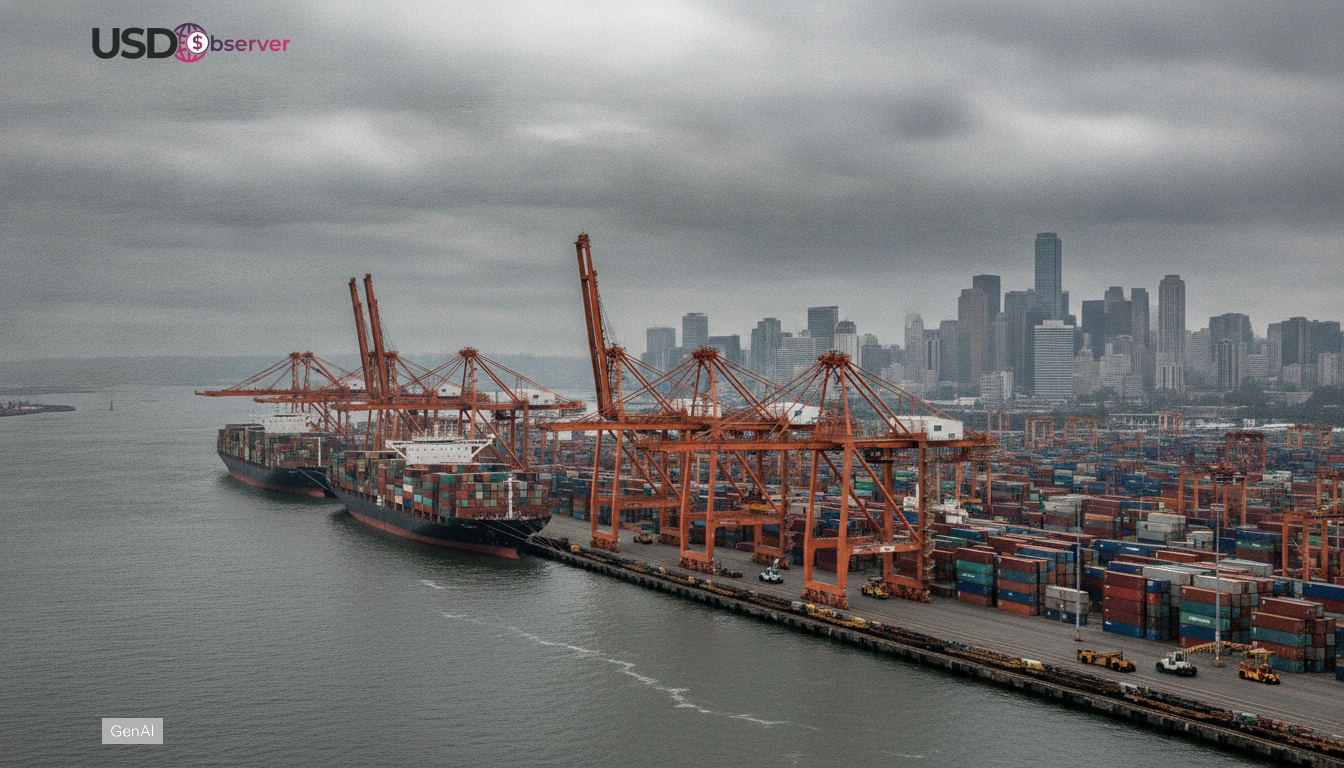
Current USD/CAD Exchange Rate Trends
Price action in USD/CAD is being driven by short bursts of liquidity and fast repricing around macro headlines rather than a single, steady trend. In the middle of the session, the usd to cad exchange has reacted most to shifts in front end rate expectations and oil sensitivity, keeping the pair choppy. Today, dealers are watching intraday spreads and how quickly rallies fade when volume thins in North American hours. Live pricing on major platforms has shown quick reversals after data prints, and the latest Update from desks has focused on whether dips are being bought on higher U.S. yields. Trading interest is clustering around recent swing levels, with stops just beyond them.
Economic Indicators Impacting the Pair
For near term direction, the currency market is treating U.S. inflation expectations, labor indicators, and Canadian growth signals as the main catalysts, with USD strength tied to how rate paths reprice. Today, traders are parsing headline risk alongside scheduled releases, and they are watching whether Canadian figures shift Bank of Canada assumptions faster than U.S. figures shift the Federal Reserve. In a risk context, energy logistics can matter for sentiment, and the BBC coverage of jet fuel shortages and summer travel risks has kept attention on supply constraints. A Live read on cross asset pricing also matters because oil often feeds into CAD positioning. The latest Update from macro desks emphasizes how fast markets can reprice when expectations change.
Market Forecasts for USD/CAD
Short horizon forecasts are being framed as conditional paths rather than point targets, and most models are anchoring on yield differentials and crude correlations. Today, several banks are effectively expressing a range view until incoming releases clarify whether the U.S. economy is reaccelerating or cooling, which would alter USD strength narratives quickly. Live market color is also being shaped by positioning across risk assets, and some desks cite crypto liquidity as a secondary sentiment input, including Top 3 Stablecoin Signals for a Market Recovery as a proxy lens on speculative appetite. In the middle of those discussions, the usd to cad exchange is treated as a barometer of relative policy persistence, with scenarios changing if Canadian data underperforms. The latest Update remains data dependent rather than directional.
Investor Sentiment and Trading Strategies
Investor behavior has rotated toward shorter holding periods, and that shift is visible in the way forex trading volumes cluster around North American data windows. Today, systematic flows are increasingly sensitive to volatility triggers, while discretionary traders prefer fading extremes when liquidity is deep. Live commentary from brokers has focused on avoiding overcommitment ahead of key releases and watching correlations with oil and U.S. rates. For broader context on how energy shocks can spill into FX positioning, Oil Prices and Currencies, the Hormuz Link Now outlines the transmission channels traders monitor. In the middle of this setup, the usd to cad exchange becomes less about long narratives and more about execution around event risk, including how spreads behave after the initial spike. The latest Update from risk teams highlights the need for defined invalidation levels.
Implications for the North American Economy
Moves in USD/CAD feed directly into cross border pricing power, corporate hedging costs, and the competitiveness of exporters on both sides of the border. Today, importers facing a stronger dollar may see faster pass through into goods priced in USD, while Canadian firms that invoice in U.S. dollars can experience near term revenue tailwinds if CAD weakens. In the middle of these effects, the currency market also watches whether sustained USD strength tightens financial conditions enough to cool demand, which can influence policy messaging from both central banks. Live monitoring matters for procurement teams in Toronto and Chicago that hedge in tranches, because execution timing can change realized costs. The latest Update from corporate treasurers tends to focus on hedge ratios and rolling maturities rather than trying to call the exact top or bottom.