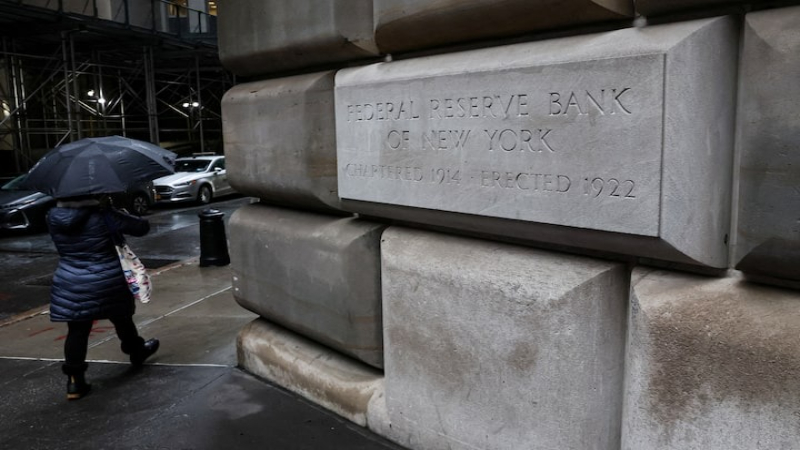
Household credit conditions in the United States showed renewed signs of strain toward the end of 2025, with debt levels rising and delinquencies increasing across several categories, according to new data released by the Federal Reserve Bank of New York. While overall mortgage performance remained historically strong, pockets of financial stress became more visible among lower income households and borrowers carrying student loan balances.
Total household debt climbed to 18.8 trillion dollars in the fourth quarter, reflecting a quarterly increase of 191 billion dollars. The rise marked a continuation of the steady expansion in borrowing seen throughout the year, bringing total household debt growth in 2025 to roughly 740 billion dollars. Compared with the period before the pandemic, household borrowing has risen by more than 4.6 trillion dollars, underscoring how credit has played a growing role in supporting consumer activity.
Mortgage delinquencies increased modestly during the quarter, with the share of loans transitioning into serious trouble rising to 1.4 percent. Economists noted that while this represents an uptick, mortgage performance remains broadly consistent with long term norms observed outside periods of severe economic stress. However, the data revealed faster deterioration in lower income neighborhoods and regions facing weaker labor market conditions or softer housing demand.
Non mortgage debt categories also contributed to the overall rise in credit stress. The share of all household loans showing some level of delinquency increased to 4.8 percent, up from 4.5 percent in the previous quarter. Credit card balances rose sharply, reaching 1.3 trillion dollars, an increase of 44 billion dollars from the third quarter, reflecting continued reliance on revolving credit amid elevated living costs.
Student loans remained the most pressured segment of household credit. Nearly one in ten student loan balances were at least three months delinquent by the end of the year. The rate at which student loans flowed into serious delinquency surged to over 16 percent, reflecting the delayed effects of resumed payment reporting following pandemic era forbearance. Total student loan balances stood at 1.7 trillion dollars, continuing a gradual upward trend.
Auto loan balances also edged higher, reaching 1.7 trillion dollars, though delinquency rates in that segment showed signs of stabilization. Researchers emphasized that while overall non mortgage delinquency rates appear to have leveled off, the distribution of stress remains uneven across income groups.
Higher income households have largely remained resilient, supported by rising asset values in housing, equities, and financial markets. Speaking earlier this year, Jerome Powell highlighted that wealth gains among higher income consumers have helped sustain spending, even as lower income households increasingly adjust budgets to cope with higher prices and slower job growth.
The latest figures suggest that while the broader economy continues to expand, underlying credit conditions reveal growing pressure on more vulnerable borrowers. As labor market momentum cools and borrowing costs remain elevated, household credit trends are expected to remain a key indicator of economic resilience in the year ahead.