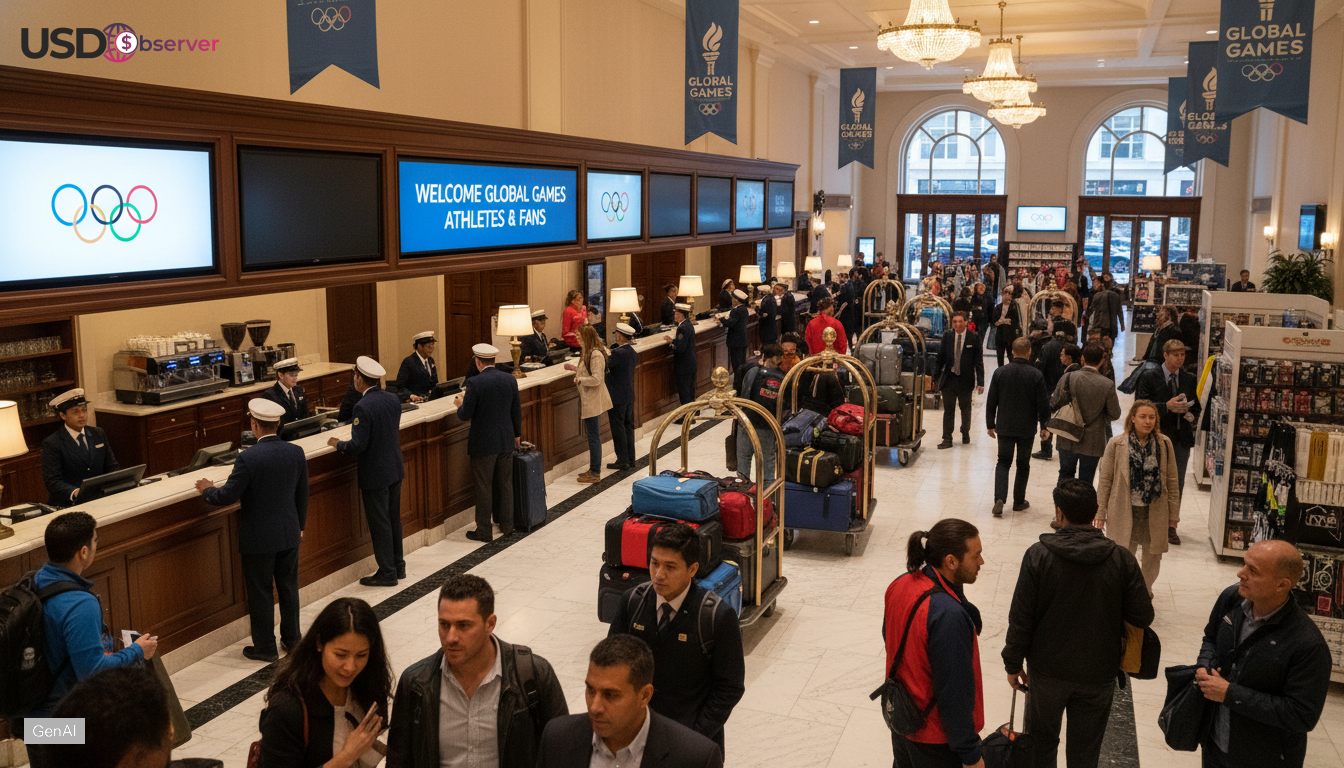
US hospitality job surge: hiring ramps up in host cities
Hotels, restaurants, and event venues across major host markets are stepping up recruitment efforts. They are expanding training capacity to prepare for peak travel weeks, according to managers and local operators. As indicated by reports in “Hospitality jobs boom as US prepares for World Cup,” the US hospitality job surge is building as World Cup 2026 planning moves from projections to operational staffing. Managers suggest that the focus is on maintaining stable teams for repeated event weekends rather than on short seasonal spikes. Operators are prioritizing front desk, housekeeping, kitchen, bar, and venue operations roles to protect guest experience when occupancy is tight. With group bookings rising in some markets, employers are testing retention bonuses, faster onboarding, and cross training. These measures aim to reduce last-minute gaps and limit service disruptions.
World Cup 2026 staffing timeline and employer planning
Coverage of the trend has highlighted how businesses are building recruitment pipelines earlier than usual, including Hospitality jobs boom as US prepares for World Cup. With the tournament set for June and July 2026, employers are aligning hiring cycles with expected match calendars and fan travel corridors, treating labor planning as critical path work. As indicated in media coverage, staffing shortfalls are seen as potential revenue risks. Labor gaps can restrict room inventory, reduce restaurant hours, and slow venue throughput during sellout periods. Some firms are reportedly adding supervisors earlier to standardize service, improve scheduling discipline, and maintain consistent training across multiple properties.
Training, scheduling, and payments readiness for visitors
Training programs are being updated for high volume international visitors, reportedly focusing more on language support, conflict de escalation, and faster point of sale workflows. Some teams are also reviewing transaction tooling and compliance in this context, as they evaluate how payment options could impact checkout speed and chargeback handling, including references from CLARITY Act 2026: US Stablecoin Rules and Outlook. Managers are testing scheduling tools and productivity tech, inspired by developments like Microsoft Tests Wearable AI for Office Workflows. The goal is tighter coordination across transport, security, and stadium adjacent concessions so guest handoffs remain smooth under pressure, especially during periods of elevated demand.
Tourism-driven economic effects on hospitality and services
Local development agencies often view tournament preparation as a demand shock that extends beyond stadiums into airports, transit, and downtown districts. The World Cup impact may also be reflected in vendor contracts for catering, temporary structures, cleaning services, laundry, and maintenance. These areas can increase labor needs across subcontractors. Economists typically track these pressures through payroll counts, hourly earnings, and job openings. Businesses may use those indicators to support arguments for faster onboarding and expanded training funding. Operators are monitoring debates on automation and staffing substitution to assess where technology can minimize repetitive tasks without lowering service quality, as covered in Humanoid Robots Amid Ukraine War: BMW Plant’s Strategic Move. Many hotel owners also expect that higher occupancy may boost local tax receipts, depending on city policy and visitor mix.
Long-term labor market changes after the tournament
Employers and recruiters consider the lead-up to 2026 as a test of how quickly the labor market can adjust for a multi-city mega event. Lessons learned could persist beyond the final match. Industry analysts and recruiters expect the current hiring wave might leave a lasting impact if companies retain improved training systems, clearer career pathways, and scheduling practices that reduce turnover. The US hospitality job surge may also evolve, with specialized roles for group logistics, VIP hosting, and venue coordination. Workforce boards in several regions are reportedly enhancing partnerships with community colleges to align credentials with employer needs, as noted in 2025 regional workforce board updates. Meanwhile, unions continue to advocate for predictable hours and safer workloads. The outcome may influence whether hospitality work becomes viewed as a stable career path or a temporary transition between sectors once the US hospitality job surge stabilizes post-2026.