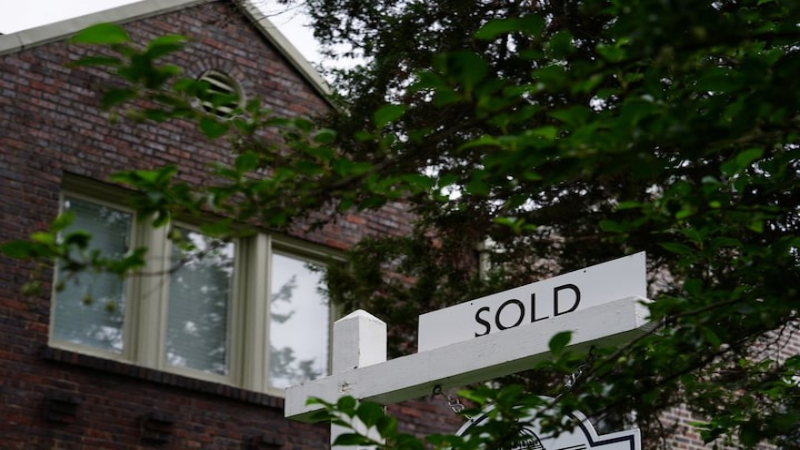
US existing home sales declined sharply in January, dropping to their lowest level in more than two years as limited inventory and elevated prices continued to weigh on buyers. The latest data underscores the ongoing strain in the housing market despite gradual improvements in affordability conditions.
Existing home sales fell 8.4 percent in January to a seasonally adjusted annual rate of 3.91 million units. The pace marked the weakest reading since late 2023 and came in below market expectations, which had projected a smaller decline. On a year over year basis, sales were down 4.4 percent, reflecting persistent headwinds for prospective homeowners.
January’s figures largely reflect purchase contracts signed in November and December, suggesting that severe winter weather in parts of the country had little direct impact on the decline. Instead, supply constraints and pricing pressures appear to have played a more significant role in dampening activity.
Housing affordability showed modest improvement at the start of the year. The National Association of Realtors housing affordability index rose to 116.5 in January, its highest level since early 2022, compared with 111.6 in December. Wage growth has recently outpaced home price gains, and mortgage rates remain lower than they were a year ago. Even so, affordability improvements have not been sufficient to offset tight inventory levels.
The supply of existing homes on the market slipped 0.8 percent in January to 1.22 million units. Although inventory was 3.4 percent higher than a year earlier, it remains historically low. At the current sales pace, it would take 3.7 months to exhaust available supply, slightly above the 3.5 months recorded a year ago but still below the six-month level generally considered indicative of a balanced market.
Limited supply has continued to support prices. The median existing home price increased 0.9 percent from a year earlier to 396,800 dollars, marking the highest median price ever recorded for January. Properties also spent more time on the market, with the median number of days rising to 46 compared with 41 days a year earlier, signaling somewhat softer demand conditions.
The composition of buyers shifted modestly. First-time buyers accounted for 31 percent of transactions in January, up from 28 percent a year earlier, though still below the roughly 40 percent share that economists consider consistent with a healthy housing market. All cash purchases represented 27 percent of sales, slightly lower than last year, while distressed sales, including foreclosures, made up just 2 percent of transactions.
Mortgage rate trends remain a key variable for the housing outlook. While rates eased over the past year, recent increases in the benchmark 10-year Treasury yield, driven by inflation concerns and fiscal uncertainty, have limited further declines. As borrowing costs and supply constraints persist, the housing market is likely to remain subdued in the near term.