US-Canada trade war: Current impacts
The US-Canada trade war is reportedly contributing to higher costs for businesses that rely on cross-border supply chains and just-in-time deliveries. As indicated by available reports, firms on both sides of the border are adjusting contracts, staffing, and sourcing as duties are incorporated into quotes and procurement. For manufacturers and retailers, the impact can emerge rapidly in intermediate goods, where components may cross the border multiple times before final assembly. Companies are monitoring tariff schedules alongside currency movements since shifts in USD and CAD can soften or worsen the final landed cost. Some executives have also stated they are delaying certain investment decisions while waiting for clearer policy timelines and dispute-settlement steps.
United States costs and supply chain shifts
US manufacturers and retailers are recalculating costs as duties affect cross-border supply chains. In interviews summarized by major news reports, some firms mentioned tariff-related price increases appearing in procurement contracts and customer quotes rather than being fully absorbed internally. The dispute may be exerting pressure on smaller importers that lack the scale to renegotiate shipping, warehousing, and sourcing terms quickly, based on industry commentary cited in such coverage. Industry groups have cautioned that uncertainty can delay capital-spending decisions, particularly where components move back and forth during production. Companies exposed to autos, building materials, and food distribution have prioritized inventory buffers and alternative suppliers, but these workarounds can add carrying costs and complicate delivery schedules in states such as Michigan and New York.
Canada exporters, retaliation, and financing stress
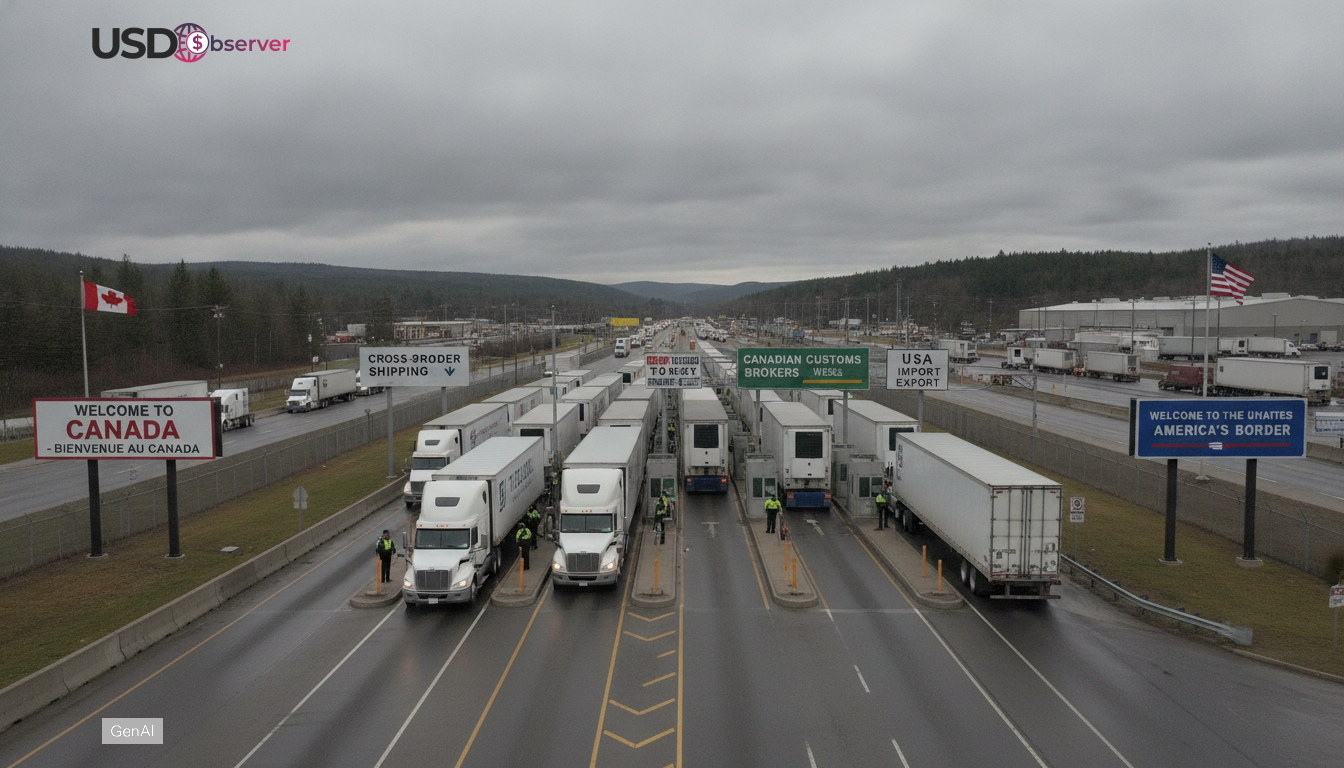
Canadian exporters facing retaliatory measures have reportedly experienced tighter margins and more volatile order flows, with possible impacts on trucking, packaging, and port services. Reports on conditions along the border noted businesses adjusting staffing and production runs to align with less predictable US demand, especially where contracts were priced before tariff changes were implemented. To understand how financial solutions can adapt when costs increase, some market participants highlight cross-border settlement and expedited funding tools described in Banks use stablecoin technology to speed loan funding, particularly when invoices and payment terms are under strain. Canada’s trade ministry has indicated that affected sectors are seeking new buyers, though shifting sales channels can require new certifications and distribution networks.
Forex impact: USD, CAD, and hedging behavior
Pricing pressure is influencing hedging demand as corporates attempt to stabilize cash flow under evolving tariff schedules, according to market participants. In forex markets, traders often react to trade-policy shocks by recalibrating growth expectations and rate paths, which can raise short-term volatility in USD and CAD pairs. Reports have mentioned businesses are monitoring exchange rates alongside tariff lines because currency movements can either offset or amplify duty costs in the US-Canada trade war. For additional information on how monetary expectations ripple through currency positioning, see Fed policy influences US forex as rate cuts are reconsidered, which is often referenced during periods when rate-cut assumptions change. Some banks and corporate treasurers have reportedly extended hedge tenors for key inputs and sales receipts, while reassessing counterparty limits in stressed sectors.
Trade deficits and future implications
Policymakers are considering how bilateral tension might affect trade deficits and investment flows, particularly given the close integration of the two economies. It has been noted that rerouting trade could alter reported balances without necessarily improving competitiveness, as firms might import similar goods through different channels at higher cost. In the global economy, supply-chain detours can add inflationary pressure and decrease efficiency, especially where rules of origin and compliance checks multiply paperwork. For further insights into demand and currency pressures tied to trade flows, see India’s US Dollar Dependency and Economic Exposure, which is sometimes referenced in discussions of how trade invoicing and reserve-currency demand interact. Reports have also described companies cautioning that prolonged uncertainty could encourage the duplication of production lines, potentially increasing unit costs that ultimately reach consumers.