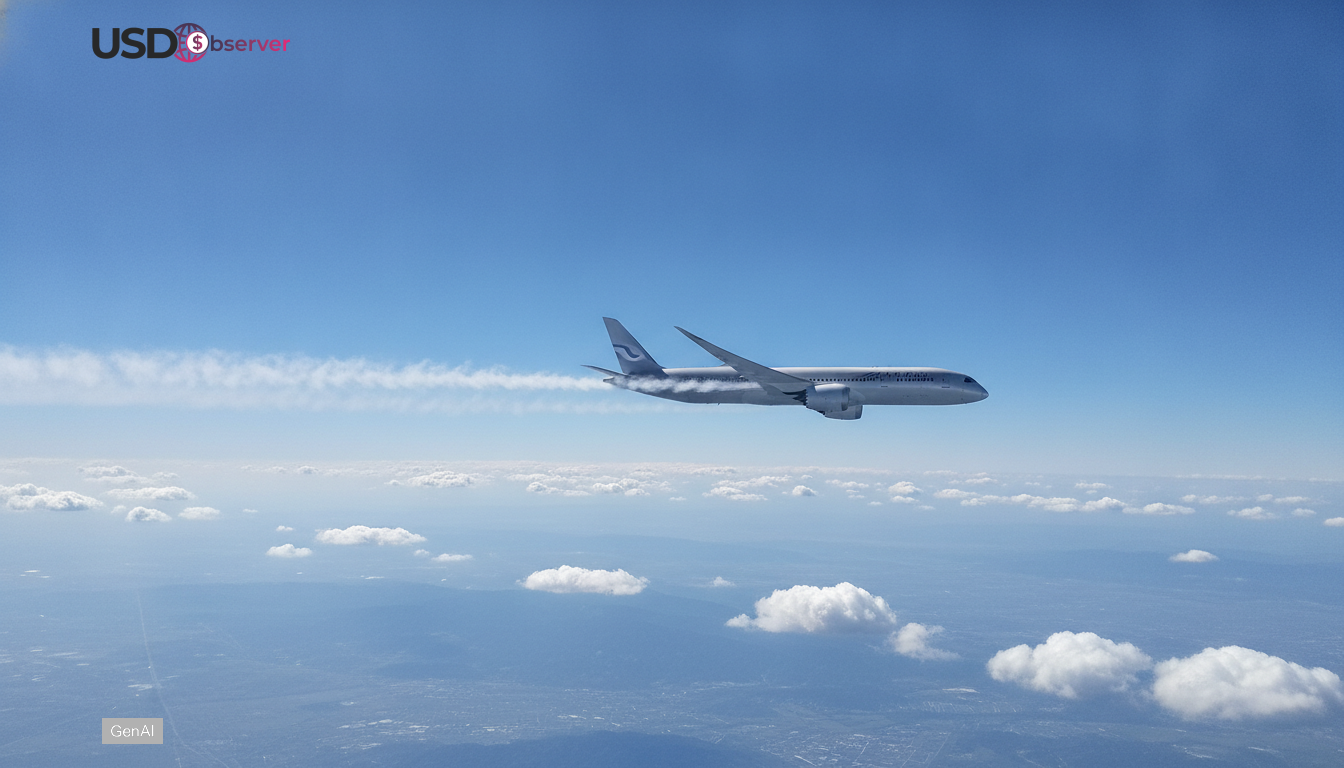
AI aviation climate trial targets contrail reduction
According to BBC reporting, UK aviation partners are conducting a flight planning trial using forecasting and machine learning to divert aircraft from areas where persistent contrails are likely to form. At the core is AI aviation climate software that integrates satellite observations with weather model outputs to identify higher risk ice supersaturated regions before departure. The goal is operational: to change routes or altitudes by small margins rather than redesign aircraft. Early trial planning focuses on short, tactical changes such as around 2,000-foot altitude adjustments or small lateral reroutes where feasible, avoiding major re-planning.
Why persistent contrails can raise warming
Persistent contrails can develop into cirrus-like clouds that trap heat, creating a net warming effect, even without changes in carbon dioxide levels, as discussed in widely cited scientific assessments and summarized by the BBC. The UK initiative positions this as a near-term measure alongside long-term fleet renewal and sustainable aviation fuel, with AI aviation climate routing as one operational approach. The BBC coverage highlights the initiative’s aim to reduce climate warming by focusing on route choice rather than new hardware. The program intends to quantify environmental impact using satellite and model comparisons, expressing any climate change benefit as estimated radiative forcing.
How the UK routing test is being run
The trial is intended to produce operational evidence on factors such as dispatcher acceptance of small altitude changes, necessary ATC coordination, and whether fuel penalties remain minor on typical sectors, according to BBC summaries of the initiative. Governance relies on existing safety and data handling practices used by airlines deploying automation. Industry discussions suggest small increases in track miles are more operationally acceptable than large detours, but thresholds vary by airline and route. The project monitors how modest changes impact time and fuel without relying on a fixed percentage benchmark. For industry oversight on AI markets, see AI Compute Futures: CFTC Weighs Potential CME October Launch.
What results could enable wider adoption
Expanding contrail avoidance beyond the UK depends on the consistency of models across meteorological regimes and the ability of air navigation providers to accommodate tactical altitude changes, as outlined in BBC coverage. AI aviation climate tools are appealing because they integrate into existing flight planning workflows and update as weather guidance improves, without necessitating new aircraft designs. Airlines must demonstrate that extra track miles do not negate the expected climate benefit and that schedule reliability is maintained, a common concern in industry discussions of operational decarbonization. Analysts also observe if larger carriers adopt common data standards to compare performance across fleets and routes, including defining what counts as an avoided persistent contrail.
Challenges, validation, and next steps
Challenges include forecasting ice supersaturated layers, limited high-resolution humidity data, and validating outcomes given variations in contrails due to engine settings and ambient conditions, as researchers note in BBC reports on contrail-avoidance efforts. In the UK trial context, AI aviation climate evaluation relies on repeatable comparisons between satellite detections and model fields across UK flight corridors. Regulators will likely require evidence that guidance does not increase safety risks or controller workload and that evaluation methods are consistent across airlines. The trial also needs to balance incentives, as airlines may bear fuel costs while climate benefits are global, highlighting the importance of policy alignment. Participants expect to publish methodologies and performance metrics, allowing independent scientists to review results.