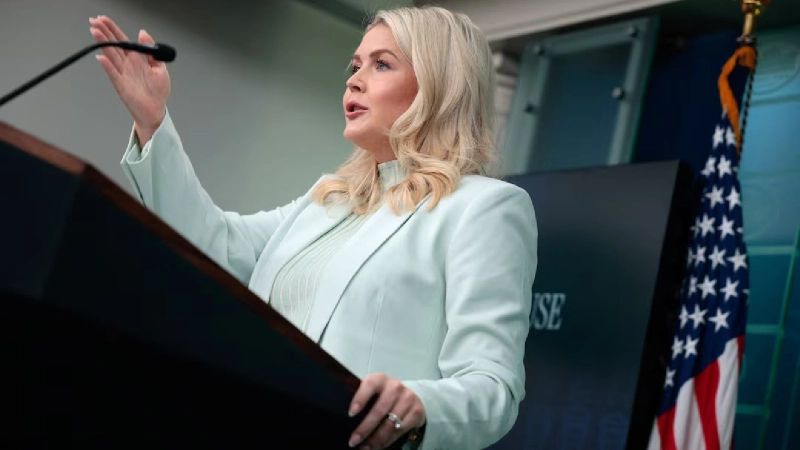
The United States signaled a tougher stance toward Iran as President Donald Trump warned of stronger military action if Tehran does not accept defeat, adding fresh uncertainty to an already volatile geopolitical environment. The statement comes as the conflict enters its fourth week, with diplomatic efforts continuing alongside ongoing military exchanges. Investors are closely watching developments, as the possibility of escalation could disrupt global energy supplies and fuel inflation pressures. The situation is reinforcing caution across financial markets, where geopolitical risk remains a dominant driver of sentiment.
Officials indicated that while discussions with Iran are ongoing, there is no guarantee of a near term resolution, despite reports of a potential framework being considered. Tehran is still reviewing proposals aimed at ending the conflict, suggesting that negotiations remain active but uncertain. The absence of a clear agreement has kept markets on edge, particularly as the Strait of Hormuz remains a critical concern for global oil shipments. Any further escalation could tighten supply conditions and amplify price volatility, affecting both commodity markets and broader economic expectations.
Energy markets have already reacted to the evolving situation, with earlier spikes in oil prices raising concerns about inflation and growth. Although prices showed some easing following reports of diplomatic progress, the risk of renewed escalation continues to overshadow optimism. Higher energy costs have direct implications for global inflation, influencing central bank decisions and altering expectations for interest rates. Investors are increasingly factoring in the possibility that prolonged conflict could sustain elevated price levels, complicating monetary policy across major economies.
Financial markets have shown mixed responses to the latest developments, with equities recovering modestly while currency markets remain cautious. The U.S. dollar has maintained relative strength as investors seek safe haven assets amid ongoing uncertainty. Analysts note that geopolitical tensions are now a central factor shaping capital flows, particularly as inflation risks intersect with slower growth signals. The divergence between asset classes reflects differing expectations about how quickly the conflict might be resolved and how lasting its economic impact could be.
The broader implications extend beyond immediate market reactions, as governments and institutions assess the long term effects of sustained instability in the Middle East. Diplomatic efforts involving multiple countries are continuing, but the outcome remains unclear. As negotiations proceed alongside heightened military rhetoric, global markets are likely to remain sensitive to any developments that could alter the trajectory of the conflict. The balance between escalation risks and diplomatic progress will continue to influence energy prices, currency movements and investor confidence in the weeks ahead.