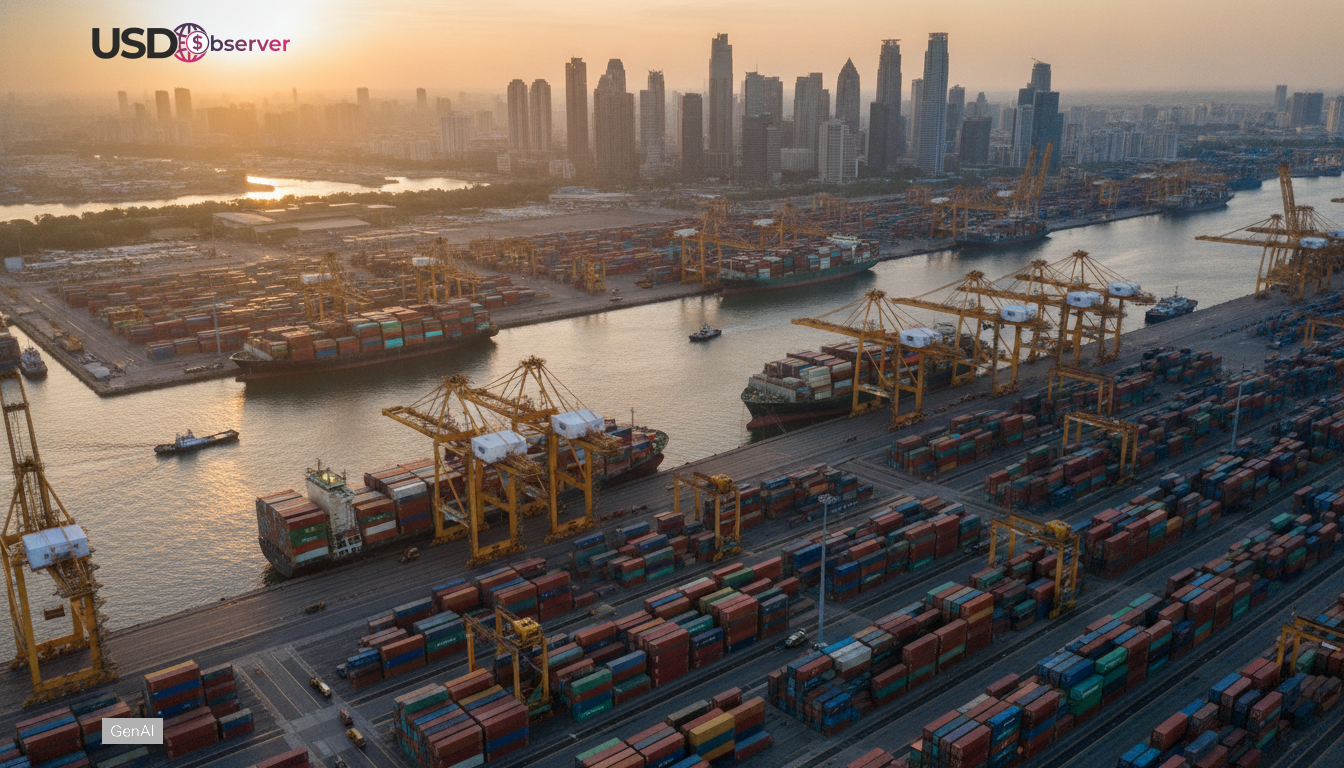
Global trade is becoming more fragmented. Supply chains are being restructured along regional and strategic lines, trade agreements are increasingly selective, and geopolitical considerations are playing a larger role in commerce. At first glance, this fragmentation appears hostile to the dominance of any single currency, particularly the US dollar.
In practice, the opposite is happening. Trade fragmentation is quietly re centralizing the dollar. Even as trade flows split across regions and blocs, settlement, invoicing, and financing continue to rely heavily on the dollar. Rather than weakening the dollar’s role, fragmentation is reinforcing it by increasing the need for a common and reliable settlement currency.
This outcome reflects how trade actually functions under uncertainty. When systems become more complex and politically constrained, participants prioritize efficiency, liquidity, and legal clarity. The dollar continues to meet those requirements better than any alternative.
Regional trade blocks still clear in dollars
The most important reason trade fragmentation is strengthening the dollar is that regional trade blocks continue to clear transactions in dollars. Even when trade shifts away from globalized supply chains toward regional partners, contracts are often still denominated and settled in dollars.
This is especially true for commodities, intermediate goods, and capital equipment. Pricing in dollars simplifies transactions across multiple jurisdictions and reduces currency risk for exporters and importers operating within fragmented trade networks.
As trade routes become less uniform, the value of a shared settlement currency increases. The dollar provides that common reference point, allowing regional trade to function without requiring full currency alignment among participants.
Trade finance remains dollar centric
Trade fragmentation has not altered the structure of trade finance. Letters of credit, shipping insurance, and working capital facilities continue to rely on dollar based banking networks. These systems are deeply embedded and difficult to replace.
Banks involved in cross border trade prefer dollar settlement because it reduces operational complexity and counterparty risk. For firms navigating fragmented supply chains, access to dollar trade finance remains essential.
As long as trade finance operates in dollars, underlying trade flows will continue to reinforce dollar usage regardless of political or regional realignments.
Fragmentation increases demand for neutral settlement
Fragmentation often reflects political or strategic distancing between trading partners. In such environments, trust between currencies can be uneven. Choosing a neutral and widely accepted settlement currency becomes a practical solution.
The dollar benefits from being perceived as operationally neutral in trade settlement. It is not necessarily chosen because of political alignment, but because it minimizes friction between counterparties with differing policy regimes or currency frameworks.
This neutrality becomes more valuable as fragmentation increases. Rather than encouraging local currency settlement, fragmentation often pushes participants toward the most universally accepted option.
Supply chain reconfiguration reinforces dollar pricing
As companies redesign supply chains to reduce exposure to geopolitical risk, they often deal with a larger number of suppliers across multiple regions. This complexity increases the appeal of standardized pricing and settlement.
Using the dollar allows firms to consolidate pricing, accounting, and risk management across fragmented operations. It simplifies procurement and hedging strategies, particularly when dealing with multiple currencies of varying liquidity.
In this way, supply chain diversification reinforces dollar usage rather than diminishing it. The more complex trade becomes, the more valuable a common settlement anchor appears.
Why alternatives struggle in fragmented trade
Efforts to promote alternative settlement currencies face structural challenges in a fragmented trade environment. Regional currencies may work well within tightly integrated blocs, but fragmentation reduces the size and liquidity of those blocs.
Without sufficient scale, alternative settlement systems struggle to match the efficiency of dollar based networks. Firms prioritize reliability over experimentation, especially when margins are under pressure.
As a result, fragmentation does not produce a multipolar settlement landscape. It produces a layered system where regional trade occurs, but clears through a centralized currency.
Conclusion
Trade fragmentation is not eroding the dollar’s role. It is quietly re centralizing it. As supply chains regionalize and geopolitical complexity rises, the need for a common settlement currency increases. The dollar continues to fill that role through entrenched clearing systems, trade finance dominance, and operational neutrality. In a fragmented trade world, the dollar remains the central connector.