Trade policy has re emerged as a central macro risk entering 2026, not because of immediate tariff hikes, but because uncertainty itself is becoming economically costly. Shifts in trade rules, export controls, and geopolitical alignments are altering investment decisions long before they show up in trade volumes. For currency markets, this uncertainty consistently channels demand toward the U.S. dollar.
The dollar’s role during periods of trade stress is often misunderstood. It is not just a beneficiary of higher tariffs or disrupted supply chains, but of the uncertainty surrounding them. When firms and investors struggle to price future costs and access, they default toward liquidity, safety, and flexibility, all of which reinforce demand for the dollar.
Why Trade Uncertainty Acts Like a Financial Shock
Trade barriers function as more than physical restrictions on goods. They introduce uncertainty into pricing, sourcing, and investment planning. Firms delay capital spending, inventories are adjusted defensively, and cross border flows slow. These behavioral responses tighten global financial conditions even without an explicit policy change.
For markets, uncertainty increases risk premiums. Investors respond by reallocating toward assets perceived as liquid and resilient. The U.S. dollar benefits because it sits at the center of global trade invoicing, financing, and reserve management. As uncertainty rises, demand for dollar liquidity increases regardless of yield differentials.
The Transmission Channel Into Currency Markets
The link between trade uncertainty and the dollar runs through several channels. First, reduced trade confidence weakens growth expectations outside the United States, particularly in export dependent economies. Second, capital flows become more selective, favoring deeper financial markets. Third, volatility rises, reinforcing defensive positioning.
These forces tend to lift the dollar even when U.S. growth is not accelerating. The currency strengthens not because of optimism, but because alternatives appear riskier. This explains why the dollar often rallies during trade related stress episodes despite limited changes in domestic fundamentals.
Why Emerging Markets Feel the Impact First
Emerging markets are typically the first to reflect trade barrier stress. Their economies are more exposed to external demand and global supply chains, and their financial markets are more sensitive to shifts in risk appetite. When trade uncertainty rises, capital flows retreat quickly, putting pressure on currencies.
This dynamic reinforces the dollar bid. As EM currencies weaken, dollar funding demand increases, particularly for trade finance and debt servicing. Even countries not directly targeted by trade measures can experience spillover effects as global liquidity tightens.
Trade Policy Versus Trade Volume
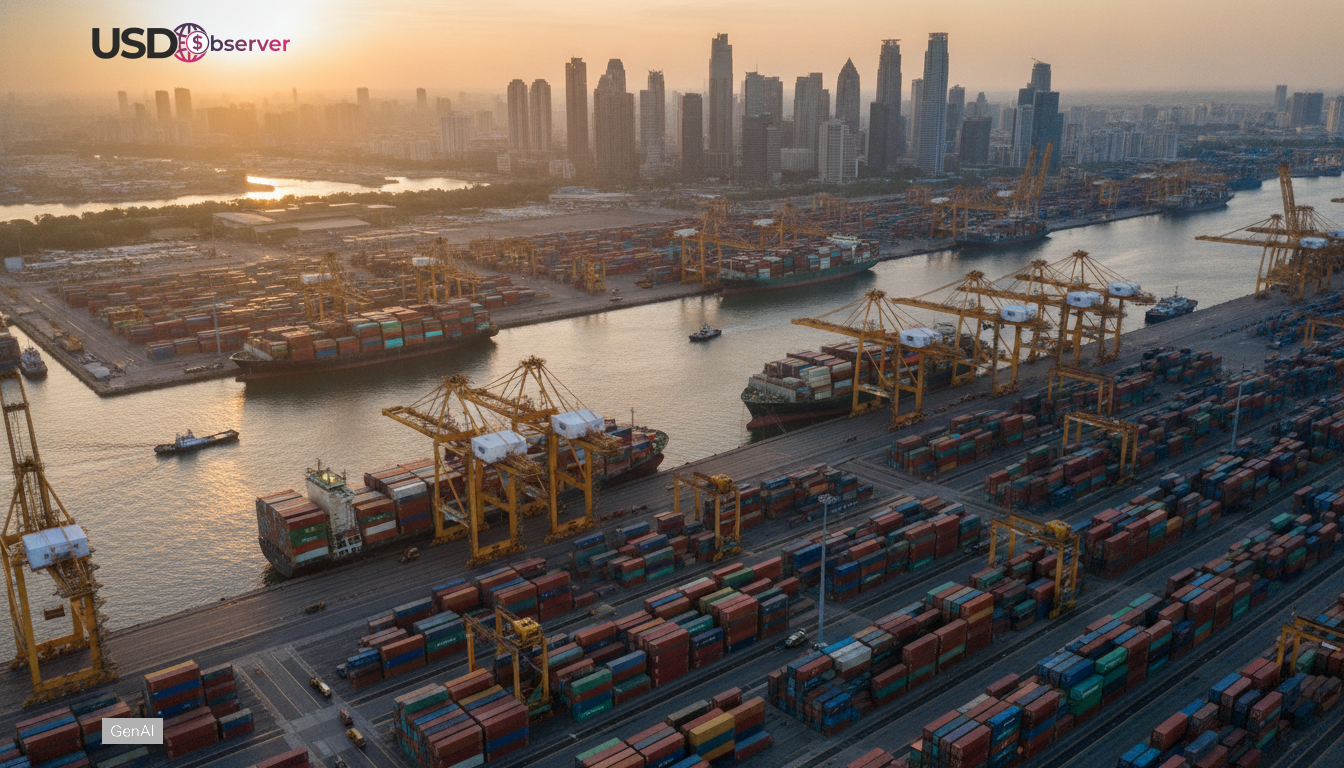
An important distinction in 2026 is that trade volumes may not collapse even as uncertainty rises. Firms adapt by rerouting supply chains or diversifying sourcing, but these adjustments come at a cost. Higher operating complexity reduces efficiency and weighs on productivity.
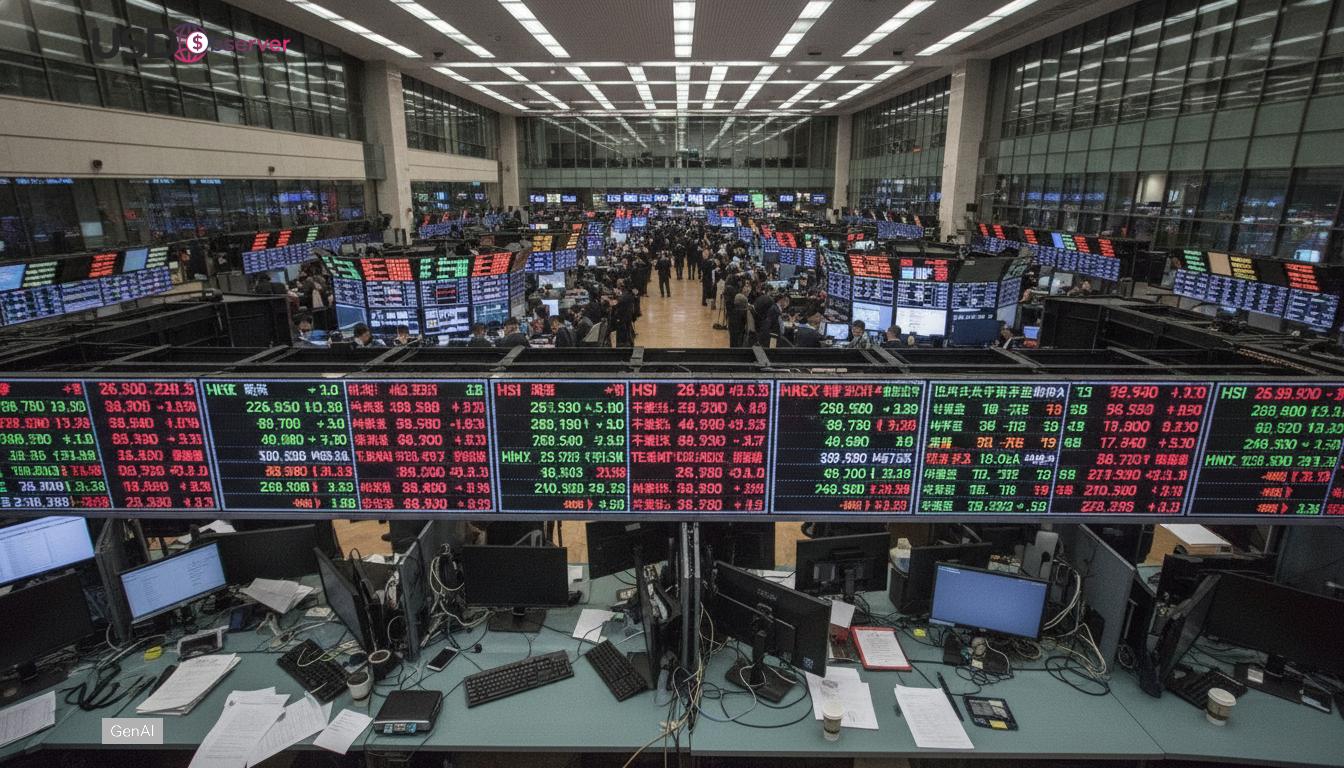
Markets price this friction through higher risk premiums rather than immediate output losses. As a result, the dollar responds more to policy signals and rhetoric than to trade data itself. This is why headlines often move FX markets even when hard trade numbers remain stable.
Building a Trade Barrier Shock Index
A practical way to track this dynamic is through a trade barrier shock index that combines policy announcements, tariff coverage, export restrictions, and geopolitical developments. Such an index does not predict trade flows directly but measures uncertainty intensity.
When the index rises, it signals tightening global financial conditions. Historically, these periods coincide with stronger dollar performance and underperformance in risk sensitive currencies. For analysts, this framework helps explain why the dollar can strengthen even in the absence of domestic growth surprises.
Implications for Global Growth in 2026
Trade uncertainty adds another layer to an already fragmented global economy. It discourages long term investment and reinforces regional divergence. While some economies adapt quickly, others face prolonged adjustment periods.
For global growth, the effect is cumulative rather than immediate. Output slows gradually, confidence erodes, and financial conditions tighten. In this environment, the dollar’s role as a safe and liquid currency becomes more pronounced.
Conclusion
In 2026, trade barriers matter as much for their uncertainty as for their direct economic impact. Policy ambiguity acts like a financial shock, tightening conditions and boosting demand for the U.S. dollar. Understanding this mechanism helps explain why the dollar often strengthens during periods of trade tension, even when growth data remains mixed.