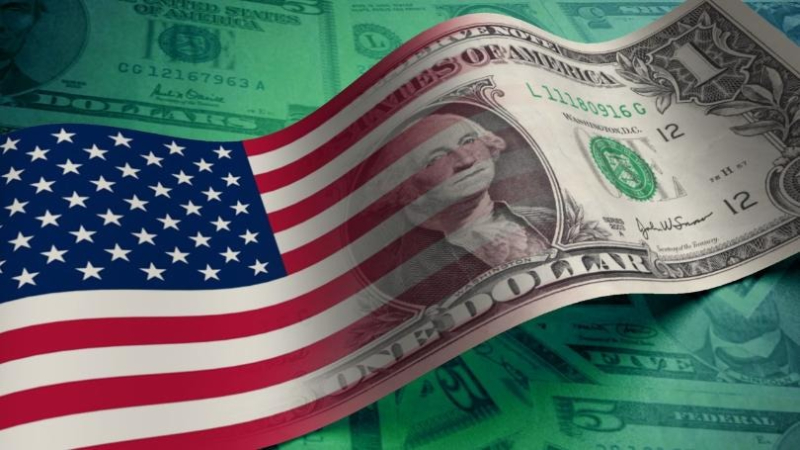
Economic momentum in the United States is easing as 2026 unfolds. Growth has moderated from post pandemic peaks, consumer demand is becoming more selective, and business investment is showing caution. Under normal circumstances, a slowing domestic economy might be expected to weaken a country’s currency and reduce its global influence. That has not happened. Instead, the United States continues to set the global price of money.
This apparent contradiction reflects how global finance actually functions. The influence of the U.S. economy extends far beyond its growth rate. Through its monetary policy, financial markets, and currency dominance, the United States continues to shape liquidity conditions worldwide, even as its own expansion slows.
The Federal Reserve Still Anchors Global Financial Conditions
The most important reason the United States sets the global price of money is the central role of its monetary policy. Decisions and signals from the Federal Reserve ripple through global markets, affecting borrowing costs, capital flows, and risk appetite far beyond U.S. borders.
Even when growth slows, policy guidance matters. Market participants around the world price assets based on expectations of U.S. interest rates and liquidity conditions. A cautious or restrictive stance keeps global financial conditions tighter than they would otherwise be, regardless of domestic economic momentum.
This influence is structural rather than cyclical. As long as the dollar remains the primary funding and reserve currency, U.S. monetary policy will continue to shape global pricing.
Global Liquidity Is Still Dollar Driven
Global liquidity is not determined by aggregate growth but by access to funding and credit. The dollar sits at the center of this system. Banks, corporations, and governments rely on dollar markets for financing, trade settlement, and balance sheet management.
When dollar liquidity tightens or eases, the impact is felt globally. Emerging markets, in particular, are sensitive to changes in dollar funding costs. Even advanced economies adjust financial conditions in response to shifts in U.S. policy expectations.
This explains why a slowing U.S. economy does not necessarily loosen global liquidity. What matters is not growth, but the availability and price of dollars.
Slower Growth Has Not Reduced Policy Credibility
Another reason the U.S. retains its influence is policy credibility. Slowing growth has not undermined confidence in the ability of U.S. institutions to manage inflation, financial stability, and market functioning. Predictable frameworks and transparent communication continue to anchor expectations.
Markets differentiate between cyclical slowdown and systemic weakness. While growth is moderating, there is no widespread perception that policy tools are constrained or credibility is eroding. This distinction allows the United States to maintain its role as a pricing reference point.
In many other economies, slower growth quickly raises concerns about policy effectiveness or fiscal sustainability. That contrast reinforces the U.S. position even during periods of deceleration.
Spillovers Are a Feature Not a Bug
Global spillovers from U.S. policy are often described as side effects, but they are a core feature of the system. Financial integration means that changes in U.S. rates influence asset prices, exchange rates, and capital flows worldwide.
These spillovers persist even when domestic conditions soften. Investors and institutions cannot ignore U.S. signals because their balance sheets and risk models are tied to dollar benchmarks. As a result, the global price of money remains linked to U.S. conditions rather than global averages.
This dynamic helps explain why other central banks often react to U.S. policy shifts even when their domestic economies are on different trajectories.
The Dollar Transmits Policy Beyond Borders
The dollar acts as the transmission mechanism for U.S. monetary influence. Because so much global finance is denominated in dollars, changes in U.S. rates directly affect global borrowing costs. This channel remains powerful regardless of U.S. growth trends.
A slowing U.S. economy may reduce demand for imports, but it does not diminish the dollar’s role in funding and settlement. As long as the currency remains central to global finance, policy signals continue to travel outward.
This separation between growth and influence is a defining feature of the current global system.
Conclusion
The U.S. economy may be slowing, but its influence over global financial conditions remains intact. Through monetary policy, dollar based liquidity, and institutional credibility, the United States continues to set the global price of money. Growth cycles change, but structure endures, and for now, that structure remains firmly anchored in the U.S.