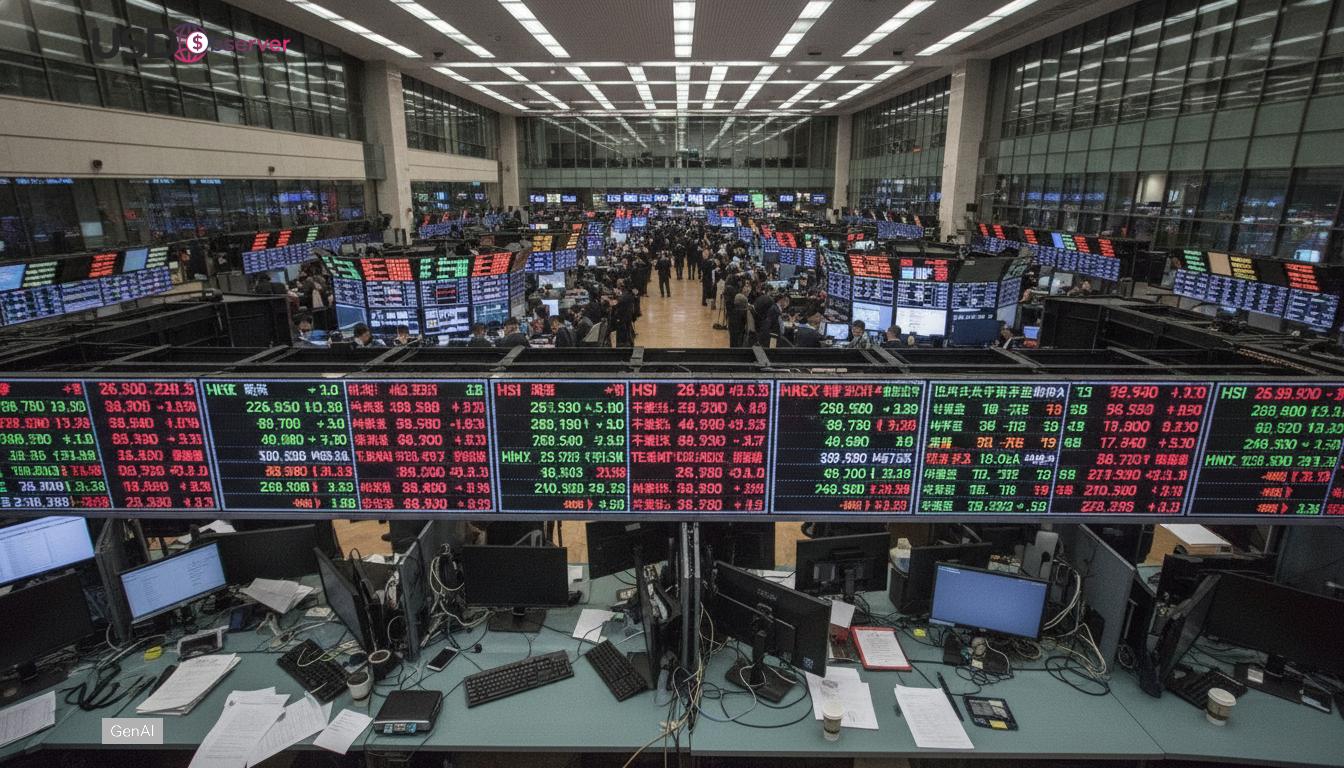
The start of 2026 has brought a familiar rhythm back to global markets. Economic calendars are crowded, volatility clusters around scheduled releases, and short term positioning reacts sharply to each new data point. On paper, this looks like a healthy information driven environment where transparency guides price discovery.
In reality, markets are struggling with a different problem. The issue is not a lack of data, but an excess of it. When too many indicators arrive in compressed windows, clarity suffers. Instead of improving decision making, the data calendar becomes a source of noise. In 2026, markets do not need surprises. They need coherence.
Why the 2026 data calendar is amplifying uncertainty
The most important challenge is density. Key releases on growth, inflation, labor, and activity often arrive within days of each other. Each indicator measures a different slice of the economy, often with different methodologies and lag structures.
When markets attempt to process all of this information simultaneously, contradictions emerge. One report points to cooling demand while another suggests resilience. Investors respond by trading the last print rather than the broader trend. This behavior increases volatility without improving understanding.
The result is reactive pricing rather than informed positioning. Markets move not because the outlook has changed, but because interpretation has become fragmented.
Conflicting signals weaken conviction
In 2026, macro signals are less directional than in previous cycles. Inflation is easing but unevenly. Growth is slowing but not collapsing. Labor markets are cooling but still tight. Each data release reinforces part of the story while contradicting another.
This creates a confidence problem. When signals conflict, conviction erodes. Traders reduce position size, shorten time horizons, and rely more heavily on technical levels. Fundamental analysis becomes harder to translate into action.
The calendar itself becomes a risk factor. Instead of waiting for clarity, markets anticipate confusion and price defensively around it.
Event driven trading replaces trend formation
Another consequence of the crowded calendar is the dominance of event driven trading. Positions are opened and closed around releases rather than built over time. This shortens market memory and weakens trend persistence.
When trends fail to form, liquidity fragments. Volatility spikes around events but fades quickly afterward. This pattern makes it difficult for longer term investors to express views and reinforces short term dominance.
In this environment, even meaningful data can fail to produce lasting moves. The market absorbs the shock and resets, waiting for the next release.
Geopolitical headlines add to the noise
Economic data does not arrive in a vacuum. In early 2026, geopolitical developments continue to intersect with macro releases. Energy markets, trade policy, and security events influence sentiment independently of scheduled data.
When geopolitical headlines coincide with economic prints, interpretation becomes even more difficult. Markets struggle to separate structural trends from temporary shocks. Risk premiums rise not because conditions worsen, but because attribution becomes unclear.
This interaction magnifies the data calendar problem. It is not just too much data, but too many narratives competing at once.
Central bank communication faces diminishing returns
Central banks rely on data to justify policy decisions. When markets struggle to interpret that data, communication loses effectiveness. Guidance that once anchored expectations now competes with every new release.
In a crowded calendar, central bank messages are quickly overshadowed. Markets focus on the next data point rather than the policy framework. This increases sensitivity to surprises, even small ones.
The paradox is that transparency can reduce clarity when context is missing. More information does not always mean better understanding.
What clarity would look like for markets
Markets do not need fewer data points. They need better hierarchy. Clarity comes from knowing which indicators matter most at a given stage of the cycle. Without that hierarchy, every release feels important, even when it is not.
In 2026, the most valuable information is consistency across indicators rather than extremes in any single one. Markets need confirmation, not shock. A series of aligned signals builds confidence and supports trend formation.
Clarity also requires patience. Allowing data to accumulate into a narrative reduces the temptation to overreact. That discipline is harder in fast markets, but increasingly necessary.
Why this matters for global stability
The data calendar problem is not just a trading issue. It affects capital allocation, policy expectations, and financial stability. When markets struggle to interpret information, risk management becomes more conservative.
This conservatism can tighten financial conditions even without policy changes. Businesses delay investment. Investors demand higher premiums. Liquidity becomes more selective.
In that sense, confusion itself becomes a macro force. Clarity is not just desirable. It is stabilizing.
Conclusion
The challenge of 2026 is not uncertainty, but information overload. Markets are drowning in data while starving for coherence. A crowded calendar amplifies noise, weakens conviction, and shortens time horizons. What markets need now is not bigger surprises, but clearer signals that allow trends to form and expectations to stabilize. In a complex macro environment, clarity is the most valuable data point of all.