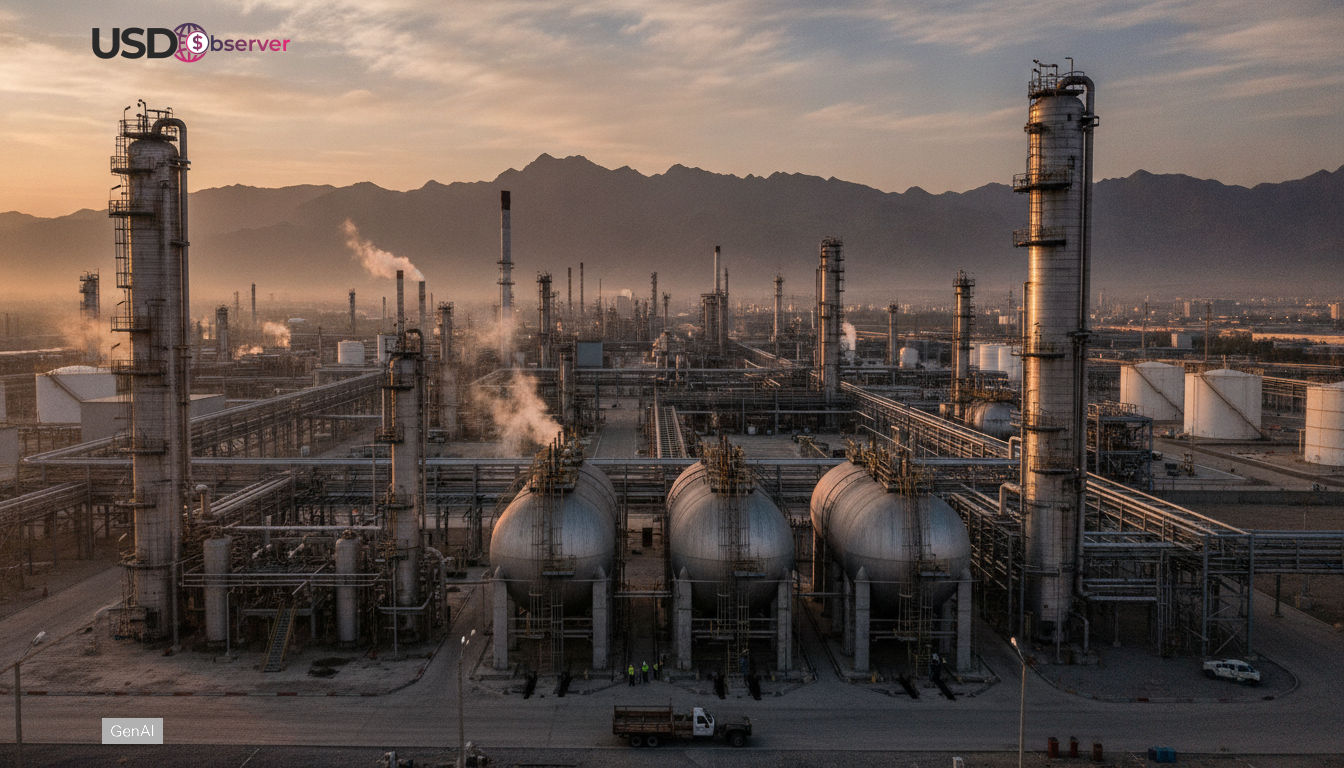
Oil prices are no longer acting as a steady disinflationary force for the US and global economy, raising fresh questions about the inflation outlook and the Federal Reserve’s policy path. After spending much of the past year helping to ease headline price pressures, crude is now trading near seven month highs, narrowing the year on year decline that had been weighing down inflation readings.
Brent crude recently climbed above 72 dollars a barrel, while West Texas Intermediate moved past 67 dollars, lifting year to date gains to roughly 15 to 20 percent. Earlier in the year, oil prices were significantly lower compared with the same period in 2025, creating favorable base effects that helped reduce annual inflation figures. That dynamic is fading quickly. Brent is now only slightly cheaper than it was a year ago, meaning oil’s contribution to headline inflation could soon turn positive.
Base effects play an important role in inflation calculations. When prices are sharply lower than the previous year, they mechanically pull down annual inflation rates. As those comparisons normalize, the disinflationary drag disappears. With US inflation still hovering near 3 percent by the Fed’s preferred measure, even a modest rise in energy prices could complicate the case for interest rate cuts.
Although the Federal Reserve focuses on core inflation, which excludes food and energy, oil prices still influence broader costs across the economy. Transportation and motor fuel represent a significant portion of the consumer price index basket. Higher crude prices increase input costs for goods and services, which can eventually filter through to consumers.
Research from central banks and private economists suggests that sustained increases in oil can have measurable effects on headline inflation. Estimates indicate that a permanent 10 percent rise in oil prices could add a few tenths of a percentage point to inflation over time. While that impact may appear limited in isolation, it becomes more significant when inflation remains above target for an extended period.
Geopolitical tensions are adding to the upward pressure. Rising friction between Washington and Tehran has introduced a geopolitical premium into crude markets. Roughly one fifth of global oil supply moves through the Strait of Hormuz, a critical shipping route between Iran and Oman. Even a low probability of disruption in that region can elevate prices as traders factor in supply risks.
At the same time, underlying supply dynamics suggest that the global oil market is not facing an immediate shortage. Production remains elevated, and analysts note that output adjustments could offset potential disruptions. Nevertheless, the recent rally underscores how quickly energy markets can shift from dampening inflation to amplifying it.
With inflation having exceeded the Fed’s 2 percent target for several years, policymakers are likely to watch oil markets closely. A sustained energy driven uptick in price pressures would add another variable to an already complex policy environment shaped by trade developments, fiscal dynamics, and global growth trends.