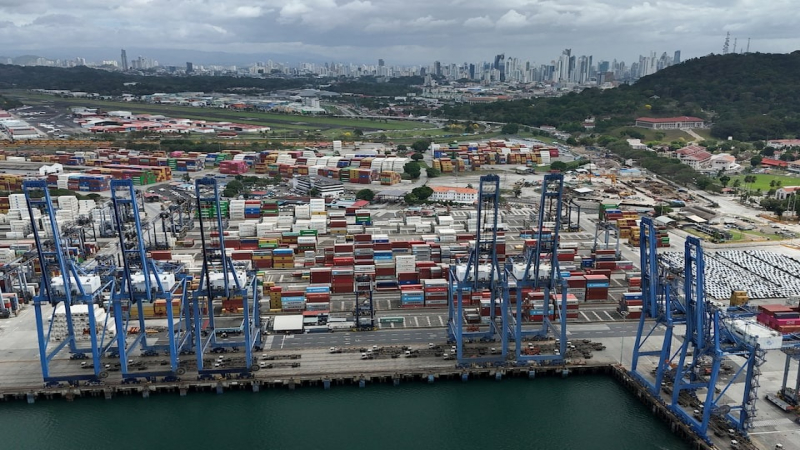
Panama has formally canceled long standing port concessions held by a subsidiary of Hong Kong based CK Hutchison, clearing the way for Denmark’s Maersk, through its APM Terminals unit, to assume temporary control of two strategic terminals near the Panama Canal.
The Supreme Court ruling, published in Panama’s official gazette, annuls the contracts for the Balboa and Cristobal ports, which had been operated by Panama Ports Company for more than two decades. With the publication of the decision, the legal process became final, and the Panamanian government moved swiftly to secure operational continuity at both sites.
The Panama Maritime Authority has taken possession of the ports by decree to ensure uninterrupted services along one of the world’s most important maritime trade routes. Officials overseeing the transition said separate contracts are being prepared for each terminal, rather than a single combined agreement, as part of an interim management framework.
President Jose Raul Mulino previously indicated that the government would formalize an arrangement with APM Terminals Panama once the court decision became legally binding. The temporary structure will remain in place while authorities design a new long term concession model to be awarded at a later stage. The government has emphasized that port operations will continue without disruption during the transition period.
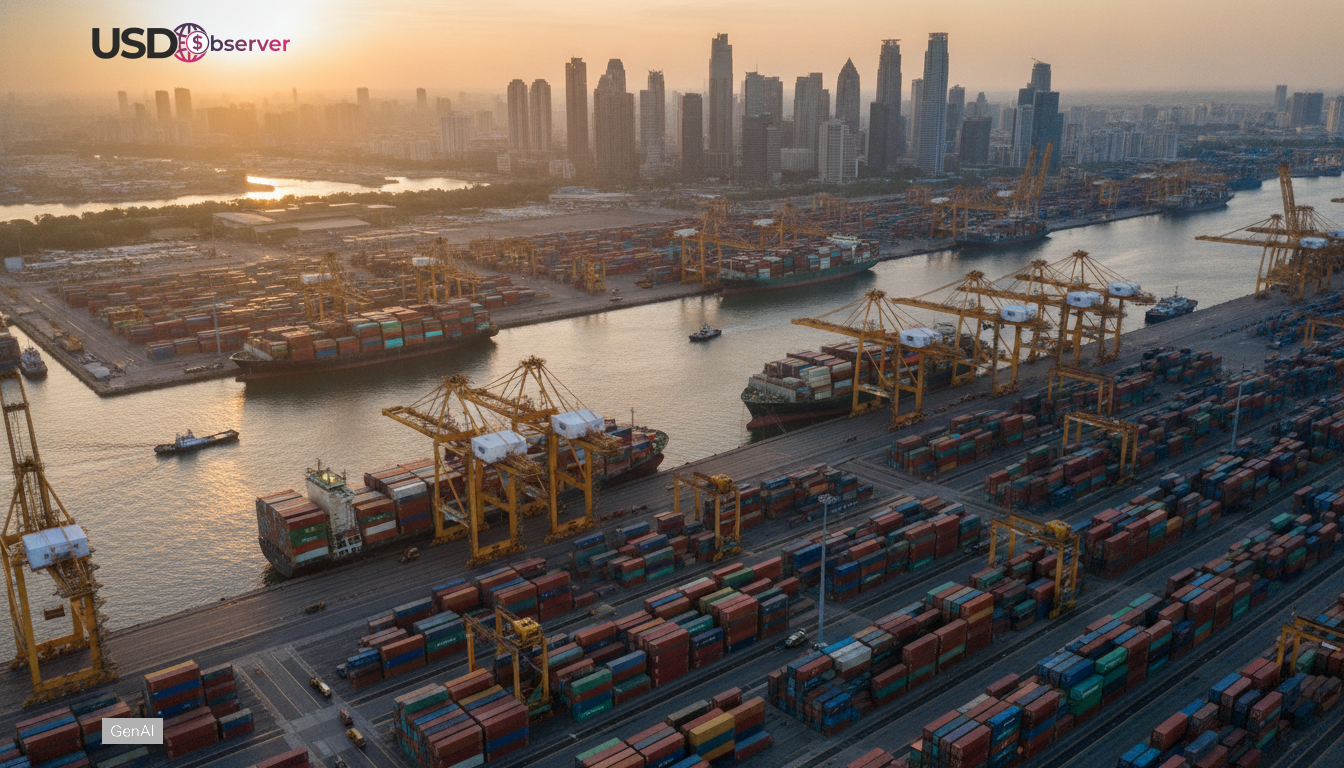
The Balboa and Cristobal terminals sit at the Pacific and Atlantic entrances of the Panama Canal, a waterway that handles roughly 5 percent of global maritime trade. The canal is a critical artery for container shipping, energy exports, and bulk commodities moving between Asia, the Americas, and Europe. Control over adjacent port infrastructure is therefore considered strategically significant in global logistics networks.
The ruling comes against a backdrop of heightened geopolitical tension and increasing scrutiny over foreign control of strategic assets. The decision is widely viewed as a development with implications beyond Panama, as major powers compete for influence over key trade corridors. In recent years, concerns have grown in Washington about the role of Chinese affiliated companies in operating infrastructure near the canal.
For global shipping companies, the immediate priority is operational stability. Maersk, one of the world’s largest container shipping groups, already operates terminals in multiple regions and has extensive experience managing high volume port facilities. The interim takeover is expected to maintain continuity in cargo handling, vessel scheduling, and supply chain coordination.
Panama’s government has signaled that the new long term concession process will aim to strengthen oversight, improve transparency, and safeguard national interests. Investors and logistics firms will closely monitor how the upcoming bidding framework is structured, particularly in light of the canal’s strategic importance to global trade flows.
The transfer of control marks a significant shift in the management of infrastructure surrounding the Panama Canal and underscores how legal decisions, geopolitical rivalry, and trade policy continue to reshape the global maritime landscape.