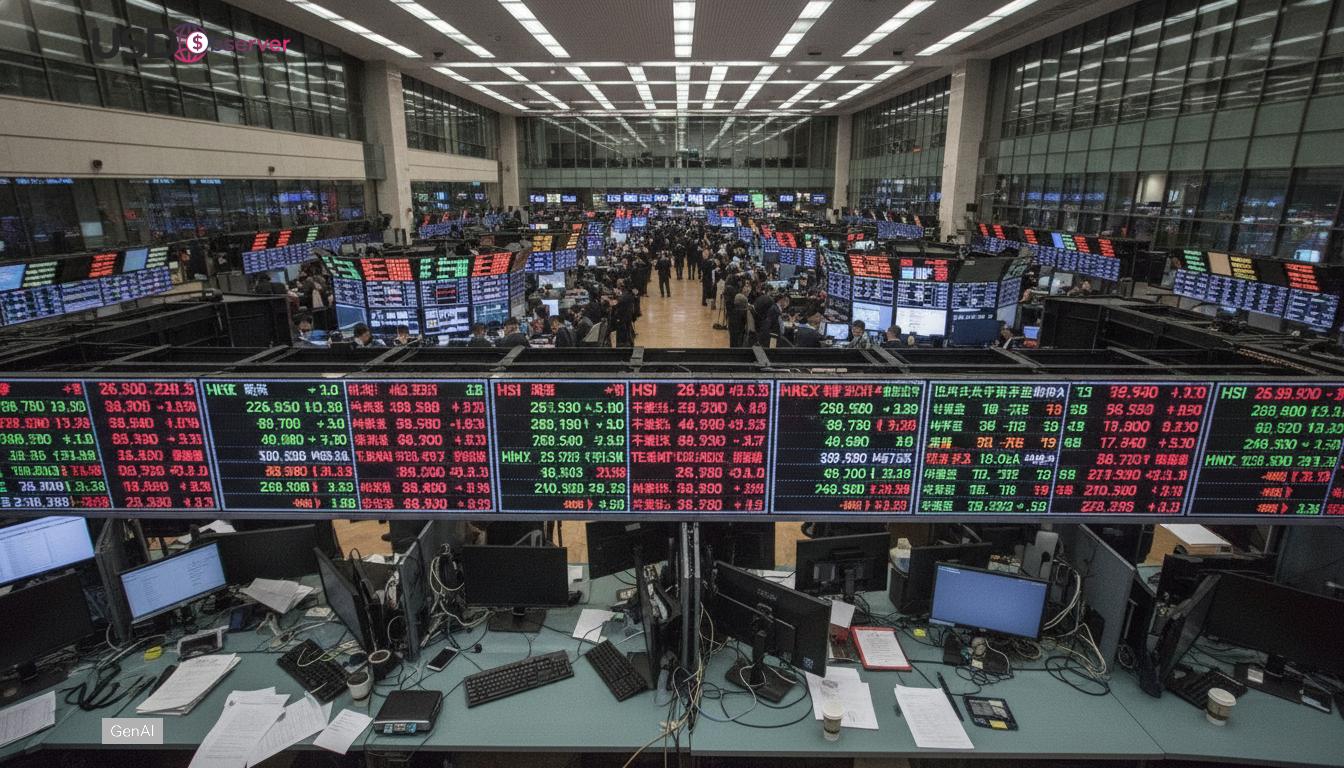
Global financial markets have opened 2026 with unusually aggressive risk positioning, as investors lean heavily into equities, commodities, and growth-linked assets while sharply reducing cash and bond exposure. The rally has been fueled by strong economic momentum, resilient corporate earnings, and renewed enthusiasm around technology investment, particularly artificial intelligence. Equity benchmarks remain near record highs, reinforcing confidence that the global economy may avoid any meaningful slowdown this year. This optimism has been reflected in investor behavior, with allocations suggesting expectations of continued expansion rather than a cyclical correction. At the same time, political volatility briefly rattled sentiment after renewed trade tensions between the United States and Europe, though the episode was quickly defused. The speed with which markets recovered highlighted how deeply risk-on positioning has become embedded, raising questions about whether optimism is beginning to outrun underlying stability across financial systems.
Investor surveys conducted at the start of the year show one of the most bullish readings in several years, with a growing share of fund managers expecting a so called no landing scenario for the global economy. Expectations for a synchronized slowdown have faded, replaced by confidence that growth can remain strong without triggering destabilizing inflation. Global economic projections have reinforced this view, with forecasts pointing to solid expansion through 2026 and limited deceleration into 2027. Equity exposure has risen sharply, commodities have attracted renewed inflows, and cyclical sectors such as banking have regained favor. Cash holdings have fallen to historic lows, signaling that managers are fully committed to market exposure rather than holding defensive buffers. This extreme positioning has pushed overall sentiment indicators into territory associated with heightened vulnerability to shocks, even as confidence remains widespread.
Despite the surge in optimism, fault lines remain beneath the surface, particularly in bond and currency markets. Investors have become increasingly underweight fixed income, reflecting concerns that renewed trade disputes or tariff pressures could complicate the inflation outlook. At the same time, skepticism toward the dollar persists, with many market participants viewing it as still overvalued following last year’s pullback. Gold has emerged as a partial hedge against geopolitical risk, becoming one of the most crowded trades as prices reach new highs. While equity exposure dominates portfolios, a lack of downside protection is notable, with a significant share of investors choosing not to hedge against near-term market drawdowns. This combination of low cash, limited hedging, and heavy equity exposure suggests that any disruption could propagate quickly through asset prices.
Technology valuations remain another area of close scrutiny as capital continues to flow into large growth companies tied to artificial intelligence and advanced computing. While current valuation levels are below historical extremes seen during earlier market bubbles, the concentration of investment has increased the system’s sensitivity to earnings disappointments or abrupt sentiment shifts. The growing share of foreign ownership in US equities and debt adds another layer of complexity, increasing the potential for volatility to spill across borders. Markets appear comfortable for now, supported by strong growth narratives and liquidity, but the coexistence of extreme optimism and unresolved geopolitical and structural risks leaves little margin for error. The balance between confidence and complacency will likely define market stability in the months ahead.