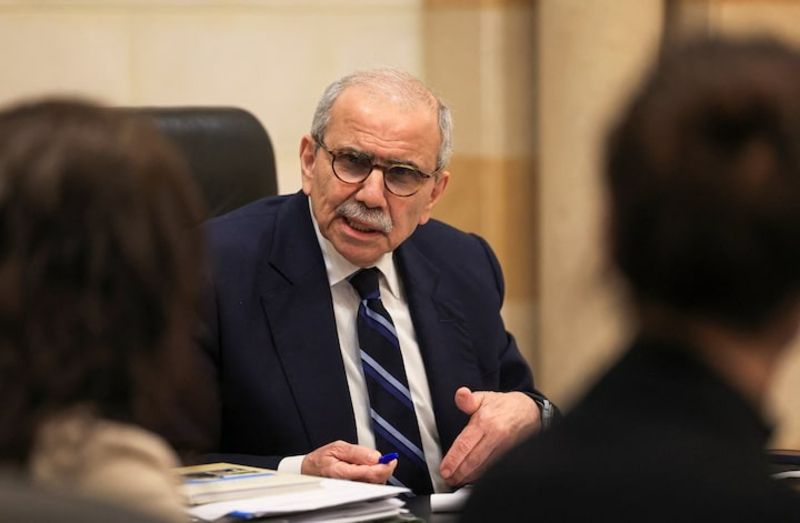
Lebanon’s Prime Minister Nawaf Salam announced that the government will move to ban Hezbollah’s military activities, marking a significant political development as tensions intensify across the Middle East. The statement follows Israeli strikes on sites described as linked to Hezbollah, carried out in response to missile and drone attacks attributed to the group after the reported killing of Iran’s Supreme Leader Ali Khamenei.
The announcement signals a potential shift in Lebanon’s internal security posture at a time when regional conflict risks spilling across borders. Hezbollah, a powerful political and armed movement within Lebanon, has long operated both as a political party and as an armed organization. Any formal effort to curb its military wing would represent a major domestic and geopolitical turning point.
Israeli officials said their military targeted Hezbollah related positions after projectiles were launched toward Israeli territory. The exchange comes amid a broader escalation involving Iran and Israel, raising fears of a widening regional confrontation that could impact financial markets, energy flows and political stability across the Gulf and Eastern Mediterranean.
Prime Minister Salam did not provide detailed implementation steps but indicated that Lebanon intends to assert state authority over armed activities within its borders. Analysts note that translating such a declaration into policy will be complex, given Hezbollah’s deep political representation and its longstanding role in Lebanon’s security dynamics.
Lebanon’s fragile economy adds another layer of sensitivity. The country has faced prolonged financial crisis, currency depreciation and banking sector strain in recent years. Heightened security tensions risk further undermining investor confidence and economic recovery efforts. Regional instability has already weighed on tourism, remittances and cross border trade, key pillars of Lebanon’s economy.
Financial markets across the Middle East have been reacting to broader geopolitical developments, including rising oil prices and volatility in currency and bond markets. While Lebanon is not a major oil exporter, regional energy disruptions influence capital flows and risk perception throughout the region.
The international community is closely watching developments in Beirut. Any sustained escalation involving Hezbollah and Israel could have implications for regional security arrangements and diplomatic efforts aimed at containing conflict. Governments and multilateral institutions have repeatedly emphasized the importance of preventing further destabilization.
Prime Minister Salam’s statement appears designed to reassure both domestic and international audiences that Lebanon seeks to avoid becoming a central battlefield in the broader confrontation. Whether the move leads to tangible changes on the ground will depend on political negotiations within Lebanon and the trajectory of events across the region.
As tensions remain elevated, policymakers and investors alike are monitoring how Lebanon balances internal political realities with mounting external pressure. The evolving situation underscores the interconnected nature of regional security and economic stability in the Middle East.