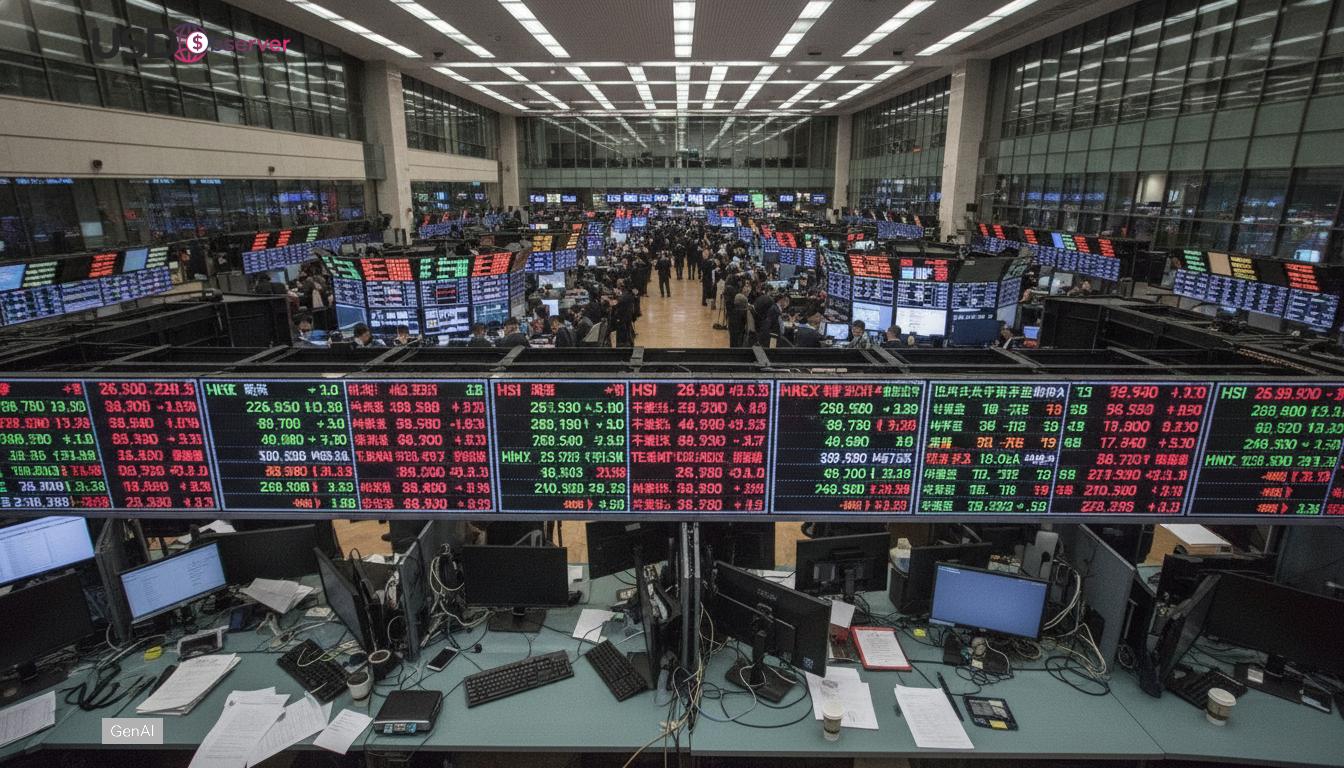
The global economy entered 2026 with a sense of cautious relief. Inflation has cooled, growth has avoided contraction, and labor data appears stable. Yet beneath this surface calm, labor market risk is quietly returning as a central macro constraint. The challenge is not weak data, but data that is good enough to delay relief while still restrictive enough to tighten conditions.
This dynamic creates what many policymakers and markets describe as a soft landing environment. However, soft landings carry their own risks. When employment indicators look acceptable rather than strong, policy settings can remain tight for longer than the economy can comfortably absorb. The result is a slow squeeze on labor conditions that often goes unnoticed until momentum fades.
Why Okay Labor Data Can Tighten Financial Conditions
Labor markets influence policy through perception as much as through statistics. When employment growth remains positive and unemployment stays relatively low, policymakers gain confidence that the economy can tolerate restrictive settings. This confidence reduces urgency to ease, even if growth is decelerating.
In 2026, this has important implications. Wage growth has moderated but not collapsed. Hiring continues, but at a slower pace. From a policy perspective, this suggests balance. From a business perspective, it signals rising costs without strong pricing power.
Financial conditions respond accordingly. Interest rates remain elevated, credit remains selective, and firms face higher thresholds for expansion. The labor market does not deteriorate sharply, but it becomes less dynamic. This quiet tightening often affects small and mid-sized employers first, where margins are thinner and financing access is more limited.
The Soft Landing Trap For Policymakers
A soft landing is often framed as an ideal outcome, but it can become a trap when conditions remain restrictive for too long. Policymakers rely heavily on labor data to validate their stance. As long as layoffs are contained and job creation persists, caution dominates.
The risk lies in timing. Labor data is typically a lagging indicator. By the time job losses accelerate, other parts of the economy may already be under strain. Investment slows, hiring freezes spread, and productivity growth weakens before unemployment rises meaningfully.
In this environment, the absence of bad data can delay necessary adjustments. Markets price stability, while underlying conditions gradually erode. This mismatch increases the risk of a sharper adjustment later rather than a smooth transition.
Corporate Behavior And Employment Decisions
Firms respond to tight conditions not by immediate layoffs, but by restraint. Hiring slows, open roles remain unfilled, and capital spending is postponed. This behavior keeps headline employment figures stable while reducing forward momentum.
Over time, this restraint affects labor quality and mobility. Workers become less willing to change jobs, limiting wage competition and innovation. New entrants face fewer opportunities, and productivity gains soften as firms focus on cost control rather than growth.
This gradual shift rarely triggers alarms, but it reshapes the labor market. By the time stress becomes visible in aggregate data, flexibility has already been lost. This is why labor risk often emerges suddenly despite long periods of calm indicators.
Interaction With Rates And Fiscal Constraints
Labor market stability also interacts with interest rate policy and fiscal limits. Elevated rates increase financing costs for businesses, reinforcing caution in hiring and investment. At the same time, governments face tighter fiscal space, reducing their ability to offset weakness through spending.
This combination narrows the margin for error. If labor conditions weaken unexpectedly, policy responses may be slower or more constrained than in previous cycles. Markets must therefore consider not just current labor data, but the system’s capacity to respond to deterioration.
For currencies and capital flows, this matters. Economies perceived as maintaining stable employment may attract capital initially, but sustained tightness can eventually weigh on growth expectations and asset valuations.
What Markets Should Watch Going Forward
In 2026, the key signals lie beneath headline numbers. Participation rates, hours worked, and job switching behavior often provide earlier warnings than unemployment rates alone. A decline in these indicators suggests tightening conditions even when job growth remains positive.
Markets should also monitor the balance between wage growth and productivity. When wages rise faster than output, pressure builds on margins, leading to delayed but sharper employment adjustments.
Understanding these dynamics helps avoid complacency. Stable data does not always mean safe conditions. Often, it signals a phase where risks are accumulating quietly.
Conclusion
Labor market risk in 2026 is not about collapse, but about constraint. Okay data can justify prolonged tight conditions, creating a soft landing trap where adjustment is delayed rather than avoided. For markets and policymakers, the challenge is recognizing when stability masks vulnerability. The next phase of the cycle will be shaped not by dramatic shocks, but by how long quiet tightening is allowed to persist.