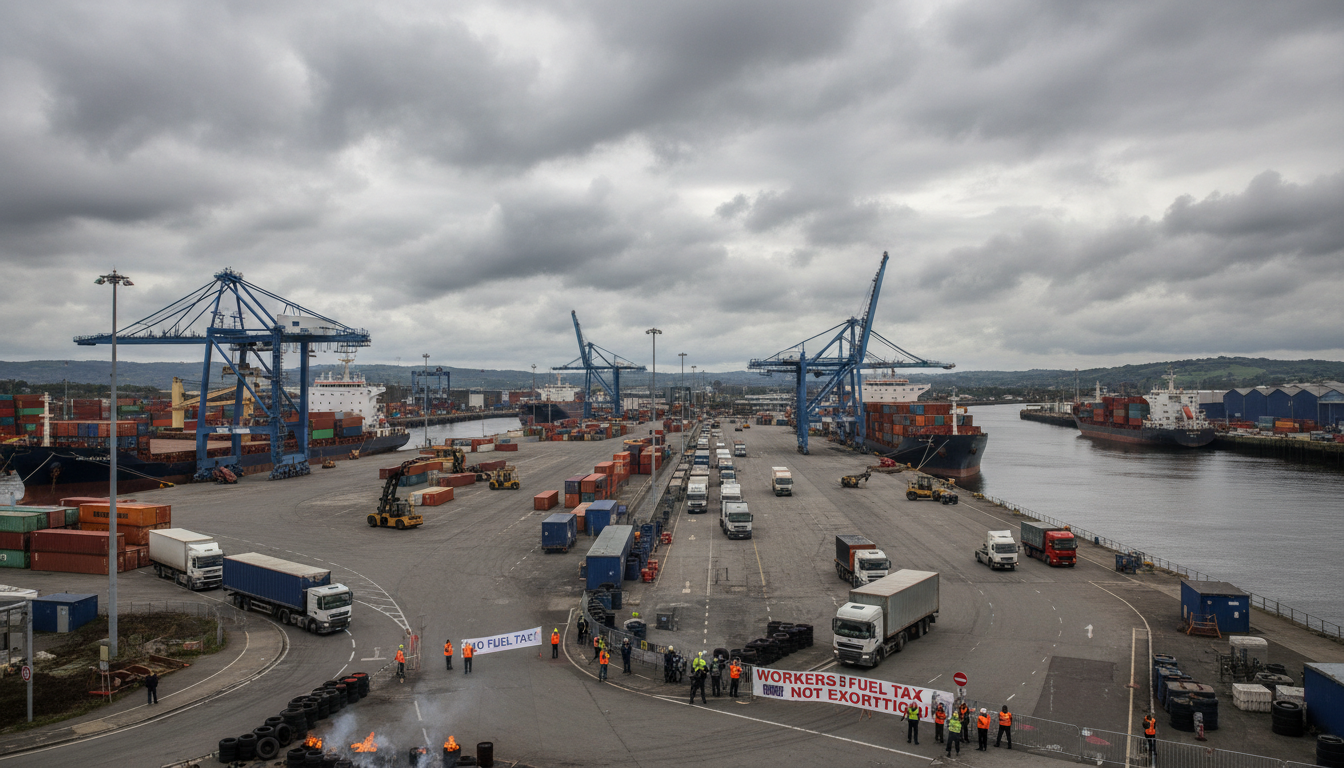
Government Responds to Fuel Protests
Irish ministers faced renewed pressure as street protests targeted rising pump prices and household bills across major towns. Officials framed the response as urgent, saying the measures aim to stabilise transport and essential commuting while wider fiscal plans are reviewed. In a Live briefing carried by national broadcasters, the government tied the package to immediate affordability and business continuity, not long-term price controls. Analysts following the protests said fuel costs have become a flashpoint for sectors that cannot easily pass through expenses. Today, opposition parties also pressed for clarity on duration and eligibility as the cabinet prepared implementing rules. The government said further policy changes would be signalled through formal budget channels.
Details of the New Fuel Supports
The new supports focus on targeted relief rather than broad price caps, with officials emphasising administrative speed and predictable take up. In an Update note, the Department of Finance said implementation will be coordinated with tax authorities and existing welfare systems to reduce delays for eligible drivers and small firms. For market context on energy pricing pressures, the BBC analysis on oil markets provides recent price dynamics and Opec influence in How UAE’s exit could affect Opec’s influence over oil price. The package is presented as temporary, and ministers said it will be reviewed against inflation and revenue data as they arrive. Today, retailers and logistics groups welcomed the faster timetable while warning that demand could stay elevated through peak travel months.
Impact on trade deficits
Economists watching Ireland cautioned that energy relief can shift import demand even when it protects consumers. When subsidies blunt price signals, fuel use can hold up, and that can widen trade deficits if the extra consumption is met by imported refined products. In a Live market note, some banks said the balance impact depends on hedging and inventory cycles, not just daily pump prices. The international angle is also being tracked by digital-asset and payments watchers as cross-border settlement grows, including Stablecoins and Digital Assets Reshape US Finance on the way transaction rails are changing. Government policy that lifts demand can also pressure the currency through higher import bills, which then feeds back into inflation expectations. The Update from officials stressed that supports will be adjusted if fiscal costs or external balances deteriorate.
Short and Long-term Economic Effects
In the short run, targeted relief may reduce pass-through from energy into services prices, supporting consumer spending and preventing abrupt job cuts in transport-heavy sectors. The medium-term question is whether the state can unwind supports without another price shock as wholesale costs move. Commentators tracking trade deficits say persistent import-heavy energy consumption can weaken current-account positions and complicate central-bank decisions on rates. For a broader view of fuel price stress and currency effects, see Global Petrol Prices Surge Amid War, Top 10 Nations Reflect Currency and USD Impact. Today, manufacturers also warned that uneven relief across regions could distort competition if some firms qualify and others do not. An Update on take-up rates is expected once tax and welfare systems begin processing claims.
Potential Global Repercussions
Ireland’s move is being watched by policymakers elsewhere because similar street pressure is building in multiple importing economies as energy remains a major input cost. If several governments cushion pump prices at once, global demand can stay firmer than expected, keeping import bills elevated for countries that do not produce enough fuel domestically. That pattern can amplify us trade deficits indirectly through higher global energy prices and stronger competition for cargoes priced in USD. In a Live discussion among European economists, the spillover risk was framed as a chain from subsidies to demand, then to shipping and refining margins, and finally to external balances. Today, investors also monitor whether repeated interventions signal a longer period of fiscal support that could affect bond spreads. An Update from Dublin on review dates will help markets judge how quickly supports can be scaled back.