Global travel and airline stocks plunged sharply as escalating military exchanges between the United States, Israel and Iran disrupted international flight networks and sent oil prices surging. Investors wiped out an estimated 22.6 billion dollars in combined market value from leading airlines, hotel operators and travel companies in a single trading session, marking the sector’s most severe shock since the pandemic era.
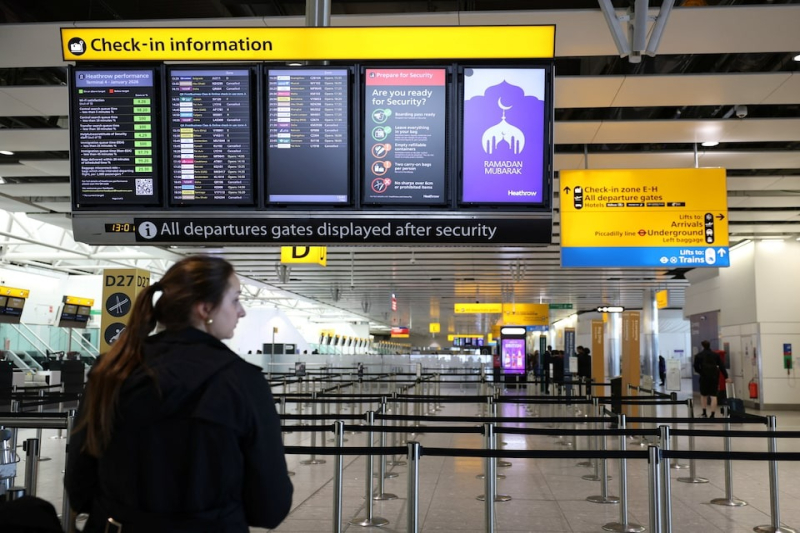
Airspace closures across key Middle Eastern corridors forced widespread cancellations and rerouting. At least 4000 flights were cancelled worldwide within three days, according to aviation analytics data. Dubai and Doha, two of the busiest global transit hubs, remained shut for a third consecutive day, stranding tens of thousands of passengers and straining airline operations worldwide. Jordan partially closed its airspace, adding to regional disruption.
The crisis has placed renewed pressure on a sector already navigating high operating costs and cautious consumer demand. Oil prices jumped as much as 13 percent to their highest levels since early 2025 as the conflict raised fears of supply interruptions. Rising crude directly impacts jet fuel prices, one of the largest expenses for airlines, and analysts warned that sustained energy inflation could weigh heavily on profitability.
Shares of major US carriers including American Airlines and United Airlines fell more than 3 percent in midday trading before paring some losses. European travel companies faced even steeper declines. TUI dropped nearly 10 percent, while Lufthansa and International Airlines Group posted losses exceeding 5 percent. Across Asia, airline stocks such as ANA Holdings, Air China, China Eastern Airlines and AirAsia X also retreated significantly.
Market analysts highlighted three primary pressure points for the industry: fuel costs, operational disruption and demand uncertainty. Even carriers with hedging strategies face rising expenses when oil climbs rapidly. Financial estimates suggest that a 5 percent increase in fuel prices could reduce earnings for Delta and United by up to 10 percent, while American Airlines could experience a much sharper profit impact.
The Strait of Hormuz has become a focal point for investors. Only five oil tankers reportedly transited the corridor on one recent day compared with around 60 per day previously. If tanker traffic remains suppressed for an extended period, analysts warn it could represent one of the most significant oil supply disruptions in modern history, amplifying volatility across commodities and equities.
While US airlines have limited direct exposure to Middle Eastern routes, the ripple effects extend globally. Asian carriers cancelled flights to Dubai, Riyadh and Doha, and European airlines suspended or rerouted services to avoid restricted airspace. Indian carriers were particularly affected due to dense Middle Eastern schedules and additional airspace constraints.
Airports attempted to resume limited services, with special domestic flights introduced to assist stranded travelers. However, the scale of cancellations has left passengers scrambling to secure alternative routes, often at significantly higher costs.
The breadth of the selloff reflects how quickly geopolitical instability can ripple through aviation, energy markets and global equities. With oil prices elevated and thousands of flights still grounded, travel related stocks remain sensitive to further developments in the conflict.