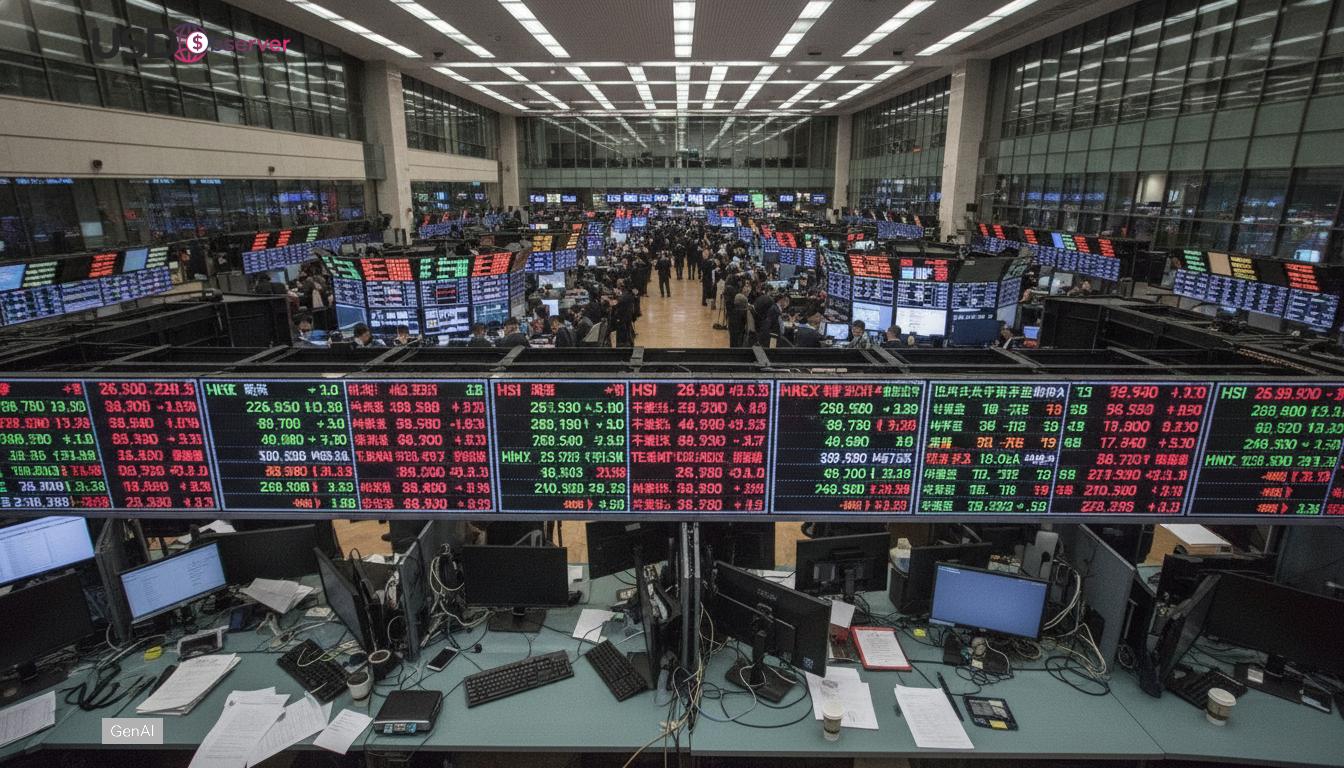
Global equity markets moved higher as investors responded to signals that geopolitical tensions in the Middle East could ease, offering a temporary boost after weeks of volatility. The rebound came despite ongoing uncertainty surrounding energy supply disruptions and rising inflation risks. While equities posted gains across major regions, oil prices continued their sharp upward trajectory, positioning themselves for one of the strongest monthly increases on record and reinforcing concerns about the broader economic impact of sustained energy market instability.
Investor sentiment improved after indications that diplomatic or strategic shifts could reduce the intensity of the conflict, prompting a short term return to risk assets. Major global indexes advanced, with strong gains seen in U.S. and European markets as traders reacted to the possibility of de escalation. However, despite the daily recovery, many benchmarks remain on track for significant monthly losses, reflecting the cumulative impact of geopolitical tensions, higher interest rates and persistent uncertainty over global growth prospects.
The surge in oil prices remains a central factor shaping market dynamics, with Brent crude climbing sharply and approaching levels not seen in recent years. Supply disruptions linked to restricted flows through key shipping routes have tightened global energy markets, pushing fuel costs higher and increasing inflationary pressures across economies. The rise in energy prices has already begun to feed through to consumer costs, with fuel prices increasing and contributing to broader concerns about purchasing power and economic stability.
Analysts caution that the recent equity gains may reflect short term positioning rather than a fundamental shift in market conditions. Investors are reacting to the possibility of easing tensions, but underlying risks remain significant, particularly if supply disruptions persist or escalate further. The combination of high energy costs and uncertain geopolitical developments continues to weigh on long term growth expectations, increasing the likelihood of slower economic expansion across major economies.
Economic data from Europe has already highlighted the inflationary impact of the energy shock, with price growth exceeding central bank targets. This development adds complexity to the policy outlook, as central banks must balance the need to control inflation with the risk of slowing economic activity. Bond markets have shown signs of adjustment, with yields stabilizing after recent increases as investors reassess growth prospects and monetary policy expectations.
Market participants are also closely monitoring currency movements and safe haven assets as indicators of broader risk sentiment. Fluctuations in major currencies and increased demand for assets such as gold reflect ongoing caution among investors, even as equities recover. Governments and policymakers are preparing for the possibility of prolonged disruption in energy markets, which could have lasting implications for trade, inflation and economic stability.
Looking ahead, the direction of global markets will depend on how geopolitical tensions evolve and whether energy supply disruptions can be resolved. While the latest rebound offers some relief, the broader outlook remains fragile, with investors likely to remain cautious in the face of ongoing uncertainty. The interaction between energy prices, inflation and economic growth will continue to shape market trends in the coming months.