Global economic momentum entering 2026 is defined less by crisis and more by constraint. Growth has not collapsed, but it has clearly lost its ability to accelerate. Despite easing inflation pressures and more stable financial conditions, the world economy continues to operate below its potential.
The central issue is not demand alone, but friction. Trade barriers, policy uncertainty, and uneven recovery paths across regions are limiting how quickly global growth can regain strength. This environment shapes not only growth expectations, but also capital flows, currencies, and fiscal decisions worldwide.
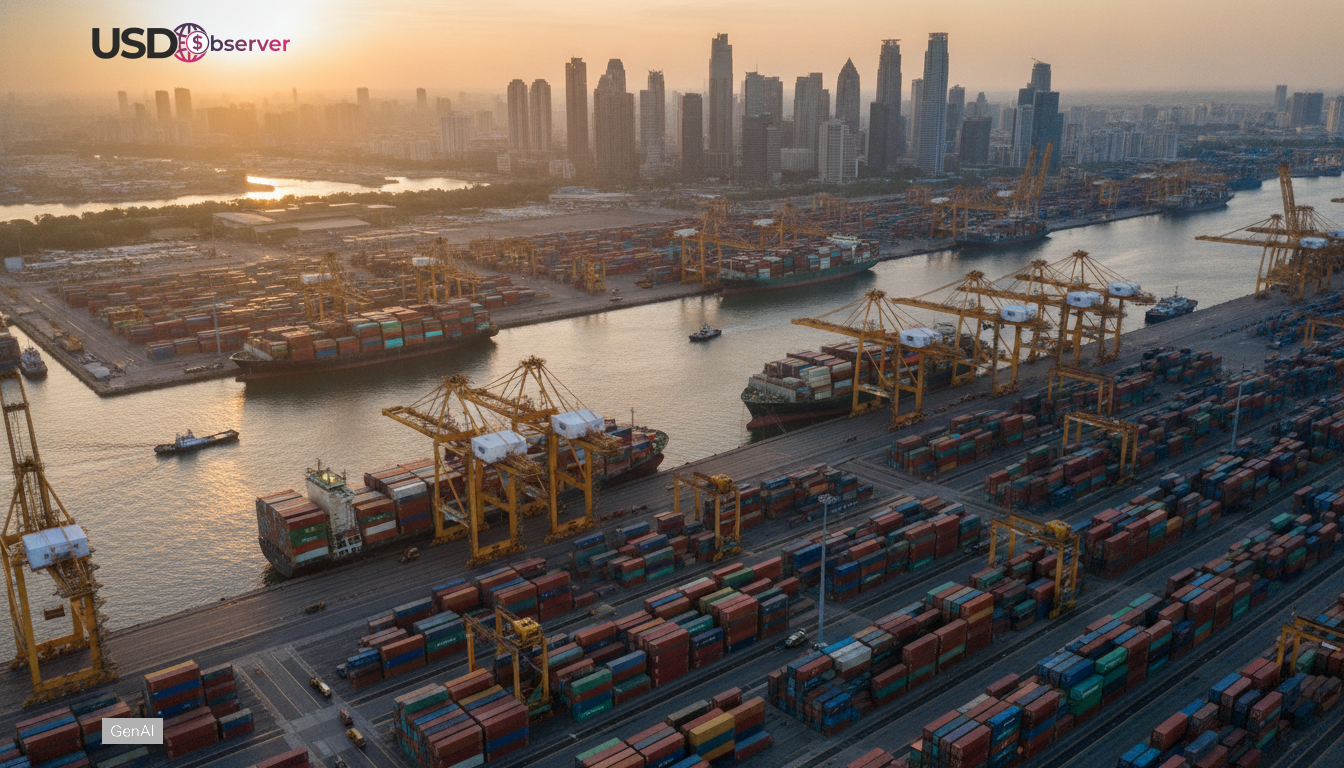
Trade Barriers Are Quietly Restraining Global Momentum
Trade restrictions have become a structural feature of the global economy rather than a temporary shock. Tariffs, export controls, and regulatory fragmentation now influence decisions well beyond headline trade volumes. These barriers raise costs, delay investment, and reduce efficiency across supply chains.
For emerging economies, restricted access to global markets limits export-led growth. For advanced economies, reshoring and friend-shoring initiatives increase production costs and slow productivity gains. The net effect is a global system that is more resilient in theory but less dynamic in practice.
This shift explains why growth remains subdued even as financial stress eases. The removal of crisis conditions does not automatically restore momentum when structural frictions remain embedded in the system.
Investment Hesitation And Policy Uncertainty
Business investment is particularly sensitive to policy clarity. In recent years, frequent changes in trade rules, industrial policy, and regulatory frameworks have made long-term planning more difficult. Firms are increasingly cautious, favoring balance sheet strength over expansion.
This hesitation is visible across manufacturing, infrastructure, and cross-border services. Even where demand exists, uncertainty around future access to markets or regulatory compliance delays capital deployment. The result is slower job creation and weaker productivity growth.
Without a clearer and more stable policy environment, investment is unlikely to become the engine of growth it once was. This reinforces the expectation of a gradual rather than robust recovery in 2026.
Inflation Cooling Without A Growth Surge
Inflation has moderated across many economies, but this cooling has not translated into a strong growth rebound. In part, this reflects the supply-side nature of recent inflation. As energy prices stabilize and supply chains adjust, price pressures ease, yet underlying growth drivers remain constrained.
This creates a challenging policy mix. Central banks may gain room to ease gradually, but governments face tighter fiscal constraints and rising debt burdens. Without coordinated support, the economy risks settling into a low-growth equilibrium.
For households, real income gains are uneven. Wage growth may slow as inflation falls, limiting consumption momentum. This further reinforces the subdued outlook.
Uneven Regional Recovery Paths
Another factor shaping the global outlook is divergence between regions. Some economies show resilience due to strong domestic demand or favorable demographics, while others struggle with structural weaknesses or external imbalances.
This unevenness reduces the effectiveness of global growth spillovers. Strong performance in one region does not fully offset weakness elsewhere, particularly when trade links are constrained. As a result, global aggregates mask significant disparities beneath the surface.
For global investors, this fragmentation complicates allocation decisions and increases the appeal of markets perceived as stable and liquid. This dynamic influences currency markets and reinforces the role of dominant financial centers.
What A Tepid Recovery Means For 2026
The outlook for 2026 is best described as stable but constrained. Growth is expected to continue, but at a pace insufficient to quickly reverse the scars left by recent shocks. Trade barriers, policy uncertainty, and cautious investment behavior form a ceiling on expansion.
This environment favors gradual adjustment rather than rapid normalization. Policymakers face limited room for error, and markets are likely to remain sensitive to signals of coordination or fragmentation. For global participants, flexibility and selectivity become more important than broad optimism.
Conclusion
The global economy in 2026 is not defined by collapse, but by friction. Trade barriers and uncertainty are slowing the transmission of recovery, keeping growth modest despite improving financial conditions. Until these structural constraints ease, the world is likely to experience a prolonged period of tepid expansion rather than a strong cyclical rebound.