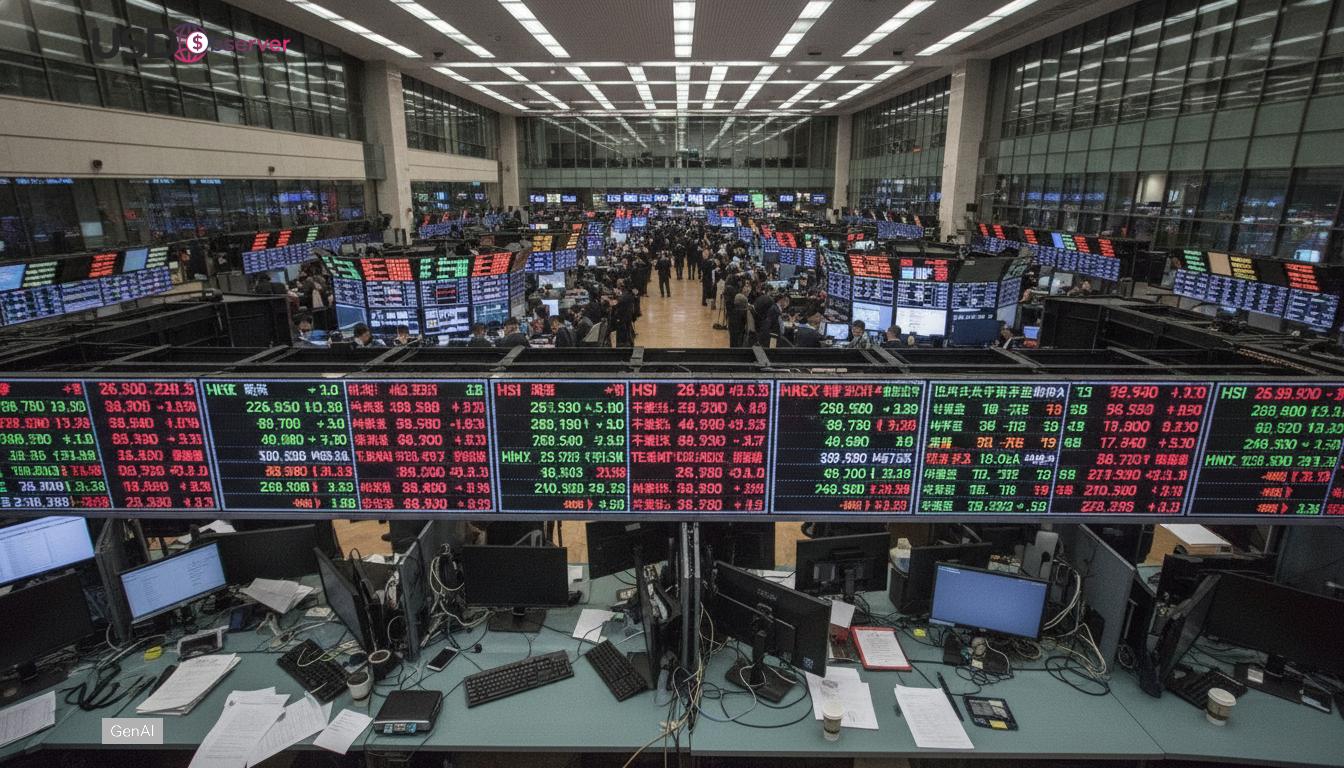
The global economy enters 2026 in a state that would have seemed unlikely just a year earlier. Growth has proven more resilient than expected across major regions, corporate balance sheets remain largely intact, and labor markets have cooled without breaking. On the surface, these conditions argue for stability in interest rates and a gradual normalization of policy expectations.
At the same time, political volatility has returned as a dominant macro force. Trade tensions, election driven policy shifts, and fragmented global coordination are reintroducing uncertainty into markets that had grown accustomed to predictability. This creates a new tug of war for rates, where economic resilience pushes yields higher while political risk pulls expectations back toward caution.
Growth resilience is challenging the case for rapid easing
The most important force shaping rate expectations is the persistence of growth. Despite restrictive financial conditions, consumption has held up, investment remains active, and service sector demand continues to provide a buffer against downturns.
This resilience complicates the argument for rapid interest rate cuts. Central banks expected tighter policy to slow activity more decisively. Instead, economies have adjusted. Productivity improvements, fiscal support, and balance sheet strength have softened the impact of higher borrowing costs.
As long as growth remains steady, policymakers face pressure to keep rates higher for longer. Markets respond by pushing back the timing of easing, reinforcing upward pressure on yields even in the absence of inflation shocks.
Political volatility reintroduces risk premiums
Against this backdrop of resilience, political risk has become the counterweight. Trade disputes, regulatory uncertainty, and shifting geopolitical alliances have injected volatility into expectations. These factors do not always show up in growth data, but they influence investment decisions and capital flows.
When political uncertainty rises, markets demand compensation. Risk premiums increase, and the appetite for aggressive positioning declines. This can flatten yield curves or limit rate increases even when growth data remains firm.
Political volatility also shortens forecasting horizons. Investors become less confident in long term assumptions, making them more sensitive to short term signals. This dynamic restrains how far rate expectations can move based on growth alone.
Trade policy acts as a transmission channel
Trade policy has emerged as a key transmission channel between politics and rates. Tariff threats, supply chain disruptions, and regulatory barriers affect prices, investment, and currency markets simultaneously.
When trade tensions rise, inflation risks can increase even as growth prospects weaken. This creates a dilemma for central banks. Tightening policy risks amplifying slowdown, while easing risks validating cost pressures.
Markets struggle to price this mix. Rate expectations oscillate as investors reassess whether trade driven inflation or growth risk will dominate. The result is higher volatility without clear direction, reinforcing the tug of war between resilience and risk.
Financial markets amplify the push and pull
Financial markets themselves magnify these opposing forces. Equity markets tend to focus on growth resilience, rewarding earnings stability and productivity gains. Bond markets are more sensitive to political risk and policy uncertainty.
This divergence feeds back into rate expectations. Strong equities encourage higher rate pricing, while cautious bond demand limits the upside. Currency markets add another layer, as capital flows respond to relative stability rather than absolute growth.
The interaction creates a complex equilibrium. Rates move within ranges rather than trends. Breakouts require either a clear growth slowdown or a decisive political shift. Until then, markets remain caught between confidence and caution.
Central banks navigate credibility and flexibility
For policymakers, this environment is uncomfortable but familiar. Maintaining credibility on inflation while preserving flexibility on growth is increasingly difficult. Communication becomes as important as action.
Central banks must acknowledge growth strength without appearing complacent about risks. They must recognize political volatility without overreacting to it. Small changes in language can have outsized effects on markets searching for direction.
This balancing act keeps rate expectations sensitive. Markets react not just to data, but to tone and emphasis. The tug of war plays out not only in economic indicators, but in interpretation.
Conclusion
The rate outlook in 2026 is defined by tension rather than clarity. Global growth resilience pushes against the case for rapid easing, while political volatility limits confidence in sustained tightening. Neither force dominates, creating a narrow path for policy and persistent uncertainty for markets. Understanding this tug of war is essential for interpreting rate movements in a world where strength and risk coexist uneasily.